
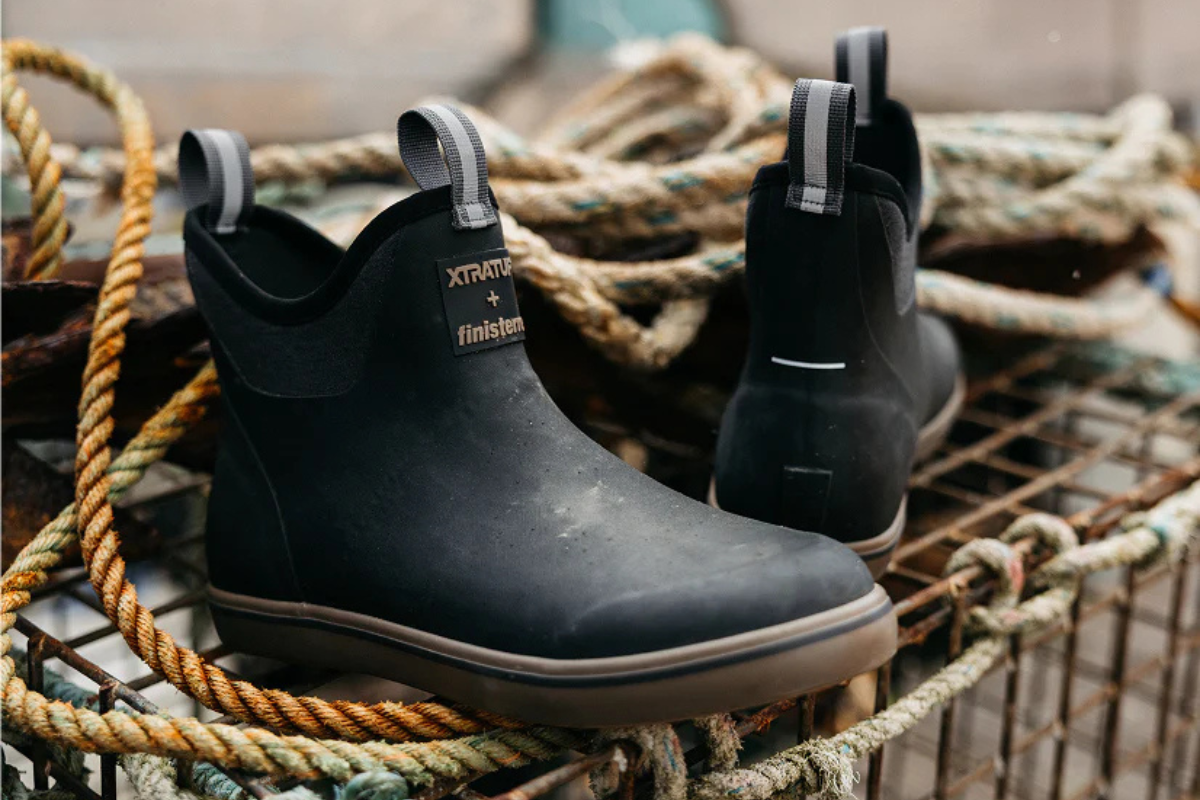

Finisterre and XTRATUF revisit the coastal boot, drawing from ocean weather and maritime workwear to shape a design grounded in durability, material innovation, and life by the sea. Footwear designed for coastal environments follows a simple rule: it must function reliably in water. Wet decks, rocks, and shores all require stability and materials that can handle constant exposure to salt and moisture. The coastal boot emerged from these conditions – a practical response to the realities of maritime work and life near the sea.
In early March 2026, the British outdoor brand Finisterre and American footwear specialist in maritime footwear XTRATUF unveiled a collaboration around this principle. This collaboration is with the brand’s long-standing Ankle Deck Boot model, which traditionally belongs to the world of commercial fishing and work at sea.
Rather than introducing a new form, the collaboration revisits a familiar object from coastal working life. It is about how traditional workwear for the sea continues to influence modern design, as coastal communities expand beyond fishermen to include surfers, environmentalists, and tourists.
Coastal Conditions as Design Logic
Most outdoor gear begins with an environment in mind. In coastal environments, water remains the defining design constraint.
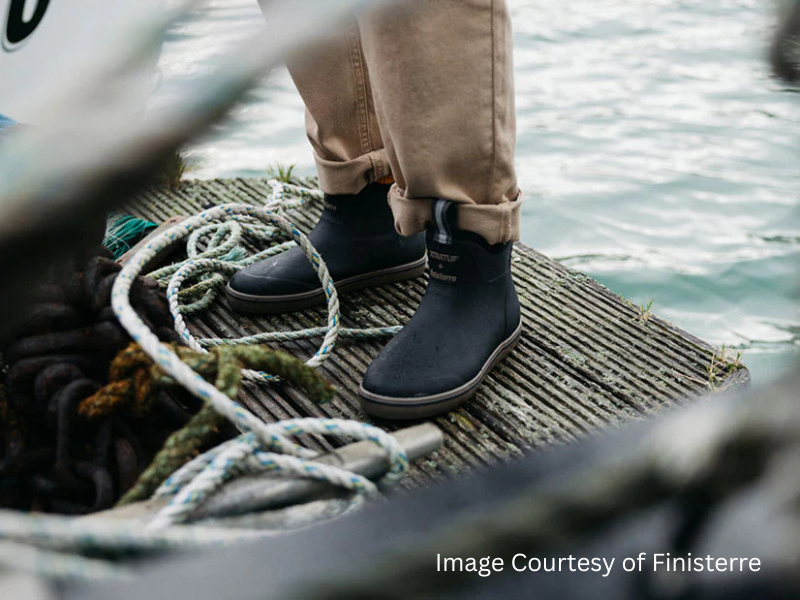
Deck boots were first introduced in working fisheries where slippery surfaces often caused accidents. XTRATUF earned its reputation in Alaska in the mid-twentieth century, developing boots made of rubber intended to provide traction on boat decks and docks exposed to rain, seawater, and fish oils. The chevron outsole, which is still in use today, was intended to “clear water from the deck and provide traction.”
Finisterre, meanwhile, has a different pedigree. The brand was started in Cornwall in 2003 and began life as a response to the needs of surfers in a cold wind, exposed to the elements for long periods of time.
The connection between the two brands reflects their shared geography. Surfers checking the surf, fishermen preparing to head out to sea, marine scientists working in the tidal zone – all of them are subject to a number of environmental challenges, from slippery floors to changing weather.
The coastal boot is not a fashion statement, but a product of geography.
A Familiar Object, Adjusted for New Materials
The collaboration between Finisterre and XTRATUF coastal boot offers an updated version of the classic ankle-deck boot without losing its fundamental design.
Like most deck boots, the design prioritises grip and water resistance for unstable surfaces found on docks, rocks, and working boats. The update focuses largely on materials, reflecting a broader shift within outdoor design.
The waterproof bootie is constructed from Yulex natural rubber, which is derived from Hevea trees. Yulex has been highlighted in recent years, particularly among surf and wetsuit brands seeking alternative materials to petroleum-based neoprene.
Other components incorporate recycled materials, including Seawool, a fibre partially made from recycled oyster shells, and recycled yarn webbing for the pull loops. The intention is to preserve the reliability expected of maritime workwear while gradually changing the materials used to produce it.
These changes are subtle but representative of a broader shift within the outdoor sector. Brands that once prioritized durability alone are now examining the environmental footprint of the materials used to achieve it.
Collaboration in Water-Oriented Design
Collaborations between outdoor brands have become common, particularly in sectors shaped by specific environments such as climbing, cycling, and water sports.
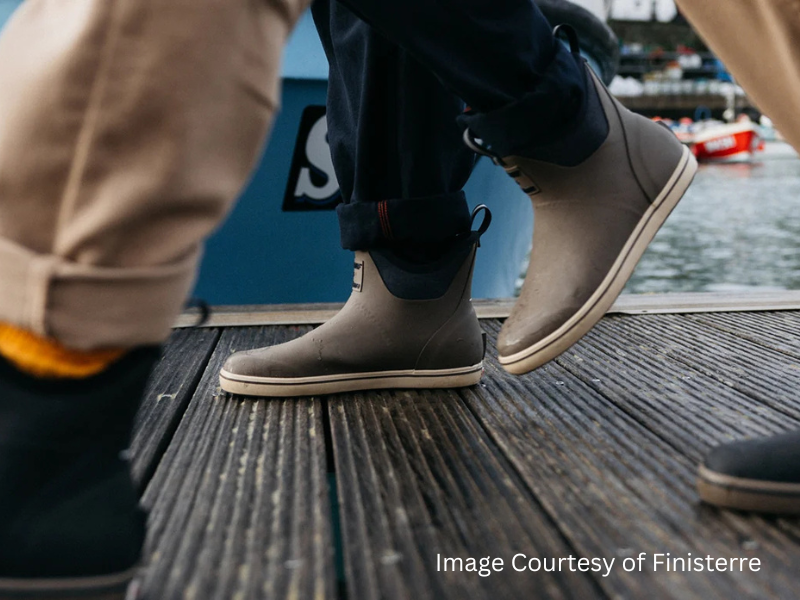
For coastal brands, partnerships often come more from shared experiences of the geography in which they operate rather than marketing considerations. Finisterre’s Head of Design, A. Todd, described the partnership as a natural one between brands shaped by similar coastal conditions, “Sometimes you don’t have to look too far to find the perfect collaborator. Accompanying us on our surf checks, beach cleans, rock-pooling adventures, and every sudden downpour, it was XTRATUF who felt like a natural partner for Finisterre.”
From XTRATUF’s perspective, this coastal boot partnership combines maritime heritage with a broader community influenced by the sea. XTRATUF has long provided footwear for fishermen and maritime workers, but it is increasingly used in other activities on or near the sea.
This is a common phenomenon in coastal culture. Coastal boots and gear originally intended for a particular coastal profession often carry over into many other activities, since the environment is similar.
Whether a person is fishing, surveying erosion, or even crossing rocks at low tide, the footwear required is essentially the same.
The Coastal Boot as Cultural Infrastructure
In this sense, the deck boot functions almost as a form of small coastal infrastructure. It is meant to facilitate movement in areas where water renders the ground unstable.
Throughout the world’s coastlines, similar equipment can be found as solutions to similar environmental demands. Similar waterproof boots appear across Nordic fisheries, Japanese aquaculture sites, and ports along the North Atlantic. The specifics vary, but the underlying principles of design are similar.
The partnership between Finisterre and XTRATUF is part of this larger history of functional coastal design. The interest in this partnership is not based on innovation but rather on similarity.
Where Water Continues to Shape Design
Coastal design is not subject to rapid change. Constraints of waves, tides, and weather patterns are remarkably stable.
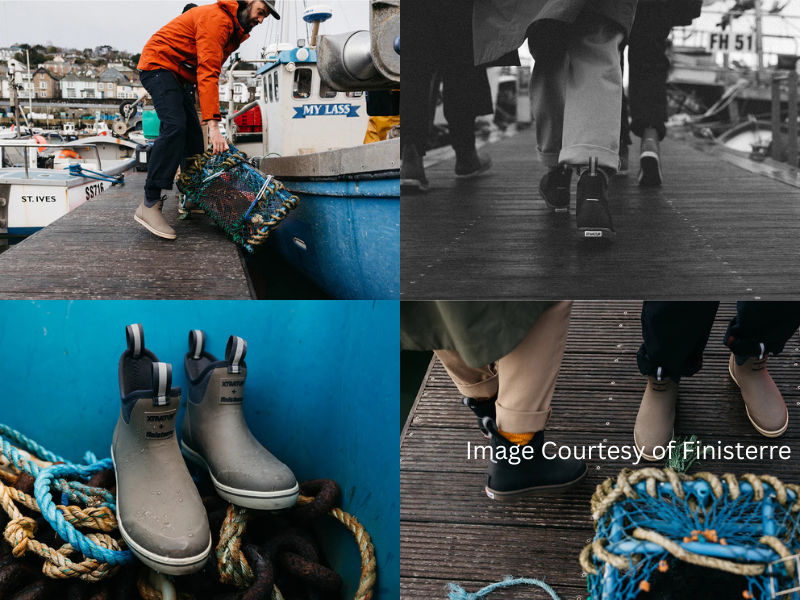
The deck/coastal boot endures because the conditions it accommodates endure. Wet ground remains a dominant aspect of coastal labour and recreation, and footwear still requires grip, insulation, and water resistance.
What is changing is the material, the manufacturing process, and the cultural setting in which it is used.
The Finisterre and XTRATUF collaboration sits within this gradual evolution of coastal equipment. It is a reworking of a familiar piece of maritime equipment, conscious of its environment.
Design in coastal areas often begins with the most basic of observations. Water is a dominant force in how people live, work, and travel. Even something as mundane as a coastal boot is not immune to this.
Read More on: