
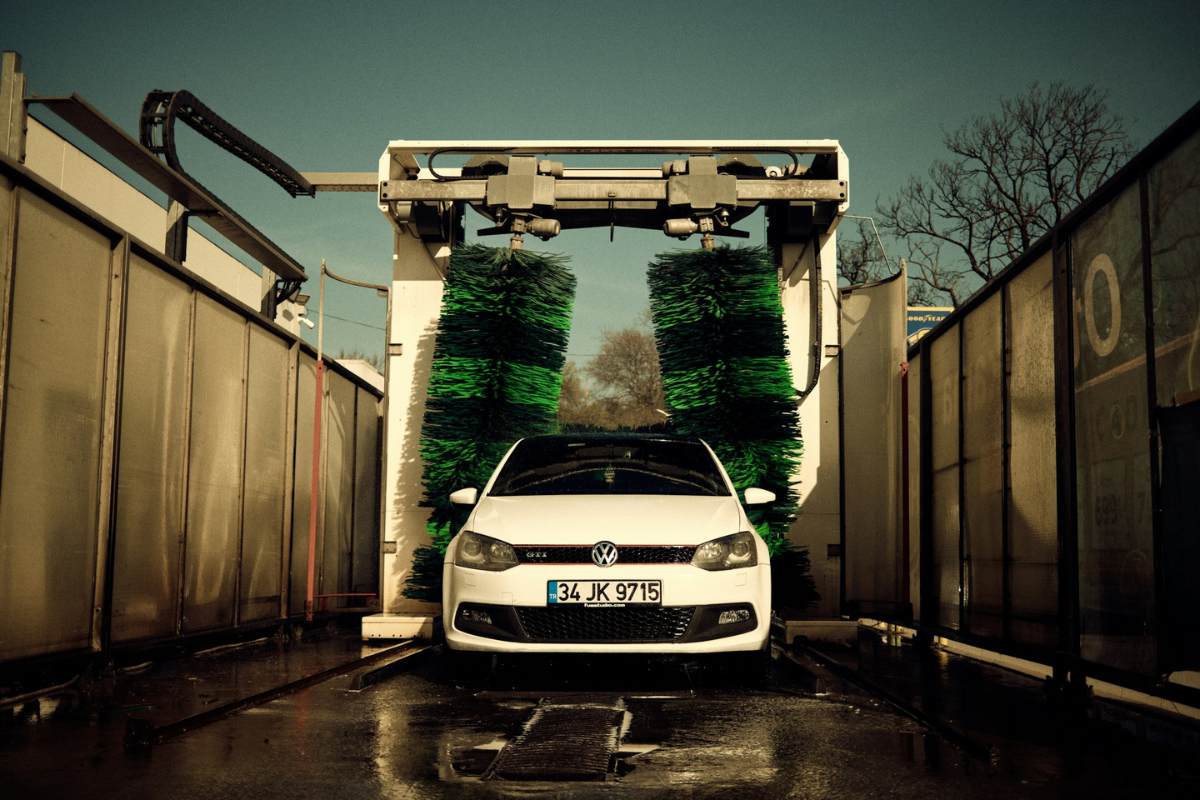

Washing a car with water is an everyday routine that few people stop to consider. For decades, it has belonged to the routine of maintenance: a bucket, a hose, and the satisfaction of a clean surface. Today, the action carries a new significance. In a hydrosensitive world, washing a car is no longer just a personal activity. It highlights the management of one of a city’s most precious resources.
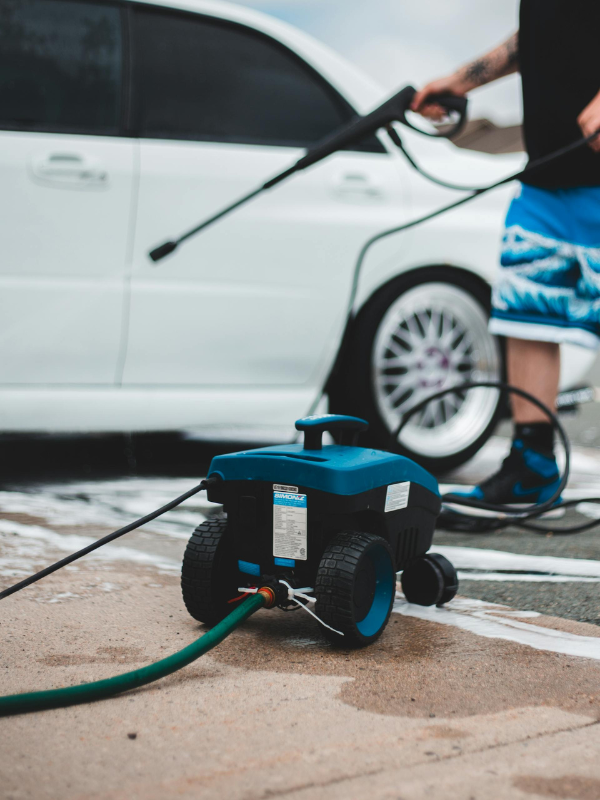
The change is not abstract. Many cities are entering a new era of water management shaped by restriction, regulation, and reuse. According to the regulations of Sydney Water, car washing with water is allowed through methods such as using a bucket, a hose with a trigger nozzle, high-pressure equipment, or commercial car washes with controlled use. These rules show how everyday habits are adapting to tighter water realities.
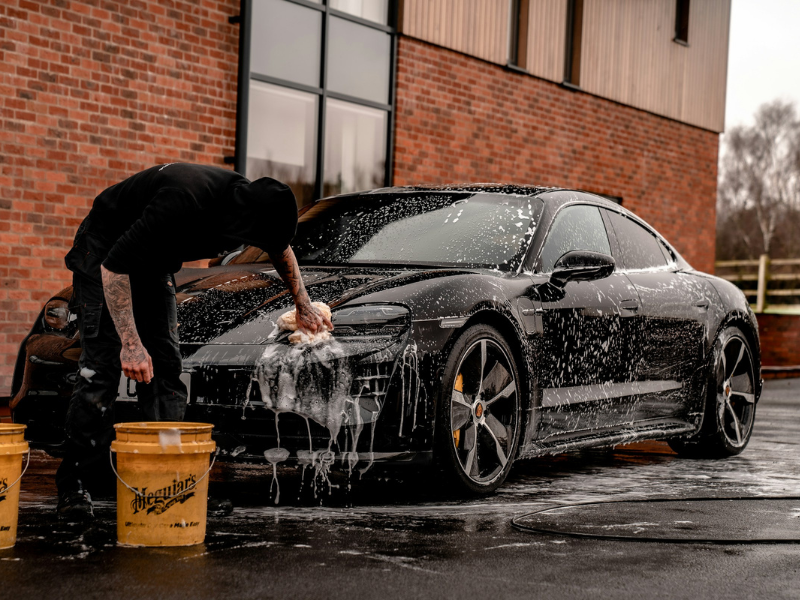
A Domestic Habit with Urban Consequences
At first thought, washing a car with water may seem a simple process. At scale, however, car washing becomes a meaningful source of water consumption. According to a bibliometric analysis in Water in 2024, over 55.77 percent of the research on car wash wastewater treatment was conducted in the last five years. The research reflects growing recognition that washing a car with water is tied to larger challenges in water reuse and pollution control.
The same review indicates that it is possible for car wash facilities to use anywhere from 150 to 600 liters of fresh water per vehicle, depending on the washing system as well as the type of vehicle. In a field study conducted in Kumasi, Ghana, it was found that an average of 158 liters of water was used for a saloon car, 197 liters for an SUV, and 370 liters for buses or coaches. In total, it was found that the car wash industry within the city utilized 1,000 cubic meters of freshwater daily. Viewed collectively, car washing becomes a small but constant demand on urban water infrastructure.
What the Water Carries Away
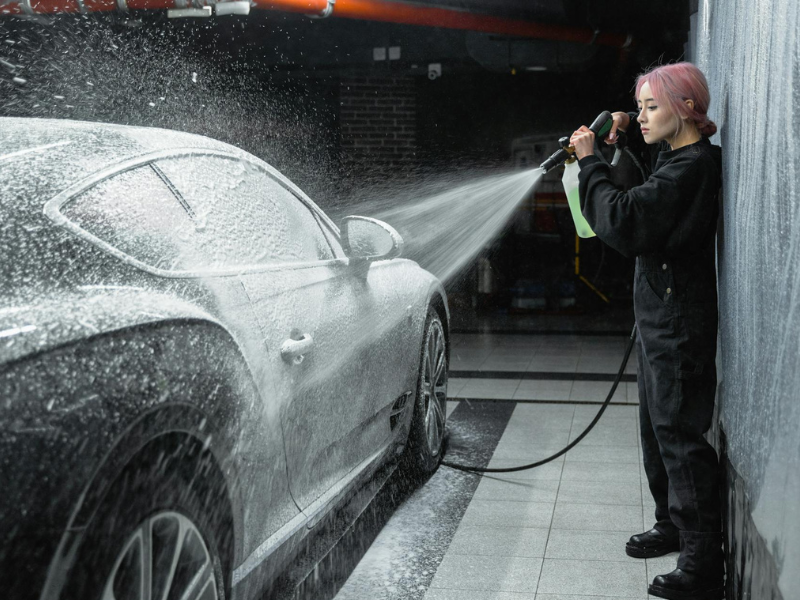
The issue is not only how much water is used. It is also the quality of water being discharged from the wash bay/driveway. Wastewater from car washes may contain detergents, surfactants, suspended solids, oil and grease, petroleum products, and heavy metals. These pollutants are from road dust, tires, braking materials, engine residues, and the wash chemicals. It is a wastewater of a different kind from the typical domestic discharge.
The Kumasi study revealed high concentrations of chemical oxygen demand, suspended solids, sulphates, and E. coli. Some discharge samples were found to be well above guideline levels by large margins. The authors describe this as a common urban problem: treated water is used to wash vehicles, then discharged as polluted runoff. This is why the United States Environmental Protection Agency considers car washing to be a stormwater management problem. Untreated car wash water can carry pollutants directly into our rivers, streams, and oceans through storm drains.
Seen this way, a simple car wash reveals a larger design challenge in modern cities. The clean car is one obvious result. Less visible is the path that water takes from reservoirs to drains and waterways after collecting chemicals and road pollutants.
Regulation As a Cultural Signal
The regulations around washing a car with water appear to be relatively minor. Yet they reflect a broader shift in how cities think about water. In Victoria, for instance, permanent water-saving regulations require that all hoses be leak-free and fitted with trigger nozzles for car washes. Such regulations do not outlaw car washes. They redefine them. They imply that urban cleaning can no longer proceed in a way that is unhindered by hydrological considerations.
This is important not only practically, but culturally as well. Much of the modern era, for instance, saw water use within the home often have the aesthetic of a watered lawn, a rinsed driveway, a polished car. The hydrosensitive city, however, encourages a different aesthetic. It favors controlled flows, recycled loops, efficient nozzles, and infrastructure that prevents polluted runoff from entering public waterways. The act of washing a car with water is familiar, but the form of the action is not.
From Freshwater Use to Water Circulation
The best solution for washing a car with water is not moral pressure but good systems. A study conducted in 2021 in Water Resources and Industry examined a car wash wastewater treatment process in Barranquilla, Colombia. The process involved coagulation-flocculation, activated carbon, and ozonation treatment processes. The study found that the treatment process was effective in removing color, turbidity, coliform, and oil and grease, each by over 93 percent. The reclaimed wastewater was suitable for several industrial and agricultural uses in Colombia, but it also required disinfection.
It is relevant because it shifts the conversation beyond restriction and into circulation. It does not have to be the case that washing a car with water requires new water each time. Treatment and reuse technologies can enable the same action to occur within a more circular urban water system.
The bibliometric review for 2024 follows the same trend. In this review, electrocoagulation, coagulation, adsorption, and combined treatment methods are presented as some of the most active areas of research in wastewater treatment for car wash plants. In other words, more and more attention is being given to how wastewater can be reclaimed and reused, rather than simply discarded.09
A Small Habit that Reveals a Larger System
The interest in washing a car with water lies not in the routine itself but in what it reveals. What it reveals is how an apparently routine activity relies on unseen systems of treatment, supply, drainage, and environmental regulation. It shows how quickly clean drinking water can become polluted runoff. It also reveals how climate pressures are reshaping even the most ordinary urban habits.
In a hydrosensitive world, washing a car with water is not just an aesthetic concern. It is a question of whether the city can align its daily habits with the imperatives of water scarcity, pollution, and reuse. The smooth finish still exists. The real question is no longer the car’s shine, but how responsibly the water behind it was used.
Read More on: