


On a warm afternoon, a lake can appear perfectly safe for swimming. Families gather along the shore, and the water looks clear and inviting. Yet appearances alone cannot reveal whether harmful cyanobacteria are present.
Harmful algal blooms are an increasingly important concern for freshwater recreation. Some develop into thick green scum, while others leave few visible clues. And although water authorities monitor popular swimming spots, conditions can change between inspections.
For anyone preparing to dive in, the question is no longer simply whether the water looks clean.
It is whether you can trust appearances.

When a Beautiful Lake Hides a Problem
Despite their name, many freshwater harmful algal blooms involve cyanobacteria, commonly called blue-green algae. These naturally occurring microorganisms inhabit lakes, rivers, and reservoirs. Under favorable conditions, they can multiply rapidly, sometimes producing toxins harmful to humans and animals.
Warm temperatures, excess nutrients from agricultural runoff or wastewater, and relatively still water can encourage their growth.
According to the World Health Organization, cyanobacteria occur naturally in freshwater, but human activities can encourage their growth and the spread of harmful blooms. Its 2021 guidance highlights the importance of managing lakes, rivers, and reservoirs to prevent toxic blooms and protect people who depend on these waters for drinking and recreation.
Some blooms resemble spilled green paint. Others form floating mats or streaks along shorelines. Yet potentially harmful cyanobacteria do not always produce dramatic surface changes.
Not every bloom produces toxins, and not every green patch is dangerous. But the absence of visible scum cannot guarantee safety either.
That uncertainty is what makes harmful algal blooms particularly troubling for recreational swimmers.
What Happens When Swimmers Enter Contaminated Water?
A swim in affected water does not automatically lead to illness. However, exposure to certain cyanobacteria or their toxins can cause health problems, particularly when contaminated water is swallowed.
The US Centers for Disease Control and Prevention identifies skin irritation, stomach discomfort, vomiting, diarrhea, and respiratory symptoms among possible effects of freshwater harmful algal blooms. Certain cyanotoxins can also affect the liver or nervous system.
Children may be particularly vulnerable to accidental ingestion while playing in shallow water.
Pets face another danger. Dogs may drink contaminated water or swallow algae while grooming their fur after swimming. Severe poisoning can develop rapidly, making suspected exposure a veterinary emergency.
These risks can go unnoticed, particularly when a lake shows no obvious signs of contamination.

The Problem With Yesterday’s Water Test
Around the world, authorities use different systems to monitor recreational water quality. Australia’s Beachwatch provides swimming forecasts, while the European Environment Agency reports on bathing-water quality across thousands of coastal and freshwater locations. These broader assessments do not necessarily indicate whether cyanobacterial toxins are present. In New Zealand, Land, Air, Water Aotearoa (LAWA) helps swimmers check local conditions, while in the United States, state and local authorities issue recreational water advisories when harmful algal blooms pose potential health risks, helping swimmers identify affected lakes and other waterways.
These systems are especially valuable where lakes and rivers attract families, open-water swimmers, and sporting competitions. Yet even regular monitoring has its limitations. Water conditions can change between tests, and a reassuring result for bacterial contamination does not necessarily rule out harmful algal blooms or their toxins.
For swimmers, the challenge is knowing not just whether a location has been declared safe, but what was actually tested and how recently. After all, can yesterday’s water-quality results truly tell us whether today’s swim is safe?
When Harmful Algal Blooms Become a Public Concern
The consequences of cyanobacterial contamination can reach far beyond an unpleasant swimming experience, sometimes disrupting entire communities and their relationship with the water.
In 2014, a major harmful algal bloom in Lake Erie triggered a drinking-water emergency in Toledo, Ohio. Residents were warned against drinking contaminated tap water, showing how quickly a familiar water source can become a public health concern.
Elsewhere in the United States, Mississippi’s Gulf Coast beaches faced widespread swimming restrictions in 2019, when blue-green algal blooms prompted authorities to warn visitors against entering affected waters.
Across the Atlantic, Northern Ireland’s Lough Neagh experienced serious blue-green algae problems in 2023, prompting public warnings about potential risks to people and animals. Concerns extended beyond the lake itself, as algae could travel downstream toward coastal waters.
These incidents reveal how harmful algal blooms can transform treasured recreational destinations into places of uncertainty. Beyond the immediate health concerns, they can disrupt swimming, affect tourism, and leave communities questioning the safety of waters they have trusted for generations.

Can Technology See What Swimmers Cannot?
Scientists are increasingly looking beyond occasional water sampling to understand how harmful algal blooms develop and move.
Satellite technology offers one promising approach.
The US Environmental Protection Agency’s Cyanobacteria Assessment Network uses satellite observations to help identify potential cyanobacterial activity across large lakes and reservoirs.
Researchers are also exploring forecasting models that combine environmental observations with weather conditions to anticipate where blooms may develop.
Meanwhile, automated monitoring equipment can continuously measure indicators such as water temperature and other changes associated with bloom conditions.
These approaches could help authorities identify emerging problems sooner and target additional testing.
However, technology has limitations. Satellite images cannot directly confirm whether dangerous toxin concentrations are present, and predictive models cannot guarantee safe swimming.
The future may therefore depend less on replacing traditional water testing and more on connecting different sources of information into clearer, faster public warnings.
Before Taking the Plunge
For swimmers, caution does not have to mean abandoning freshwater recreation.
Checking current local advisories is a sensible starting point. So is avoiding water with unusual discoloration, floating scum, or suspicious accumulations along the shore.
Keep children and pets away from suspected blooms, including material washed onto beaches.
Most importantly, clear-looking water should never be treated as definitive proof of safety.
Preventing harmful algal blooms also requires action beyond the swimming area. Reducing nutrient pollution, protecting catchments, and improving wastewater management can help address the conditions that allow blooms to flourish.
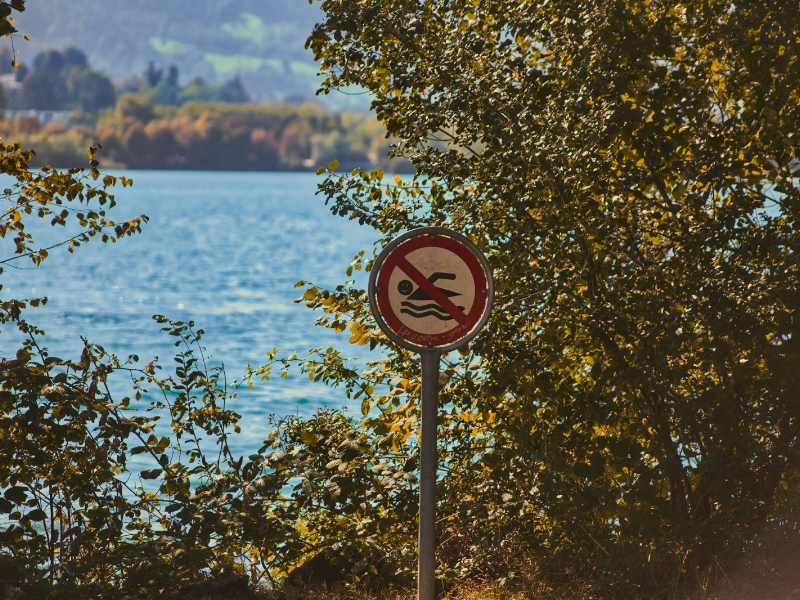
The Lake Hasn’t Changed Its Invitation
Lakes have always drawn people. They offer relief from summer heat, moments of quiet, and memories that often last long after the holidays end.
Harmful algal blooms do not erase that beauty. But they remind us that a landscape can look healthy while something beneath its surface tells a different story.
Better monitoring, clearer warnings, and healthier waterways can help preserve the freedom to enjoy these places.
A lake may look unchanged from one day to the next, even when its water quality has shifted. Reliable monitoring and accessible public information are essential to keeping freshwater recreation safe
Read More on: