
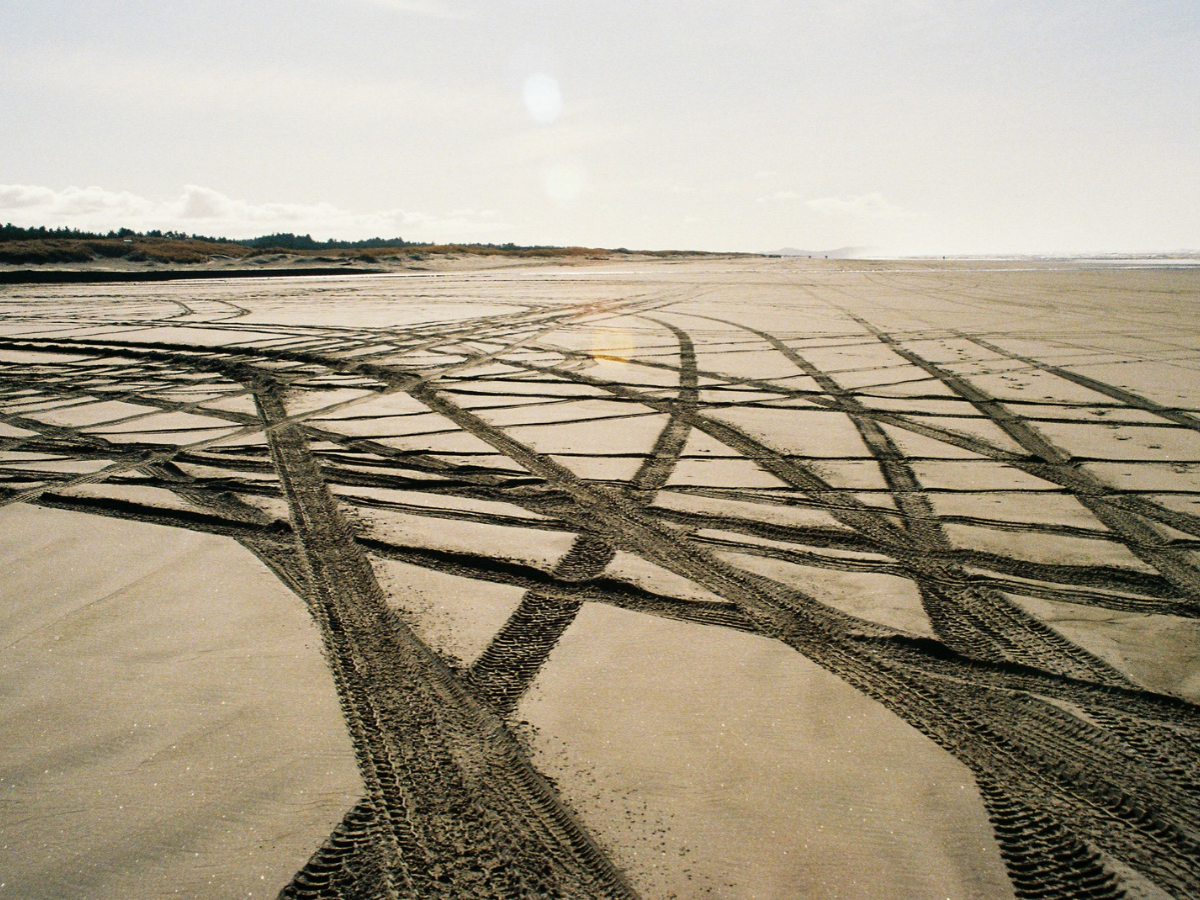

Every time a car turns a corner, accelerates through traffic or brakes at a junction, something is left behind.
Not a plastic bottle. Not an oil spill. Something far less noticeable.
As tyres wear against the road, tiny fragments of rubber and chemical additives scatter into roadside dust, settle near drains or become airborne. When rain arrives, some are washed into stormwater systems, eventually reaching streams and rivers.
The scale is concerning. A 2024 US Geological Survey study detected the tyre-derived chemical 6PPD-quinone in 57% of 90 stormwater samples collected across the United States. This chemical, formed when a common tyre additive reacts with ozone, can be highly toxic to certain aquatic species.
This is tyre pollution, an invisible consequence of everyday transport. Roads may appear spotless, and rivers may look healthy, even as potentially harmful chemicals travel downstream.
The real concern is no longer just how much rubber our vehicles leave behind, but what happens when those traces enter the water.
The Road Has a Secret Drainage System
A busy road and a quiet river may seem like separate environments. In reality, stormwater infrastructure often connects them.
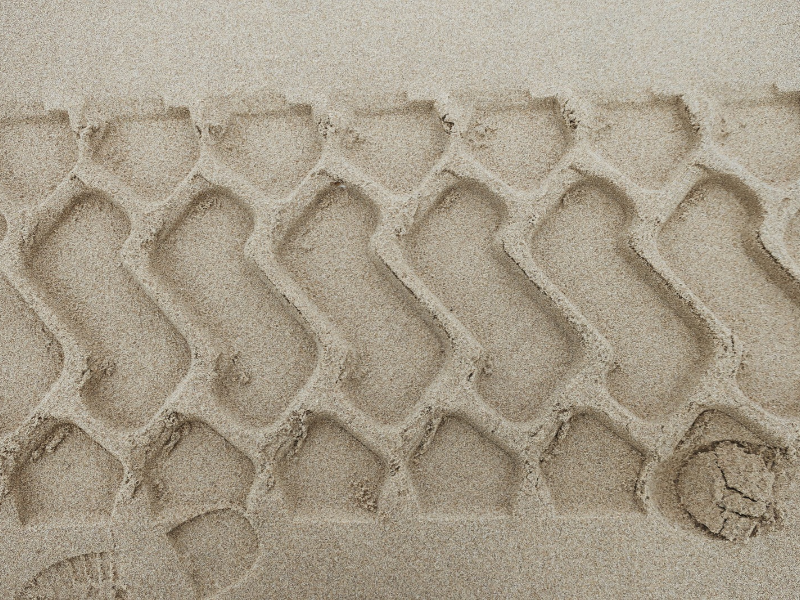
As tyres wear down, they release particles containing rubber, road debris and chemical additives. Rainwater can carry these materials into drainage systems, where some are trapped while others reach nearby waterways.
The scale is substantial.
A 2025 UK study estimated that approximately 79,500 tonnes of tyre-wear material are generated annually across the country, with around 28,100 tonnes reaching surface waters.
These are modeled estimates, not direct measurements from every river.
Nevertheless, they reveal something important: the journey from road to river is not an occasional accident. It is a recurring pathway for pollution.
And the smallest particles are only part of the story.
How Salmon Revealed the Risks of Tyre Pollution
For years, scientists in the Pacific Northwest of the United States faced a disturbing puzzle.
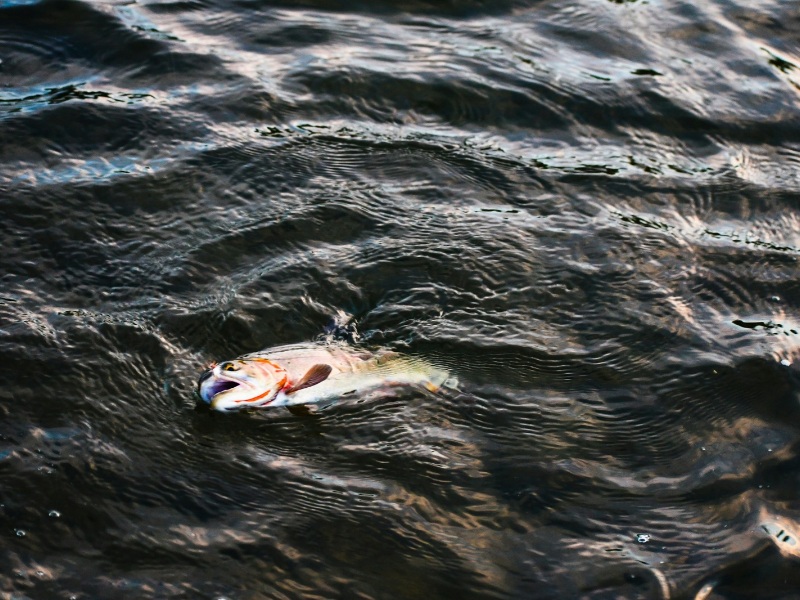
Coho salmon returning to urban streams were dying before they could reproduce. The fish sometimes appeared disoriented, struggled to swim, and eventually died.
Researchers suspected contaminated stormwater, but identifying the responsible substance proved difficult.
Researchers eventually identified a likely cause.
Scientists identified 6PPD-quinone, a chemical formed when 6PPD, an additive used to protect tyres from degradation, reacts with ozone.
The discovery connected an ordinary vehicle component to a previously unexplained environmental problem.
Research documented by the US Geological Survey has since helped establish the significance of tyre-derived chemicals in aquatic environments.
The findings do not mean every fish species responds the same way. Coho salmon are particularly sensitive, and scientists are still investigating effects on other organisms.
But the discovery changed the conversation.
Tyre pollution was no longer simply about microscopic fragments accumulating in nature. A chemical associated with those fragments could be acutely toxic to vulnerable aquatic life.
The River May Be Different by Morning
Imagine a river sampled on a dry Tuesday.
Its water appears clear. The results seem reassuring.
By Wednesday evening, heavy rain has washed accumulated road contaminants into the same waterway.
The river may look almost identical, but its chemistry could be different.
A 2025 study of Washington’s Miller Creek found that 6PPD-quinone concentrations rose during storms, sometimes exceeding aquatic-life screening values for several hours.
This exposes a weakness in conventional monitoring: a single sample cannot necessarily capture short-lived pollution events.
It also raises a practical question for urban planners.
If harmful chemicals arrive in bursts during rainfall, should cities focus more closely on what happens between the road and the river?
What If the Pavement Became Part of the Solution?
One approach is to rethink how cities manage stormwater.
Rain gardens, vegetated drainage channels and specially engineered soils can intercept polluted stormwater before it enters natural waterways.
Rather than sending runoff directly into a pipe, these systems allow water to pass through materials designed to retain or remove contaminants.
In Washington, King County researchers tested different bioretention soil mixtures in 2025.
In laboratory tests, the bioretention soil mixtures substantially reduced 6PPD-quinone concentrations. Treated stormwater also reduced acute toxicity to juvenile coho salmon.
The findings offer a promising direction, although laboratory results cannot guarantee identical performance across every urban drainage system.
Other possibilities include permeable pavements, improved roadside filtration, and treatment units installed near stormwater outlets.
Future monitoring networks could combine rainfall forecasts, flow sensors and targeted chemical sampling to identify periods of greater contamination risk.
However, technology presents another challenge.
Filters that capture solid tyre particles may not remove dissolved chemicals equally well. Systems must therefore be designed around the pollutants they are intended to treat.
The goal is not simply to make runoff look cleaner. It is to reduce what reaches the river.

Could Tomorrow’s Tyres Leave Less Behind?
Another approach exists.
Instead of concentrating entirely on cleaning polluted water, what if tyres themselves could become less harmful?
California has already taken steps in this direction.
Since October 2023, the state’s Department of Toxic Substances Control has regulated motor vehicle tyres containing 6PPD, requiring manufacturers to evaluate potential alternatives or other ways of reducing exposure.
The challenge is more complicated than simply removing one ingredient.
6PPD helps prevent rubber from cracking and deteriorating. Any replacement must protect tyre performance while avoiding similar environmental risks.
California’s 2026 alternatives database shows that researchers and manufacturers are investigating different chemical and material options. Some candidates have already encountered concerns about effectiveness or safety.
Meanwhile, reducing unnecessary vehicle journeys, maintaining appropriate tyre pressure and adopting gentler driving habits may help limit tyre wear.
These measures cannot eliminate tyre pollution, but they reinforce an important principle: preventing contamination is preferable to relying entirely on removing it afterward.
The River Is Closer Than We Think
A river does not begin at the water’s edge.
Its condition is shaped by the roads, neighborhoods, industrial areas and drainage networks throughout its catchment.
That is why tyre pollution deserves attention beyond laboratories and environmental reports.
It connects the choices made in vehicle manufacturing with the decisions cities make about streets, stormwater and green infrastructure.
There is still much to learn about how different tyre-derived chemicals behave in natural waterways. But research has already revealed enough to challenge an old assumption: that the environmental consequences of driving are limited to exhaust emissions and fuel consumption.
The next time rain runs along a roadside gutter, it may be carrying traces of countless journeys.
And somewhere downstream, a river receives what the road leaves behind.
Read More On: