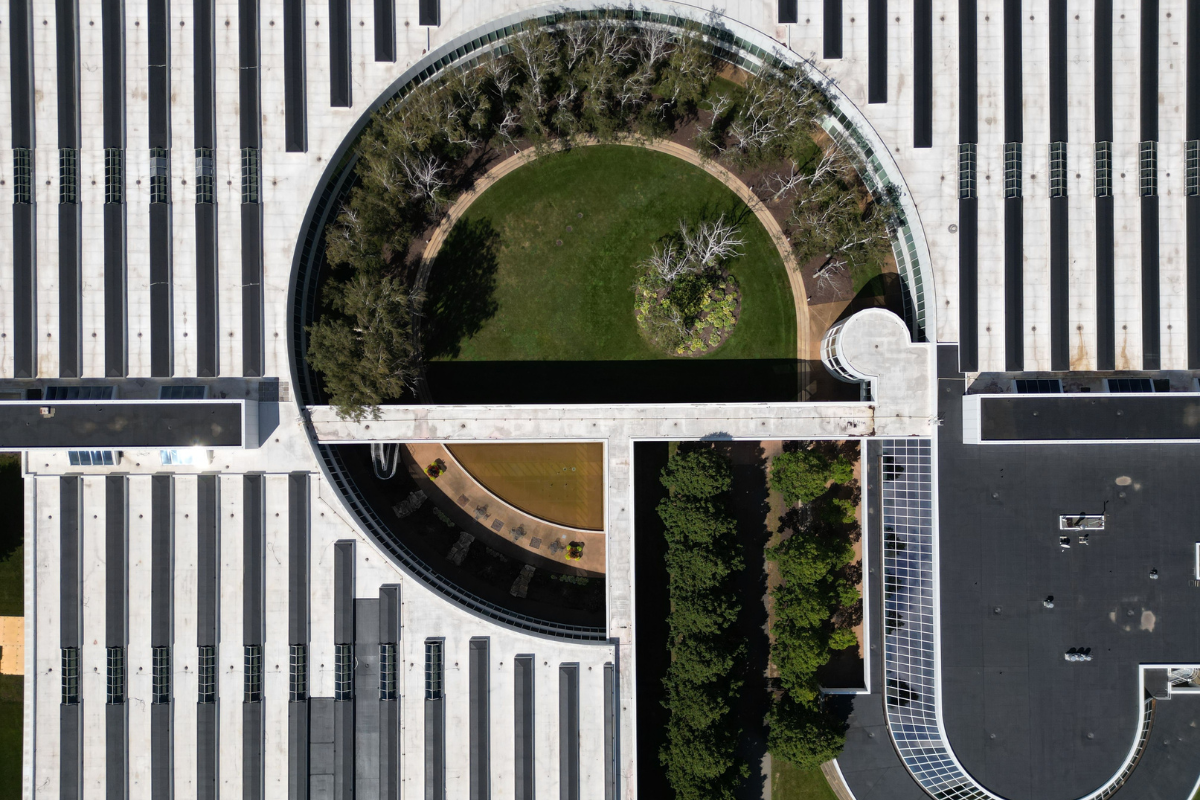

As floods become more frequent despite larger drainage systems, blue-green roofs offer an alternative approach to urban stormwater management by allowing buildings to store and regulate rainfall.
For decades, our streets, pipes, and even our waterways have been built to get stormwater away from cities as fast as possible. While this approach supported urban growth, it also reduced the landscape’s ability to naturally absorb and retain water. With too much rain falling in a short amount of time, millions of liters of stormwater flowed into our drainage systems.
Today, this philosophy is being subtly questioned. Blue-green roofs represent one response to this challenge, as they help us turn our rooftops into living gardens that embrace water rather than shunting it underground.
In contrast to such visible measures as storm barriers or expensive construction, the change goes on unnoticed. Over the tops of office buildings, residential blocks, school buildings, and storage facilities, a new layer of urban infrastructure is emerging, where rain will be collected, suggesting that the future of managing urban rain could come from overhead.
Where Architecture Learns to Breathe with the Rain
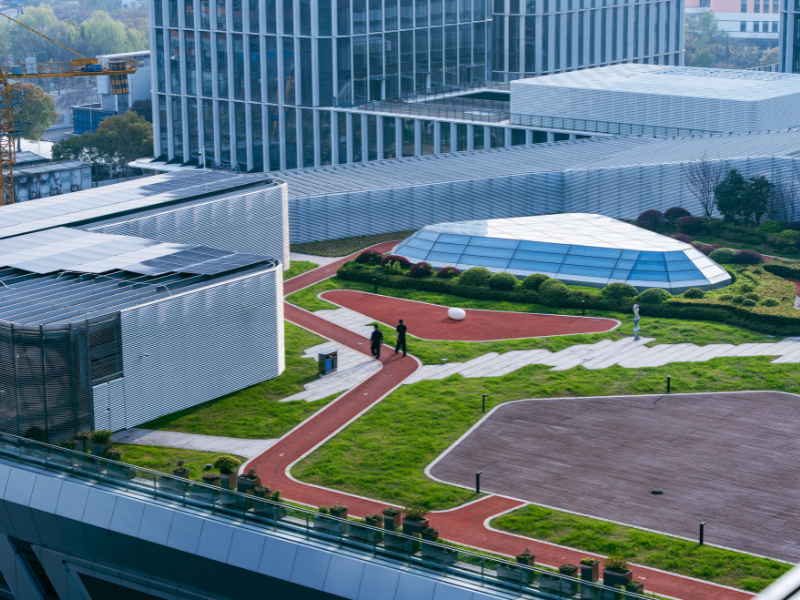
The blue-green roof is much more than just plant matter placed over a structure. Underneath all those grasses, wildflowers, and shrubs lies an elaborate system designed to collect and drain rainwater, storing it for gradual release back into the urban water system.
This concept is inspired by nature itself. The wetlands, forest areas, and well-managed soils help absorb and retain rainwater, allowing it to filter slowly into rivers and groundwater tables without causing flooding. However, urbanization has reduced most natural areas’ water-retention capacity by converting permeable landscapes into impermeable surfaces.
Blue-green roofs restore part of the urban water cycle by allowing rooftops to function as small-scale watersheds. The buildings thus become a solution to the issue of water flow rather than contributing to the problem, and also lower indoor temperatures, increase biodiversity, and purify the air.
One of the best examples of such an approach is Amsterdam. Using the concept of “RESILIO Smart Blue-Green Roofs,” renovations have been carried out in social housing, where intelligent roofs have been installed to collect water beneath soil covered with plants. Using advanced technologies such as sensors, smart valves, and decision support systems, the roofs respond to weather forecasts and release stored water in advance to make space to capture the next storm, thus reducing the burden on the city’s drainage system. Thus, what looks like green roofs are actually small wetlands and water reservoirs working quietly amidst the city.
Instead of bending nature to accommodate cities, the approach of blue-green roofs is to make cities adapt to nature. Blue-green roofs show how some of the best examples of climate infrastructure do not necessarily have to be along the waterfront or underground – they can grow above us, where architecture begins to perform ecological functions traditionally associated with landscapes.
The Secret Life Happening Above the Skyline
The roof of most buildings goes unnoticed by the people below, but many cities are beginning to treat rooftops as active components of environmental infrastructure. Globally, cities have begun to view roofs not just as unused space but as active structures that can store rainwater and keep cities cool.
The push is well underway. With the introduction of its Green Roof Bylaw, Toronto now boasts more than 1,200 green roofs, while Hamburg aims to green 70 percent of eligible new or renovated roofs, using financial incentives to promote this practice. Both examples illustrate how each roof could contribute to managing stormwater for an entire city.
This reflects a broader shift in how cities view the role of buildings within environmental systems. Buildings are no longer stagnant but become active elements of environmental infrastructure, implying that the skyline of tomorrow will not only function like architecture but also like elevated wetlands working on behalf of the city.
The Next Generation of Blue-Green Roofs
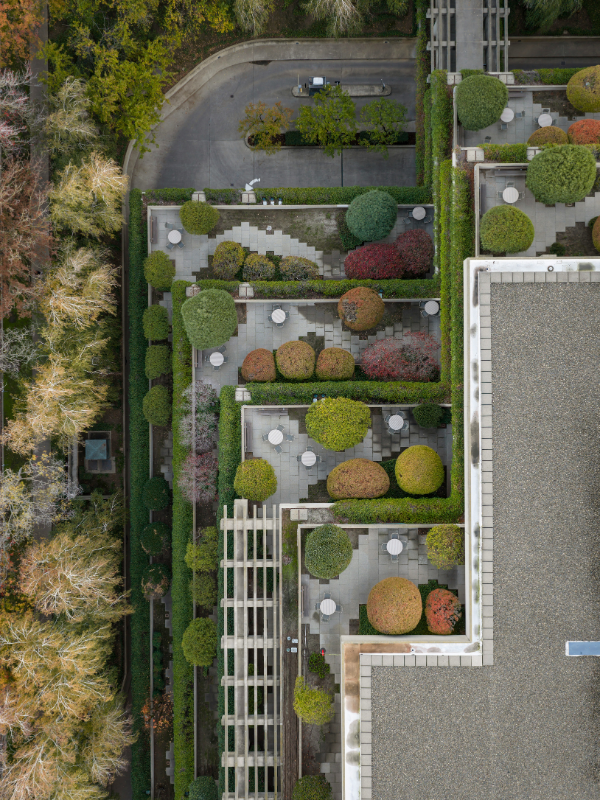
Blue-green roofs have developed from rooftop gardens to something far more complex. Scientists and planners are beginning to view blue-green roofs as an interconnected part of the city’s infrastructure, rather than functioning separately from one another.
Auckland City recently witnessed a collaboration between the Auckland City Council and the University of Auckland that discovered that living roofs could collect up to 80% of rainwater during intense storm events and virtually all the rainfall during lesser storm events. This study is currently being used to guide future planning policies.
However, elsewhere the ambition is becoming even greater. In Singapore, for example, the ABC Waters Program involves mainstreaming blue-green infrastructure in city planning, with over 100 projects identified by 2030 and over 50 already built. The ultimate aim here is to make nature-based stormwater management a standard feature of urban development. Emerging forecasting tools and digital monitoring systems may further integrate blue-green roofs into broader urban water-management networks.
These initiatives extend beyond environmental improvement….
These provide an innovative approach to city resilience, in which climate adaptation, biodiversity, architecture, and citizens’ health can be addressed in a single conversation.
The future urban park need not consume valuable ground space. It might be located high above the streets.
Even Nature Needs Good Engineering
While blue-green roofs can provide visual and ecological benefits, their implementation must be carefully planned before the plants even come into play. Adding water will increase a building’s weight, meaning it needs a structure capable of carrying that load safely.
Amsterdam’s RESILIO project is an excellent example of this dilemma. Researchers discovered that all three main functions of blue-green roofs – maximizing stormwater storage, maximizing evaporation to cool the roof, and ensuring that the plants do not suffer from drought – often stand in opposition to each other. When the water storage layer is full, it is beneficial for plants and cooling, but there will be little space left for incoming precipitation; when the water storage layer is empty, there will be more flood protection, but no water for the plants.
These rooftops are evolving beyond basic roof gardens into sophisticated systems that integrate hydrology, engineering, ecology, and digital technology. Their most revolutionary feature is perhaps not their vegetation but rather their capability to control when to store water and when to release it.
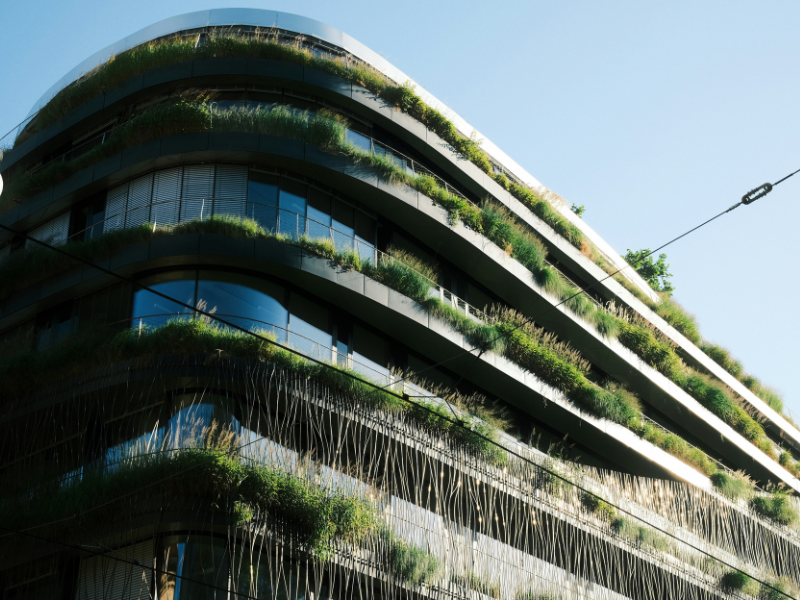
Perhaps the City’s Next Wetland Will Be Overhead
Contemporary skylines are largely defined by glass, steel, and concrete. However, in years to come, it could be remembered for the layers of plant growth silently harvesting raindrops overhead while adapting to the era of more storms and warmer weather. According to the Intergovernmental Panel on Climate Change (IPCC), there will be an increase in the intensity and frequency of rainfall in many areas, necessitating storage facilities.
Blue-green roofs may serve as reservoirs during rain, cooling mechanisms during heat waves, pollinator havens, and small yet important parts of a much greater urban system.
They will perhaps never be judged in terms of their contributions to iconic skyscrapers or mega-structures of engineering; rather, in the form of numerous structures functioning together silently. As forecasting technologies and water-sensitive design continue to develop, blue-green roofs may play a larger role in urban climate adaptation.
Read More on: