
What if the tidal park became the future of the waterfront?
For centuries, cities have built walls, levees, and engineered shorelines to keep water at a distance. Cities have channelized their rivers, covered their creeks, and contained the tides behind massive concrete walls, all in an attempt to find security. However, in light of the rapidly changing climate, a new mindset is emerging.
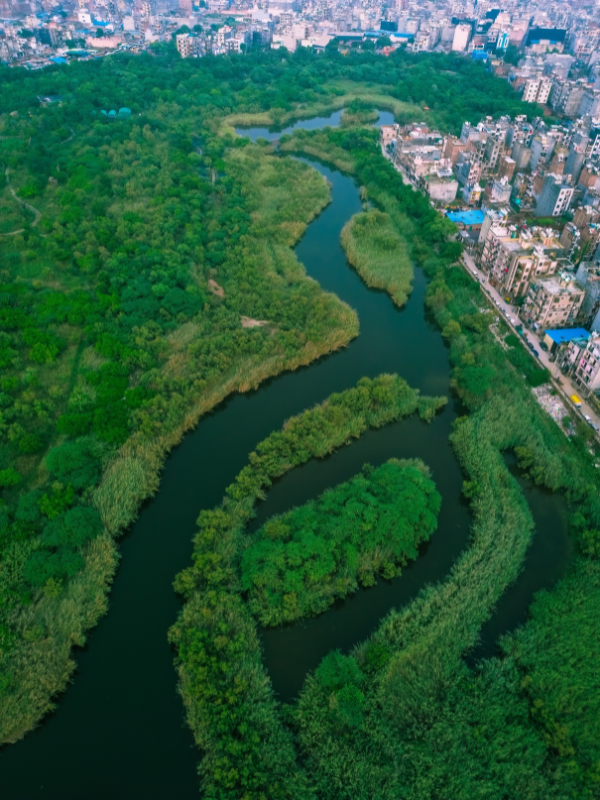
With the tidal park, nature comes back to the urban realm. As an ecological landscape, it merges the public function of parkland with the natural process of the tide. Wetland, parkland, and climate adaptation converge in a landscape designed to accommodate water rather than exclude it.
A Park That Changes with the Water
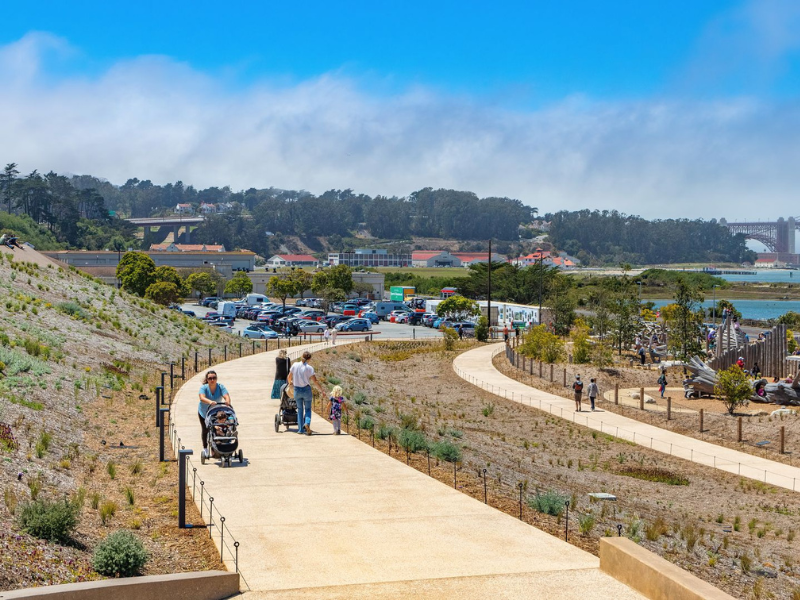
In contrast to conventional parks, the tidal park is designed to change throughout the day, adapting automatically to the tides. The boardwalks are set up so that people can observe the marshes, which are filled with salt water during high tides but later become mudflats with natural vegetation. The rainwater is absorbed into the site rather than overloading the drainage system.
The design draws on ecological functions that wetlands have provided for thousands of years. From flood mitigation to water filtration, carbon storage, fisheries provision, biodiversity, and adaptation to change, wetlands play multiple roles. However, these systems are being degraded at an alarming rate – higher than any other ecosystem type. Delivering a keynote address in Nairobi at the launch of the Global Wetland Outlook for 2025, the Convention on Wetlands said that 22% of the world’s wetlands have been lost since 1970, adding that the cost of degradation could lead to the loss of $39 trillion worth of economic benefits by 2050.
The warning reinforces a growing realization among urban designers: wetlands are not empty land waiting to be developed but vital infrastructure that cities can learn from. By restoring natural tidal landscapes within urban environments, the tidal park transforms these ecological functions into public space, allowing water to move, landscapes to adapt, and communities to reconnect with the coastal rhythms that have shaped civilizations for millennia.
Rediscovering Nature’s Engineering
Long before urban drainage systems existed, wetlands quietly managed water on an extraordinary scale.
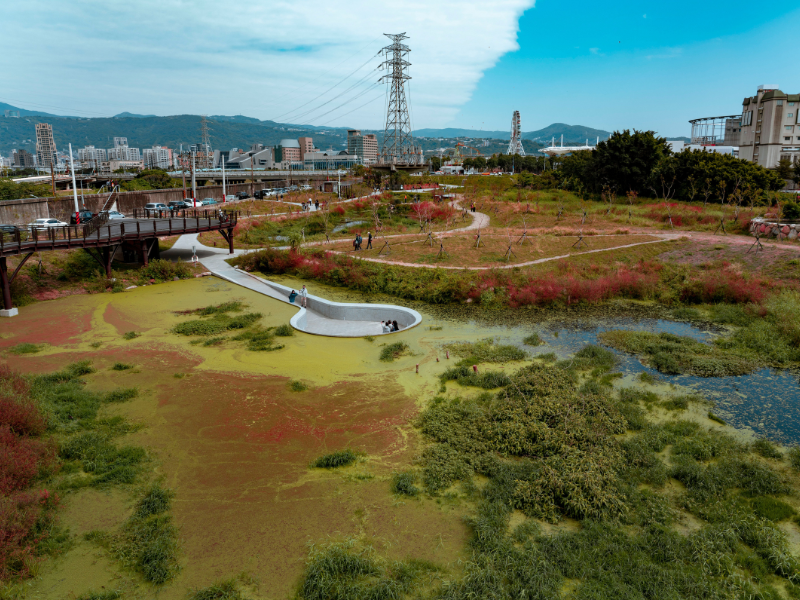
The salt marsh ecosystem reduces wave action, filters sediment, purifies the water, and offers homes to birds, fish, and various other wildlife. These are ecosystems that do not oppose change but constantly adapt to change, thereby making them one of nature’s strongest infrastructures.
In today’s world, these ecological processes have been increasingly implemented in urban areas by designers. The Chinese Sponge Cities initiative involves integrating wetlands into urban development, while wetland rehabilitation is being carried out in Cambodia and Zambia for enhancing flood protection and water security. In these cities, hard edges of wetlands are replaced by marshy plants; porous land allows water infiltration through natural processes, and floodplains are turned into urban parks.
Rather than relying solely on larger engineered defenses, tidal parks suggest how ecological systems can become part of urban infrastructure.
Where the Tidal Park Is Already Returning
A growing number of cities are already testing this approach.
In New York, for example, the Tide Deck at Pier 26 shows what a living ecosystem looks like at a waterfront city space. Walkways allow visitors to view an artificially-created salt marsh, which is flooded and drained in line with two daily tides on the Hudson River. When the tide comes in, oysters and barnacles filter the plankton-filled water, while during low tide, the tide pools and the salt marsh offer a place for protection for the waterfowl and other animals. The plants growing in the salt marsh include the native Spartina alterniflora, helping stabilize soil erosion on the shorelines. In nearby Brooklyn Bridge Park, salt marshes have been created by means of using native plants as a way to preserve the shoreline and create wildlife habitat in an exceptionally dense urban landscape.
Hunter’s Point South Waterfront Park is an example of a site where ecological restoration is integral to a more inclusive vision for sustainable and affordable city living. Transforming the once-industrial 11 acres of waterfront land into a resilient park by introducing new wetlands, gardens, lawns, and trails that facilitate stormwater management, while also facilitating residents’ connection to the East River, the redevelopment of the area is part of a much bigger project that will provide 5,000 new units, 60% of which are forever affordable.
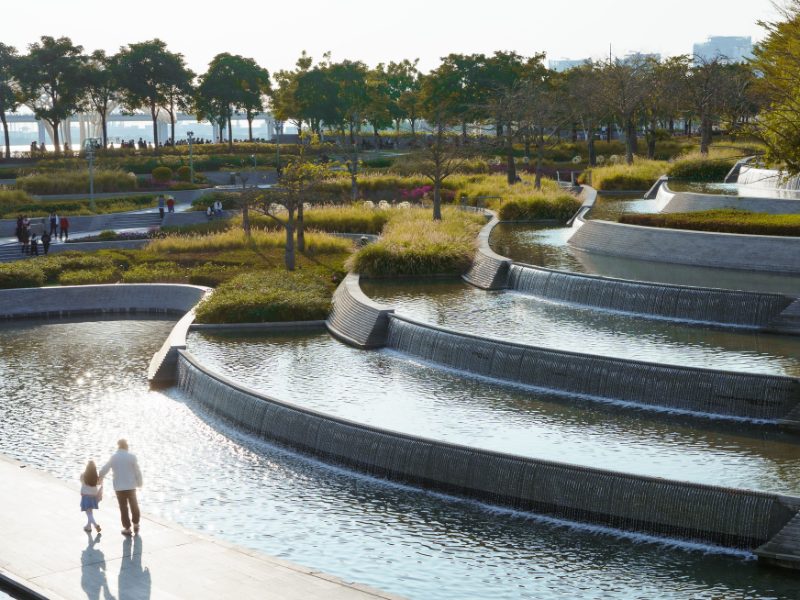
The Keilehaven Tidal Park in Rotterdam exemplifies how the revival of tidal parks can transform urban water’s edges. Conceived in conjunction with Rotterdam’s “The River as a Tidal Park” vision, the initiative involves the creation of a tidal landscape in what was once a harbour area. Some areas in the park are only accessible during low tide, giving visitors the opportunity to witness firsthand the dynamics of the delta’s ecosystem, while different levels of wetness/dryness provide niches for the habitation of birds, fish, shellfish, and indigenous flora. The park was designed through nature-sensitivity, with the use of recycled urban elements in construction, and acts as a template for deltaic cities on how to integrate nature into their waterfronts.
The Idea Is Reaching New Shores
The rationale underlying the tidal park concept is also gaining ground outside North America.
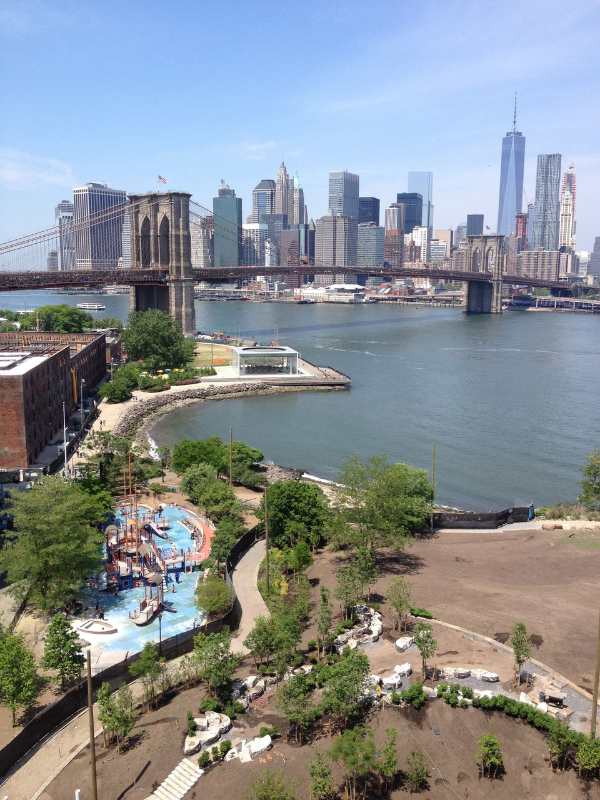
In Auckland, approaches towards adapting the shoreline have come to take into account the benefits of incorporating natural coastal processes along with accessibility for people. The Harbourview-Orangihina Park contains a large area of intertidal zone where rare shorebirds live, whereas the removal of manmade barriers in Āwhitu Regional Park restored the wetlands’ natural tidal action.
In other instances, flood-control measures are being developed that incorporate both ecological restoration and recreation, showing that it is possible for parks to serve as places where excess water can be stored while maintaining their recreational value.
Given that sea levels keep rising, these projects give us a preview of what the future adaptation might hold.
More Than Climate Infrastructure
There is no doubt that tidal parks provide benefits that go well beyond simply protecting from floods.
Wetlands purify water of pollution before it enters rivers and oceans. Local plants reduce temperature in cities during heatwaves. Wetlands become habitats for wildlife that lost their homes because of urbanization.
What is probably even more important is that such landscapes remind people of coastal processes.
Visitors can observe tides reshaping the landscape, wildlife returning to restored habitats, and the ongoing relationship between cities and water.
The park is not just a system but a teaching tool that shows communities that resilience requires more than engineering.
Beyond the Seawall
The future waterfront might not be about bigger walls and pumps, but about water-absorbing environments that rejuvenate ecosystems and adapt to changing weather.
The comeback of the tidal park is symbolic of the new direction urbanism takes – drawing ideas from wetlands, estuaries, and natural edges of land, rather than trying to beat nature.
With the future of cities becoming ever-more uncertain, the greatest success stories among coastal areas might well belong to those that opt for mobility over immobility, adaptation over resistance, and ecology over exclusion.
Tomorrow’s waterfront will remain an area where people can stroll, congregate, and contemplate. But behind these activities, its edges may be engaged in what is perhaps the oldest ecological activity on earth: cohabitation with the tide, not struggle against it.
In this sense, the tidal park functions not only as a public space but as a model for how future waterfronts might evolve.
Read More on: