
On a Mediterranean island in August, water has competing jobs.
It fills hotel pools, runs through restaurant kitchens, irrigates gardens, and meets the daily needs of thousands of residents. At the same time, rainfall may be scarce, and visitor numbers may be close to their annual peak.
This is the difficult geography of tourism water scarcity: the places most dependent on summer visitors can face their greatest demand precisely when freshwater is under the most pressure.
The scale of that imbalance can be striking. The European Environment Agency reports that tourist water consumption can range from 300 to 2,000 liters per person per day, depending on the destination and facilities, compared with average EU household consumption of around 124 liters per person per day. Tourism accounts for about 5% of the EU’s annual public water abstraction, but the pressure is highly seasonal and concentrated in particular destinations.
For islands, that concentration matters. Unlike a large mainland city, there may be no neighboring reservoir to draw from when demand rises.
The response is beginning to reshape how holiday destinations think about water.
When an Island Cannot Simply Find Another Tap
Greece offers a clear picture of the problem.
In February 2026, the country’s Ministry of Environment and Energy announced funding for 42 water-scarcity projects worth more than €75 million.
The program includes desalination facilities and water-network improvements in places including Astypalaia, Folegandros, Lipsi, Paxos and Alonnisos.
More funding followed. In July, the government allocated €65 million for water-supply projects, alongside a planned €30 million specifically for island water infrastructure.
Desalination offers islands something geography cannot: a freshwater source sitting directly beside them.
But producing water from the sea requires infrastructure and energy. The challenge is therefore shifting from simply finding water to finding ways of producing it more efficiently.
What If Tourism Helped Pay for the Water?
The Balearic Islands are experimenting with an interesting answer to another question: who pays?
In 2025, the islands’ water agency ABAQUA awarded contracts worth around €8.3 million to modernize desalination plants in Alcúdia, Andratx, Ciutadella and Santa Eulària de Riu.
The upgrades include energy-recovery systems expected to save more than 4.48 million kWh of electricity each year.
What makes the project particularly relevant to tourism water scarcity is its funding source: the Sustainable Tourism Tax.
In other words, money generated through the visitor economy is being directed back into infrastructure that supports life on the islands.
The connection is continuing. In April 2026, the Balearic government moved forward with plans to expand desalination capacity at Alcúdia and Andratx, again using Sustainable Tourism Tax funding.
It offers a model for destinations facing similar pressures: directing tourism revenue towards water infrastructure can help distribute the costs of rising demand, rather than leaving local residents to bear them alone.

The Hotel Where Water Gets a Second Shift
Building more supply is only half of the equation.
Hotels can also use less.
The EU-funded DEMEAUMED project tested water-treatment and reuse technologies at Hotel Samba in Lloret de Mar, Spain.
Rather than allowing every liter to make a single journey through the property, the project explored treating water for reuse in applications such as toilet flushing and irrigation.
The European Commission reported that the water-treatment and reuse approaches studied could potentially reduce freshwater consumption by approximately 30–50% in the project setting.
That matters because some of the most visible features of a holiday resort – landscaped grounds, pools, and intensive laundry and cleaning operations – sit within the same local water system used by surrounding communities.
Water reuse cannot remove tourism water scarcity on its own. But it changes an important part of the equation: how much new freshwater each visitor requires.
Could the Sea Power Its Own Desalination?
The next shift may happen offshore.
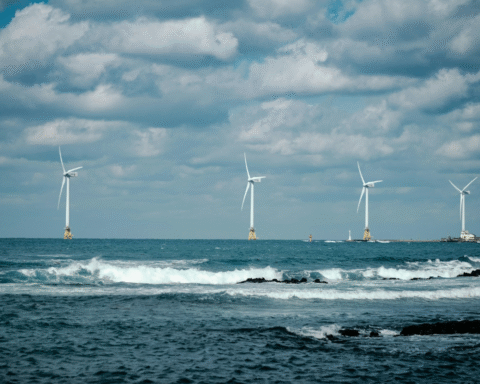
In the Canary Islands, the EU-backed DESALIFE project is exploring desalination powered by ocean waves.
The European Commission provided approximately €6 million in EU funding for a project designed to deploy offshore desalination technology near Gran Canaria.
The concept developed by Ocean Oasis uses wave energy to support the desalination process, producing freshwater at sea before sending it ashore.
It remains an emerging solution rather than an answer ready for every island. But the idea is compelling: instead of transporting water to a dry island or relying solely on energy-intensive infrastructure on land, the surrounding sea could provide both the raw water and some of the energy needed to treat it.
The Future May Be About Using Water Twice
There is unlikely to be one engineering fix for tourism water scarcity.
Desalination can create new supply. Water reuse can reduce demand. Better networks can cut losses. Tourism taxes can help finance infrastructure. New technologies may eventually change how islands produce freshwater altogether.
But there is also a simpler question beneath all of them.
How much water does a destination need to consume to remain a desirable place to visit?
The most resilient tourism destinations may not be those that continually find more water for more visitors. They may be those that redesign hotels, infrastructure, and visitor habits so that the same limited supply does more.
Ultimately, managing tourism water scarcity is not only about using less water. It is also about deciding who pays for the infrastructure, who benefits from tourism, and how residents’ access to freshwater is protected.
Read More on: