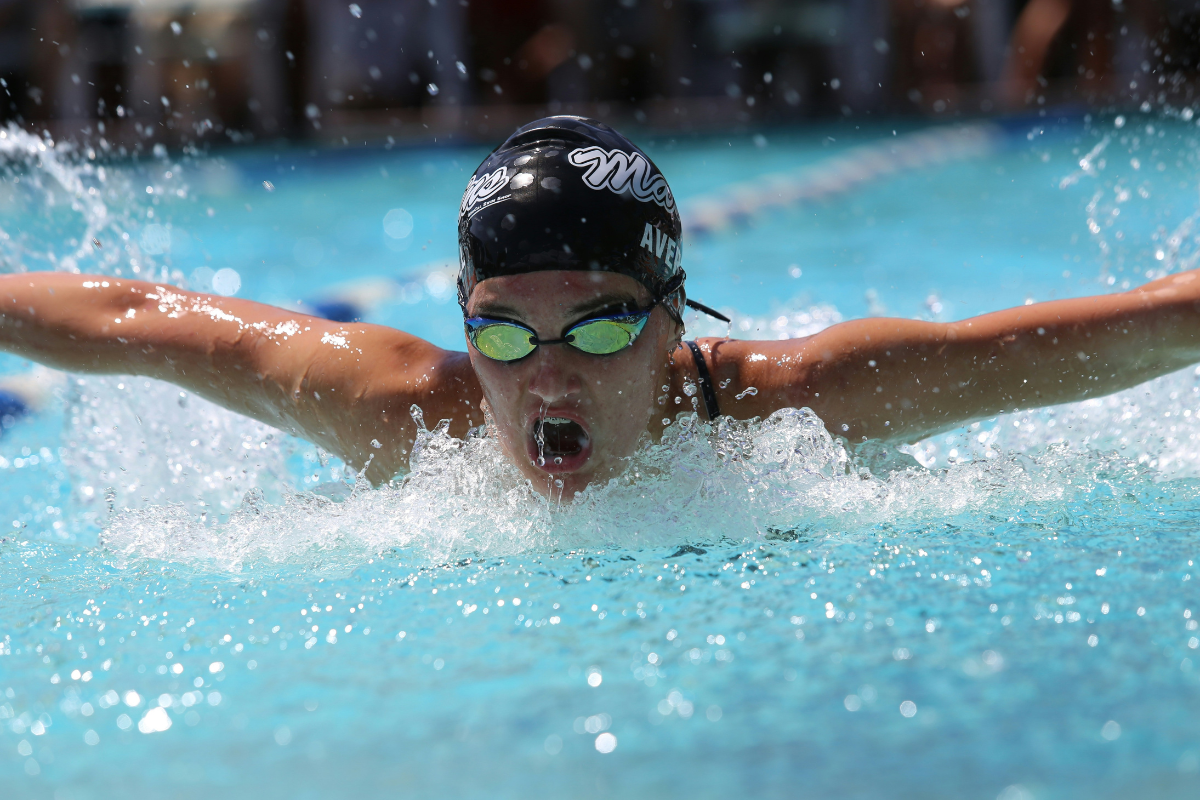

Swimming has traditionally offered a rare break from digital life. Beneath the surface, no phone notifications or screens demand attention. Just breathing, movement, and the steady rhythm of water.
That experience is beginning to change.
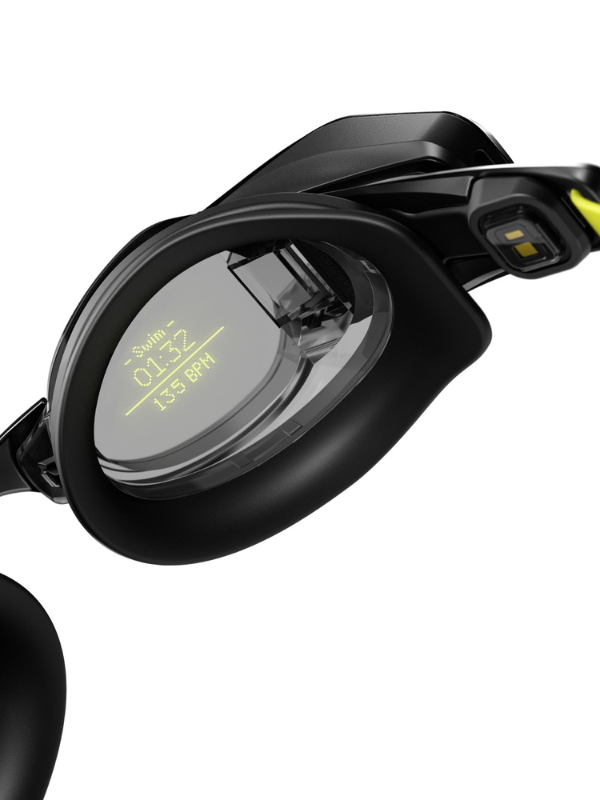
Smart swimming goggles now place performance information directly within a swimmer’s field of vision. Distance, pace, stroke rate, and even heart rate can appear without stopping at the pool wall or checking a watch.
For competitive swimmers, this offers immediate feedback that was once difficult to access during a session. For recreational swimmers, it introduces a new way to understand technique, endurance and progress.
Yet as wearable technology becomes part of the swimming experience, a more interesting question emerges: does having more information make us better swimmers, or simply more conscious of every movement?
When the Pool Becomes a Digital Dashboard
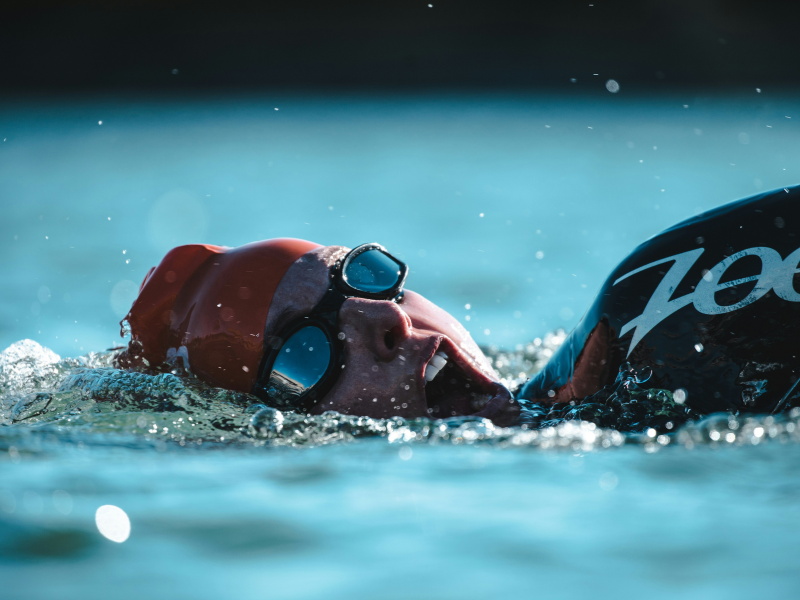
Unlike conventional goggles, which primarily protect the eyes and improve underwater visibility, smart swimming goggles combine miniature displays, motion sensors, and software to interpret movement.
One example is Canadian technology company FORM, whose goggles use an augmented reality display to present swimming metrics while the wearer moves through the water.
Depending on the model and swimming mode, these measurements can include distance traveled, length count, split times, stroke rate, stroke count, and pace.
The technology combines onboard motion sensing with algorithms that identify swimming movements. Some models also incorporate optical heart-rate monitoring, while compatible watches can provide additional GPS information for open-water sessions.
The result is a change in how swimmers receive feedback. Instead of reviewing their performance after completing a set, they can respond to selected measurements during the swim itself.
For a swimmer trying to maintain a consistent pace over 400 meters, that distinction matters. Small changes in speed or stroke rhythm become visible, with time to adjust.
The pool is no longer simply a place to practice technique. It is becoming a place where technique can be continuously measured.
From Lap Counting to Digital Coaching
Smart swimming goggles are moving beyond basic performance tracking, and manufacturers are exploring ways to turn swimming data into practical training guidance.
In November 2025, Canadian company FORM launched HeadCoach 2.0, a software update that analyses swimming technique and individual goals to deliver personalized feedback after each session. The system identifies areas for improvement and suggests what swimmers should focus on during their next workout.
Other manufacturers are taking different approaches. American swim equipment company FINIS introduced its Smart Goggle, powered by Ciye, in 2021. Its removable Smart Coach module displays lap counts, split times, stroke rates, and rest periods within the swimmer’s peripheral vision. After training, the companion app provides detailed performance analysis, including stroke type and pacing. The removable module also lets swimmers replace worn goggles without buying the electronics again.
Meanwhile, Holoswim has developed augmented reality swimming goggles with adjustable displays and optional prescription lenses for nearsighted swimmers, extending the technology’s accessibility to people with different visual needs.
Beyond in-lens displays, companies such as Phlex are developing connected swimming analysis systems for coaches and teams. Its platform uses wearable sensors and software to collect performance information, allowing coaches to review individual training patterns and make more informed decisions.
Together, these developments reflect a wider shift in swimming technology, from simply recording distance and time towards interpreting performance and supporting individual training decisions.
For recreational swimmers without regular coaching, such tools may offer greater structure and help identify changes in pace or stroke consistency. For competitive athletes, they provide another source of information alongside traditional coaching.
Yet digital feedback has limitations. Sensors can identify measurable patterns, but they cannot fully interpret every technical weakness, physical limitation, or environmental condition.
The question is no longer whether swimming performance can be measured in real time, but whether that information can be translated into meaningful improvements without distracting swimmers from the water itself.
The Research: More Feedback, But Not Necessarily More Speed
Scientific research is beginning to clarify what smart swimming goggles can achieve.
A 2023 study published in Frontiers in Sports and Active Living examined the accuracy of augmented reality swimming goggles against video analysis. Researchers assessed 2,354 pool lengths completed by 36 recreational swimmers and triathletes and found that the tested goggles correctly identified swimming strokes in 99.7% of cases, while pool-length counting accuracy reached 99.8%. The findings suggest that smart swimming goggles can reliably capture fundamental performance metrics under controlled pool conditions.
But accurate measurement is only one part of the equation. The more important question is whether access to that information improves performance.
A 2025 randomized controlled trial published in the Journal of Sports Sciences examined whether real-time visual feedback could improve swimming training consistency. The study involved 57 recreational swimmers prescribed 35 workouts over 12 weeks. Participants using augmented reality goggles followed prescribed workout distances more accurately in two of the three training-volume groups. Among those following the highest-volume training plan, compliance with prescribed interval effort reached 69%, compared with 58% among swimmers without real-time feedback. However, improvements were limited to certain training measures, suggesting that immediate feedback may support structured workouts without necessarily improving every aspect of performance.
A subsequent study published in October 2026 in Medicine & Science in Sports & Exercise offered an important qualification. Drawing on the same 57-participant, 12-week trial, researchers examined changes in critical swim speed, an indicator of sustainable swimming performance, alongside motivation. Swimmers receiving real-time visual feedback improved their critical swim speed by an average of 6.8%, compared with 6.3% among those training without feedback. However, the difference was not statistically significant, suggesting that access to immediate performance data did not produce additional measurable improvements in swimming speed or motivation during the study.
In other words, smart goggles helped participants follow certain training instructions more closely, but did not produce measurably greater improvements in swimming performance over the study period.
The findings challenge a familiar assumption in wearable technology: that more immediate feedback automatically leads to better results.
What Heart Rate Can Reveal Beneath the Surface
Heart-rate monitoring is another area where swimming wearables are developing.
Tracking cardiovascular effort in water presents practical challenges. Wrist-based devices can be affected by movement, water, and sensor contact, while chest straps are not always comfortable for swimmers.
In April 2024, FORM introduced its Smart Swim 2 goggles, incorporating an optical heart-rate sensor positioned against the swimmer’s temple. The integrated system lets swimmers monitor their heart rate through an augmented reality display without a separate wearable device.
A 2026 study published in the Journal of Sports Sciences evaluated the accuracy of heart-rate monitoring in smart swimming goggles. Researchers tested 25 experienced recreational swimmers and compared readings from FORM Smart Swim 2 goggles with a Garmin HRM-Swim chest strap. The goggles recorded an average heart rate of 136 beats per minute, compared with 135 beats per minute from the reference device, with a mean absolute percentage error of approximately 1.0%. The findings suggest that integrated optical sensors can provide reliable average heart-rate measurements during structured swimming sessions.
For endurance athletes, this information can help distinguish between swimming faster and working harder. Two sessions with similar lap times may involve different levels of cardiovascular effort.
Still, the results apply to the tested device and participants. They do not establish that every smart swimming goggle measures heart rate with equivalent accuracy.
Beyond the Pool: Finding Direction in Open Water
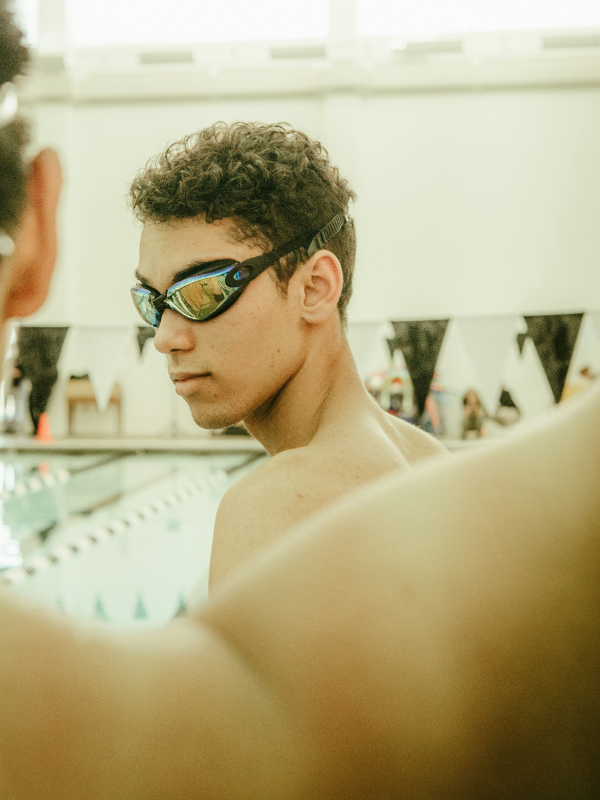
The usefulness of swimming data becomes more complex outside a controlled pool.
In open water, swimmers must navigate currents, waves, changing visibility, and the absence of lane markings. Maintaining a consistent direction can be difficult, particularly over longer distances.
Recent developments in smart swimming goggles are beginning to address these challenges. Newer models incorporate digital compass technology and augmented reality displays that provide directional guidance within the swimmer’s field of vision. Other innovations include effort-based pacing metrics that help swimmers assess intensity without relying entirely on GPS-derived speed.
These features reflect a broader shift in wearable swimming technology, from measuring performance to assisting with navigation and decision-making in open water.
For triathletes and long-distance swimmers, directional guidance could help reduce unnecessary deviations from a planned course, potentially conserving energy and improving efficiency. Real-time pacing information may also help swimmers maintain a more consistent effort despite changing water conditions.
However, open-water environments remain unpredictable. Currents, weather, and visibility can change quickly, and digital navigation tools cannot account for every hazard.
As smart swimming goggles become more sophisticated, their value may extend beyond performance tracking. Yet even the most advanced systems remain supplementary tools, not substitutes for environmental awareness, appropriate safety precautions, and open-water experience.
A More Durable Future for Swimming Technology?
As smart swimming goggles become more sophisticated, manufacturers are reconsidering how these devices are designed, maintained, and eventually replaced.
Conventional swimming goggles are vulnerable to scratched lenses, deteriorating anti-fog coatings, and worn seals. Adding electronic displays, sensors and rechargeable batteries introduces further challenges, particularly when equipment is regularly exposed to chlorine, saltwater and moisture.
Recent product developments suggest a growing focus on durability. In July 2025, a new generation of smart swimming goggles was introduced with scratch-resistant Corning Gorilla Glass 3 protecting both the inner and outer lenses, alongside a replenishable anti-fog treatment. According to the manufacturer’s (FORM) launch announcement, the supplied treatment provides more than 175 applications, offering an alternative to conventional factory-applied coatings that can deteriorate over time.
Other designs incorporate detachable electronic modules, allowing swimmers to replace worn goggle frames without discarding the technology inside.
These innovations could extend the useful life of swimming equipment, although improved physical durability does not necessarily translate into a smaller environmental footprint.
Unlike conventional goggles, connected models contain batteries, electronic components and specialized materials that complicate repair and disposal. Their longevity also depends on software compatibility, replacement-part availability and continued technical support.
This raises a wider question for the growing swimming technology industry: can manufacturers develop equipment that remains useful for years rather than becoming obsolete with each new product generation?
For technology designed to enhance experiences in pools, lakes and oceans, durability should be measured not only by resistance to water and wear, but also by how much equipment ultimately becomes waste.
The Price of Knowing Every Stroke
Smart swimming goggles introduce both financial and psychological considerations to an activity that has traditionally required little more than basic equipment and access to water.
Unlike conventional goggles, these devices combine electronic displays, motion sensors and connected software, often at a considerably higher price. Some manufacturers also offer subscription-based coaching, personalized training programs and advanced performance analysis, creating ongoing costs beyond the initial purchase.
For competitive swimmers and dedicated athletes, access to detailed performance data may justify the investment. Recreational swimmers, however, may find that the additional features offer limited benefits compared with simpler tracking methods.
There is also the question of attention.
Swimming has long been valued for its repetitive movements, controlled breathing and relative freedom from everyday digital distractions. Introducing a constant stream of pace, distance and stroke information changes that experience.
While immediate feedback may encourage swimmers to meet training goals and track progress, it can also shift attention to numerical targets rather than physical sensations, technique, and enjoyment.
The World Health Organization’s physical activity guidelines recommend that adults undertake 150 – 300 minutes of moderate-intensity aerobic activity each week, or 75 – 150 minutes of vigorous activity, or an equivalent combination. The guidelines emphasize regular physical movement and its associated health benefits, reminding us that exercise does not need sophisticated technology to be worthwhile.
As wearable swimming technology becomes more advanced, its value may depend less on how much information it provides and more on whether that information improves the experience.
For some swimmers, measurable progress brings motivation and purpose. For others, the greatest benefit of swimming remains the opportunity to disconnect, move freely and enjoy the water without another screen demanding attention.
The Future of Swimming May Be More Personal, Not More Digital
The next stage of smart swimming technology is likely to involve increasingly personalized feedback, improved sensor accuracy, and closer integration between wearable devices and training platforms.
Recent developments already show this direction. Instead of simply recording what happened during a swim, connected systems are beginning to interpret performance and suggest what to practice next.
That creates opportunities for athletes who want greater control over training, particularly those without frequent access to specialist coaching.
Yet the latest research also offers a useful reminder: technology can make training more measurable without necessarily making it more effective.
The strongest future for smart swimming goggles may therefore lie in selective feedback, giving swimmers the information they need without overwhelming the experience itself.
After all, swimming does not become more valuable simply because every stroke can be counted.
The real achievement will be technology that helps people understand their movement while preserving the quiet experience of swimming.
Read More On: