
A waterproof jacket has a simple job: keep the rain out. Whether crossing a mountain ridge, sailing through rough weather, or walking through a downpour, we expect outdoor clothing to protect us without thinking much about the materials that make it possible.
For decades, that protection often relied on per- and polyfluoroalkyl substances (PFAS), a family of synthetic chemicals valued for their resistance to water, oil, and stains. Their durability, however, comes with an environmental cost. Many PFAS persist for years, accumulating in water, soil, and living organisms.
Now, PFAS-free waterproof gear is moving from experimental development into everyday outdoor clothing. New membranes, alternative coatings, and stricter regulations are changing how manufacturers approach waterproofing. Yet replacing chemicals forever raises another question: can the industry maintain performance without creating new environmental problems?

The Chemistry Behind a Dry Jacket
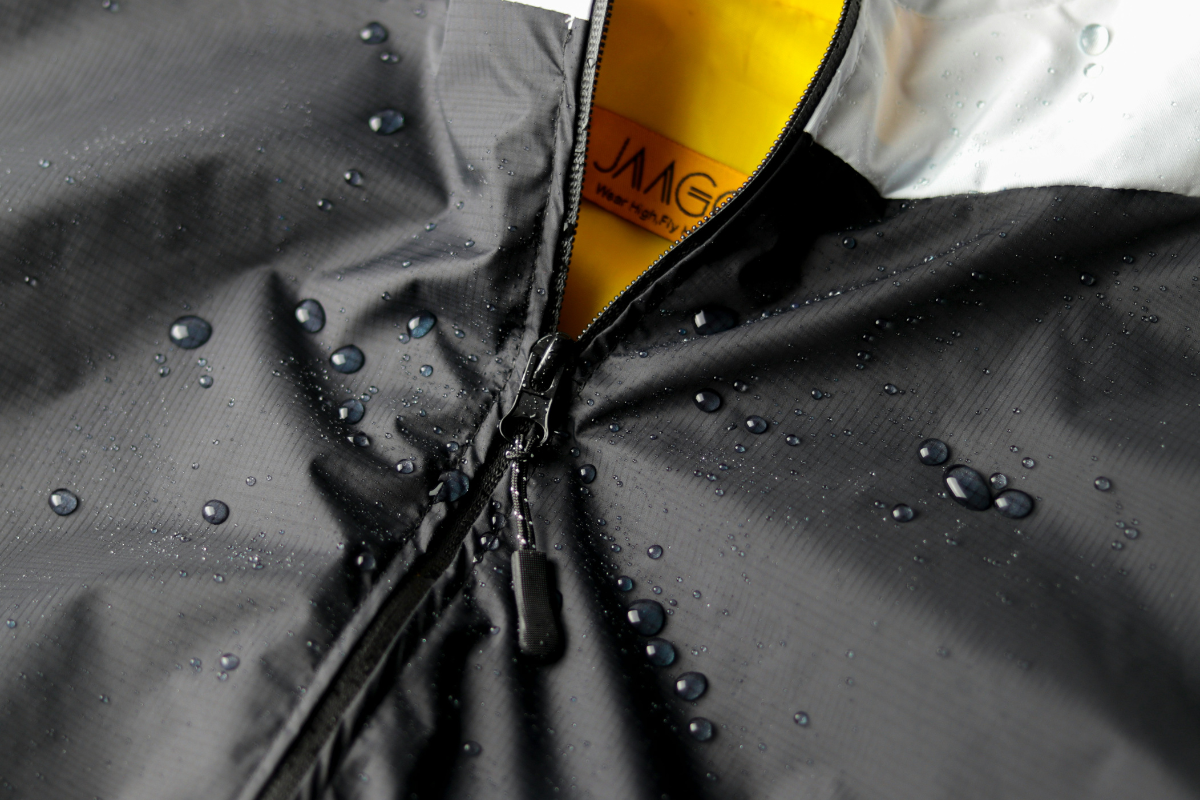
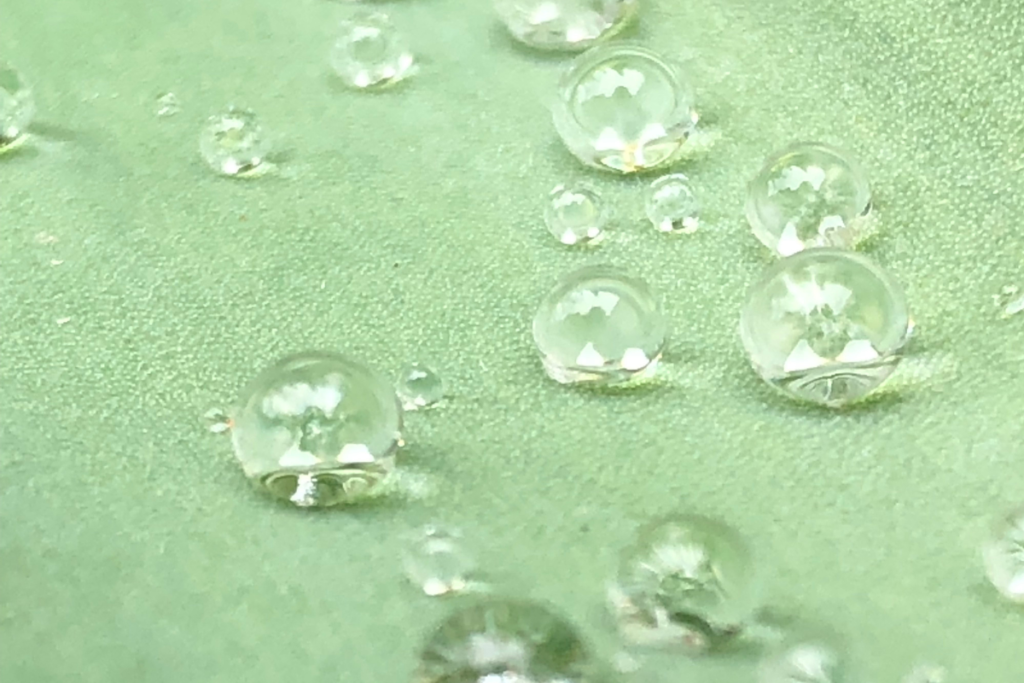
Waterproof clothing depends on more than a single protective coating. Many technical jackets combine a waterproof membrane with an outer durable water-repellent (DWR) finish that encourages rain to bead and roll off the fabric.
PFAS have historically been used in both components, although not every waterproof garment contains them.
Removing these substances requires manufacturers to rethink different layers of a product. A membrane must prevent water penetration while allowing moisture vapor to escape, while the outer finish must continue repelling rain after repeated washing, abrasion, and exposure to dirt.
The distinction matters because a jacket can remain technically waterproof even when its outer fabric becomes saturated. However, this wetting out can make the garment feel heavier and less comfortable, while reducing its ability to release moisture.
For manufacturers, the challenge is not simply finding something that repels water. It is finding something that keeps working.
When Environmental Promises Become Legal Deadlines
The transition towards PFAS-free waterproof clothing is no longer driven by voluntary commitments alone.
In France, legislation adopted in February 2025 introduced restrictions on PFAS in clothing, footwear, and waterproofing treatments from January 2026, with exemptions for certain protective equipment and transitional arrangements for existing stock. The restrictions are set to expand to other textile products in 2030, although specified essential and industrial applications will remain exempt.
Denmark has also introduced restrictions on PFAS in consumer clothing, footwear, and certain waterproofing treatments. Although the legislation took effect in July 2025, restrictions on the import and sale of covered products became applicable on 1 July 2026, and retailers may sell existing stock until 1 January 2027.
Across the European Union, restrictions on PFHxA and related substances began applying to several consumer products in October 2026. These measures do not amount to a complete ban on all PFAS, but they are narrowing the chemicals manufacturers can use.
The United States presents a different picture, with restrictions varying between states. In New York, a ban on the sale of new apparel containing intentionally added PFAS took effect in January 2025, while specialized outdoor clothing designed for prolonged exposure to extreme wet conditions faces similar restrictions from January 2028.
These distinctions reveal a difficult regulatory balance. Governments want to reduce persistent chemical pollution, but specialized protective equipment may require additional testing before suitable alternatives can be adopted.
For outdoor brands operating internationally, the result is a changing regulatory landscape that increasingly favors chemical innovation.
From Mountain Jackets to a New Generation of Membranes
Some of the most visible progress is already appearing in commercial outdoor gear.
American outdoor clothing company Patagonia has spent years moving away from PFAS-based technologies. By its Spring 2025 product transition, the company had eliminated intentionally added PFAS from its new styles.
Its waterproof collections now include products incorporating expanded polyethylene (ePE) membranes, an alternative to traditional expanded polytetrafluoroethylene (ePTFE).
Similarly, GORE-TEX has introduced ePE membrane technology designed to deliver waterproof, windproof, and breathable performance without intentionally added PFAS.
These developments demonstrate that PFAS-free waterproof gear is no longer confined to research laboratories.
However, ePE remains a synthetic polymer, and replacing fluorinated materials does not automatically resolve concerns surrounding fossil-derived resources, manufacturing emissions, or end-of-life waste.
The industry’s next challenge is therefore broader than removing one chemical family. It must consider the environmental footprint of the entire garment.

Frankfurt’s Textile Laboratories Offer a Different Future
While established outdoor brands are redesigning membranes, researchers are exploring entirely different ways to make textiles repel water.
At Techtextil 2026 in Frankfurt, award-winning innovations offered a glimpse of how future waterproof materials might be developed. Among them were a Swiss plasma-based technology that makes yarns water-repellent without PFAS or fresh water during coating, and a French textile treatment derived from agricultural waste. Both demonstrated promising alternatives to conventional fluorinated finishes.
Instead of relying on conventional PFAS-based treatments, the process uses organosilicon chemistry and is designed to avoid fresh-water consumption during coating.
The Swiss plasma-based process uses organosilicon chemistry instead of conventional PFAS-based treatments and is designed to avoid freshwater consumption during coating.
Another award-winning innovation came from French start-up H&B Materials, which is developing PFAS-free water-repellent treatments using fatty acids derived from agricultural waste. Rather than relying on conventional surface coatings, its patented process chemically bonds plant-based water-repellent compounds directly to cellulose fibers, offering a promising alternative to traditional textile finishes.
These technologies are promising, but they remain at different stages of commercial development. Their performance under prolonged exposure, repeated washing, and demanding outdoor conditions will determine how widely they can be adopted.
A laboratory breakthrough is only the beginning of a successful material transition.
The Replacement Problem Nobody Can Ignore
The outdoor industry’s earlier attempts to move away from harmful chemistry offer an important warning.
When concerns emerged around long-chain C8 PFAS, manufacturers increasingly adopted shorter-chain C6 alternatives. These were initially viewed as a way to maintain water repellency while reducing certain risks.
Yet shorter-chain PFAS remain persistent, and some are highly mobile in the environment.
Patagonia’s earlier attempt to replace long-chain C8 chemicals with shorter-chain C6 alternatives offers an important lesson. Initially considered less harmful, C6 treatments later posed significant environmental concerns. The company has since acknowledged the transition as a case of “regrettable substitution,” highlighting the risks of replacing one problematic chemical with another.
A February 2025 report from Washington State’s Department of Ecology highlights the challenges of moving away from PFAS in outdoor gear. Of the twelve apparel, footwear, and equipment manufacturers surveyed, ten still used PFAS in their products, though seven planned to phase them out. Eight manufacturers had already introduced PFAS alternatives, yet seven still used PFAS in some products. The findings suggest that while the industry is making progress, adopting alternative materials does not necessarily mean abandoning forever chemicals altogether.
Introducing a new material, in other words, does not necessarily mean an entire product or supply chain has become PFAS-free.
The same caution applies to newer technologies. A plant-derived coating is not automatically biodegradable, while a fluorine-free synthetic membrane is not necessarily free from other environmental impacts.
Independent chemical assessments and lifecycle studies remain essential.
Can Cleaner Gear Survive the Elements?
For everyday rainwear, alternative waterproof technologies are becoming increasingly practical. However, demanding environments introduce additional challenges.
Drysuits used for diving, sailing, and cold-water activities must withstand sustained water exposure, movement, abrasion, and pressure. Their effectiveness depends on membranes or coatings, but also on seams, seals, zippers, and overall construction.
A promising water-repellent finish cannot, by itself, establish that an entire drysuit will perform safely.
Durability is another concern.
A 2025 study published in the Journal of Hazardous Materials found that aging, washing, and abrasion can influence how PFAS are released from waterproof outdoor fabrics. Researchers observed PFAS migrating from outer water-repellent layers into inner fabrics, while repeated washing increased chemical release and microfibre shedding. The findings highlight how waterproof clothing can contribute to environmental pollution throughout its useful life, not just during manufacturing or disposal.
Meanwhile, a July 2026 review published in npj Advanced Manufacturing examined emerging PFAS-free waterproof-breathable membrane technologies, including electrospinning, film stretching, and other polymer processing techniques. The researchers explored how these approaches could deliver effective water protection and breathability while addressing challenges involving durability, environmental impact, and large-scale manufacturing.
These approaches offer opportunities to improve membrane structures, but researchers continue to investigate trade-offs involving breathability, mechanical strength, production costs, and durability.
A broader environmental assessment is also needed. If a replacement treatment wears away quickly and causes consumers to discard garments sooner, some sustainability benefits could be reduced.
The goal should be equipment that is both chemically safer and built to last.
Beyond Forever Chemicals: What Comes Next?
The future of waterproof outdoor gear may involve more than replacing traditional coatings.
Plasma-treated yarns could allow manufacturers to modify textile surfaces with greater precision. Electrospun membranes may offer new ways to balance water resistance and breathability, while renewable feedstocks could reduce dependence on conventional petrochemical ingredients.
By 2030, stricter regulations and continuing research may make PFAS-free technologies increasingly common across outdoor clothing.
However, broader adoption will depend on transparent testing, scalable manufacturing, and evidence that alternative materials perform reliably throughout a product’s lifespan.
Another challenge remains in wardrobes and waste streams worldwide. Older waterproof garments remain in circulation, and removing PFAS from new production does not eliminate the substances already present in discarded textiles.
The European Environment Agency has highlighted the complications PFAS create for textile recycling and waste management, reinforcing the need to consider what happens after a garment reaches the end of its useful life.
A Better Way to Stay Dry
The outdoor industry has already demonstrated that effective waterproof clothing can be produced without intentionally added PFAS. What remains uncertain is whether every application can achieve the same durability and protection with alternatives that have a demonstrably lower environmental impact.
The most encouraging developments look beyond a single chemical replacement, examining how materials are sourced, manufactured, maintained, and eventually discarded.
For consumers, the next step is to look beyond a PFAS-free label and ask how a product performs, how long it lasts, and what happens when it wears out.
After all, the future of waterproof gear should be measured not only by how well it keeps water away, but also by how carefully it protects the surrounding environment.
Read More On: