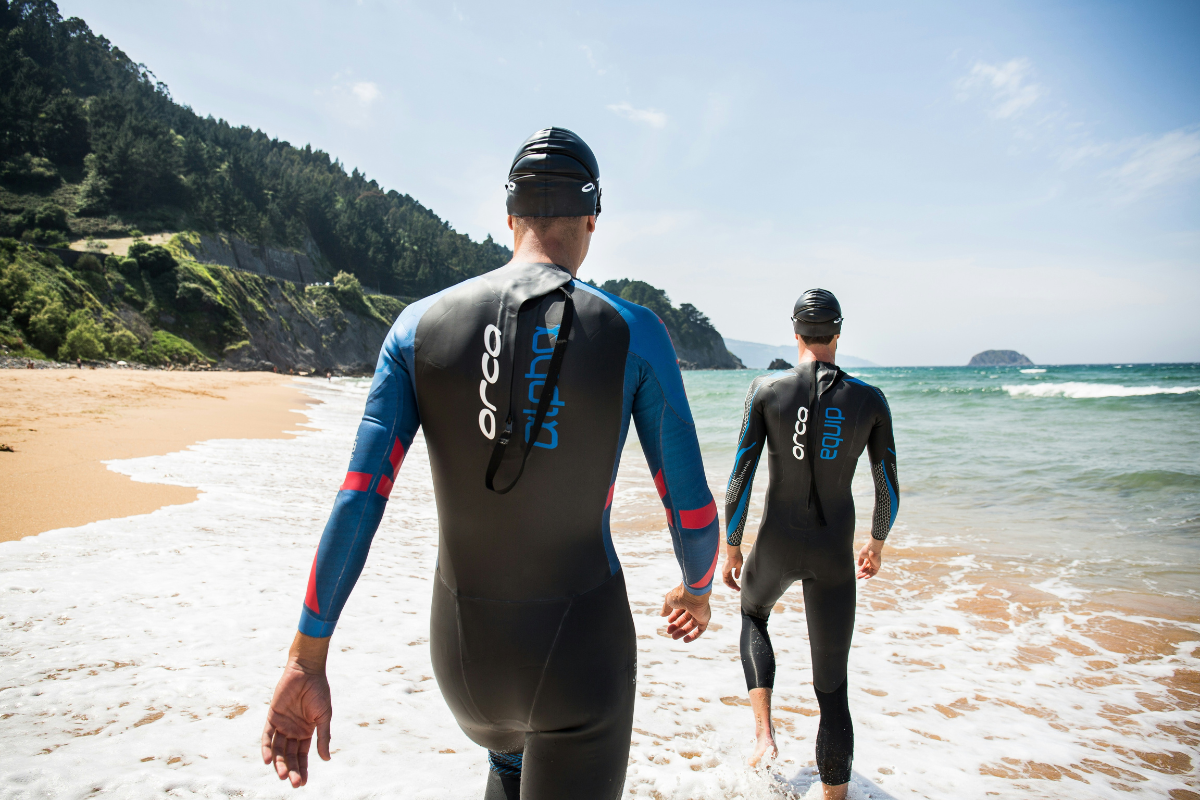

A day beside the water can expose what ordinary gear was never designed to handle. Salt, spray, intense sunlight, sudden weather shifts and prolonged immersion place very different demands on what people wear and carry. Now, water-ready gear is being reimagined for these realities, alongside growing concerns about chemical pollution, material waste and environmental impact.
From PFAS-free waterproof jackets and natural-rubber wetsuits to UV-protective clothing, smarter lifejackets and sensor-enabled textiles, coastal gear is entering unfamiliar territory. Yet behind these advances lies a bigger question: are we genuinely designing better gear for life by the water, or simply giving conventional products a greener story?
Where Sun, Salt and Water Set the Rules
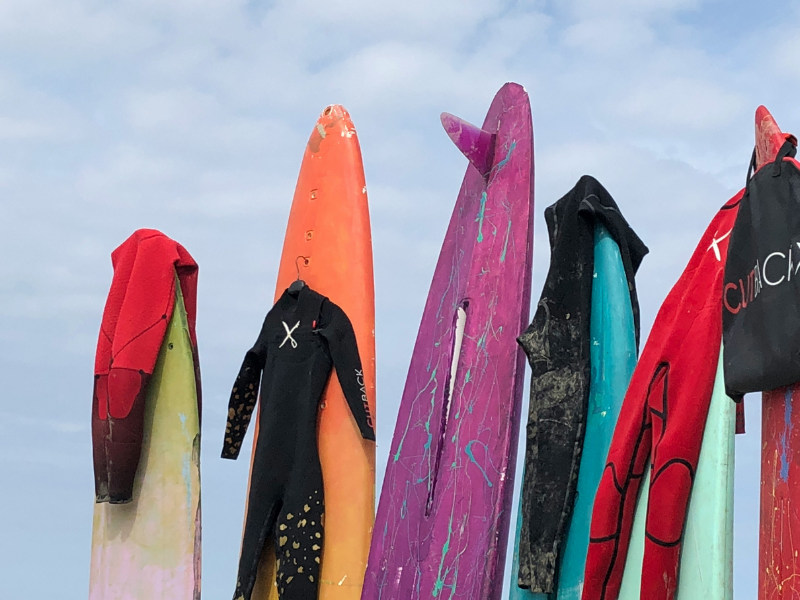
Coastal environments are unforgiving testing grounds.
Salt corrodes materials, sand creates abrasion, and wet conditions accelerate heat loss. Sun exposure adds another challenge, particularly when ultraviolet radiation is reflected from surfaces such as sand and water.
New Zealand illustrates why this matters. Summer UV Index levels commonly reach around 12 and can exceed 13 in northern areas, according to Earth Sciences New Zealand. Meanwhile, UPF 50+ clothing can block at least 98% of ultraviolet radiation.
For surfers, fishers, paddlers, lifeguards and people working outdoors near water, clothing increasingly needs to balance several demands at once: UV protection, ventilation, waterproofing, flexibility and durability.
The result is a shift from clothing that simply covers the body toward gear designed around the conditions it faces.
Rethinking the Chemistry of Staying Dry
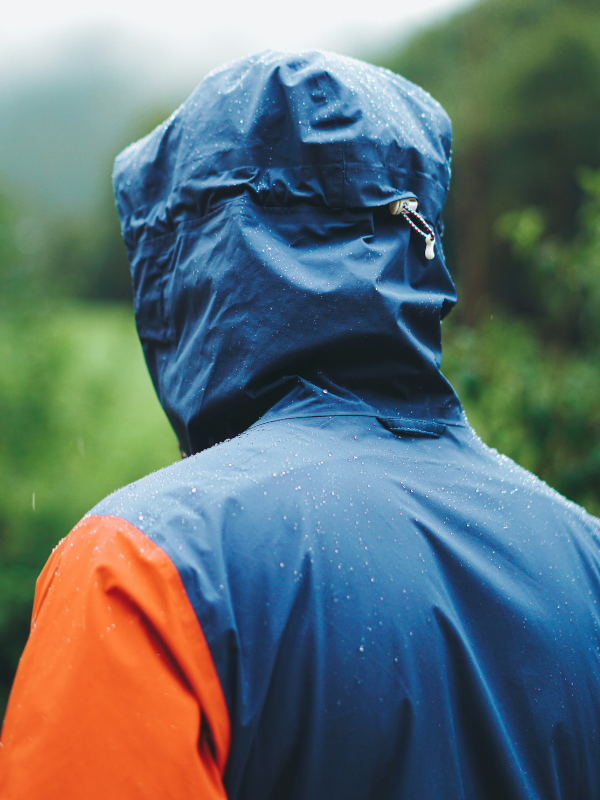
Waterproof clothing has its own environmental contradiction.
PFAS – a large group of highly persistent chemicals – have been widely used to help outdoor textiles repel water, grease and stains. Their durability made them remarkably effective. It also created a serious environmental problem because many PFAS break down extremely slowly and have been found in water, soil, wildlife and people.
Manufacturers are consequently searching for alternatives.
Patagonia says that for Spring 2025 and beyond, all its new membranes and water-repellent finishes are made without intentionally added PFAS. The transition followed nearly 15 years of work to find alternatives without compromising performance, illustrating how difficult it can be to replace highly effective waterproofing chemistry.
A lower-impact waterproof jacket still needs to remain waterproof. If it deteriorates quickly and requires frequent replacement, an environmentally preferable material alone cannot make the product sustainable.
A Different Future for the Wetsuit
The wetsuit is undergoing its own material rethink.
Conventional wetsuits have traditionally relied heavily on synthetic rubber. Alternatives such as Yulex use natural rubber sourced from rubber trees, and brands including Patagonia and UK-based Finisterre have introduced wetsuits combining natural rubber with recycled linings and other lower-impact components.
But changing the raw material solves only part of the problem.
What happens when a wetsuit reaches the end of its usable life?
Finisterre has explored recovering material from old wetsuits for use in new products. It highlights an important distinction often lost in sustainability marketing.
Recycled content puts old material into a product. Circular design asks whether that product can become useful material again.
For future sustainable wetsuits, that second question may matter far more.
When Ocean Plastic Comes Back as Clothing
Few environmental claims sound more convincing than transforming discarded plastic into something useful.
Recovered fishing nets, bottles and plastics collected near waterways can now become fibers for bags, swimwear, jackets and other coastal gear.
But there is a less visible side to the story.
Synthetic textiles can release microfibres during use and washing. UNEP estimates that the textile industry contributes around 9% of the microplastic pollution entering oceans each year, while approximately 60% of clothing materials are plastic-based fibers such as polyester, acrylic and nylon.
This creates an awkward cycle: plastic headed towards the ocean can be recovered, transformed into clothing and potentially return to water in microscopic form.
Recycled material still has value. But “made from ocean plastic” cannot, by itself, prove sustainability.
How long the product lasts, how much it sheds, whether it can be repaired and what happens to it afterwards are equally important.
The Lifejacket Learns to Do More
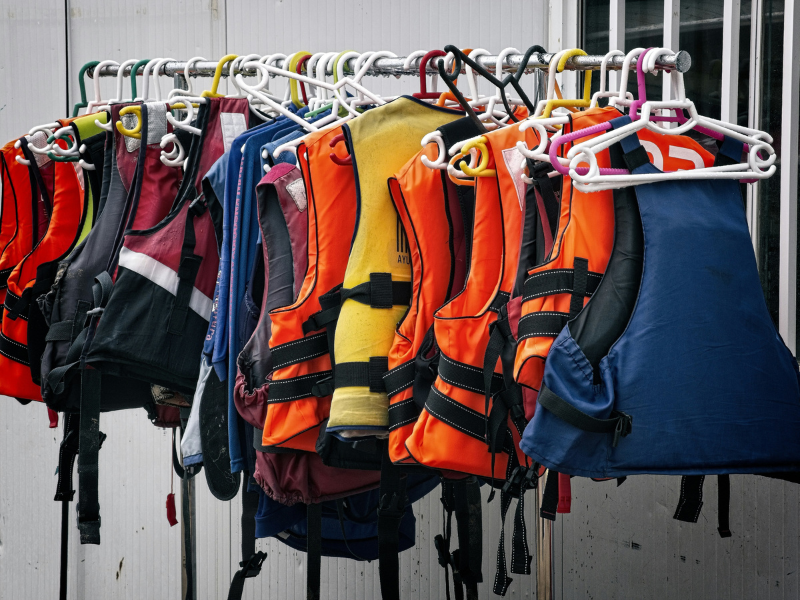
Around water, innovation is not only an environmental issue. Sometimes it determines whether someone survives.
US Coast Guard recreational boating data for 2024 found that 76% of victims whose cause of death was known drowned. Where personal flotation device use was known, 87% of drowning victims were not wearing one.
The figures reveal a surprisingly human design challenge: safety equipment cannot protect people if they avoid wearing it.
That makes comfort, weight, fit and freedom of movement important safety innovations in their own right.
Future water safety technology could go further. A lifejacket might detect immersion, inflate automatically, illuminate itself at night and transmit the wearer’s location to rescuers.
Instead of simply providing buoyancy, the lifejacket could become a wearable rescue system.
What If Clothing Could Read the Coast?
Smart textiles open an even more intriguing possibility: equipment that responds to the environment rather than simply resisting it.
A sailing shirt could monitor accumulated UV exposure. A wetsuit might track changing water temperature. A kayaking jacket could recognize prolonged immersion, while a coastal wearable could warn someone when an incoming tide threatens to cut off their return route.
Many of the individual technologies needed for this already exist – sensors, GPS, environmental datasets, wearable electronics and wireless communication.
The harder challenge is bringing them together in equipment capable of surviving salt, water, sand, repeated washing and years of movement.
And making clothing smarter introduces another environmental dilemma.
Batteries, sensors, antennas and circuit boards can turn a recyclable textile into electronic waste. Modular design could offer a better route, allowing electronic components to be removed, repaired or upgraded separately from the garment.
Smart gear should not have to become disposable gear.
When “Eco” Needs Evidence
Sustainability has also become a powerful language for selling outdoor products.
Labels such as green, natural, ocean-friendly, responsible and eco-friendly can suggest environmental progress without explaining exactly what has improved.
A jacket may contain recycled polyester yet remain impossible to recycle. A wetsuit may use natural rubber while containing other components that are difficult to separate. An “ocean-friendly” garment may still shed synthetic fibers.
This gap between genuine improvement and green marketing is receiving increasing regulatory attention, particularly in Europe, where rules are moving towards clearer environmental claims and better information about product durability and repairability.
Tomorrow’s consumers may expect numbers rather than nature-inspired labels.
A Passport for the Things We Wear
Digital product passports could make that transparency far easier.
A code attached to future sustainable outdoor gear could reveal where materials originated, which treatments were applied, whether replacement parts exist, how the item can be repaired, and where its components should go at the end of their useful life.
Such information could change the meaning of sustainable shopping.
Instead of asking, Is this jacket eco-friendly?, buyers could ask more useful questions:
How long should it last? Can I repair it? What chemicals does it contain? Can its materials be recovered?
Those questions are much harder to answer with marketing alone.
Perhaps the Future Is Not Another Purchase
Some of the most sustainable coastal equipment of the future may not belong to us at all.
Surf schools, resorts, waterfront communities and tourism operators could expand rental and sharing systems for wetsuits, lifejackets, dry bags and other specialist equipment. High-quality products could then be professionally maintained, repaired repeatedly and eventually collected for material recovery.
It could make better gear accessible to people who need it occasionally while reducing the number of inexpensive products purchased for a single holiday or season.
The shift would be subtle but important: from selling more gear to getting more life from every piece of gear.

Designed for Water, With Water in Mind
The next generation of water-ready gear will likely be safer, lighter, more traceable and increasingly intelligent. But the number of sensors inside a jacket or the percentage of recycled fiber on its label should not define progress.
The more meaningful test is whether equipment protects the person using it without quietly transferring unnecessary costs to the environment around them.
A jacket that lasts. A wetsuit that becomes another wetsuit. A lifejacket people actually want to wear. Materials that avoid persistent chemicals. Technology that can be repaired rather than discarded.
Perhaps that is where the future of coastal gear becomes most interesting: not in designing more things to take to the water, but in designing them with the water in mind.
Read More on: