
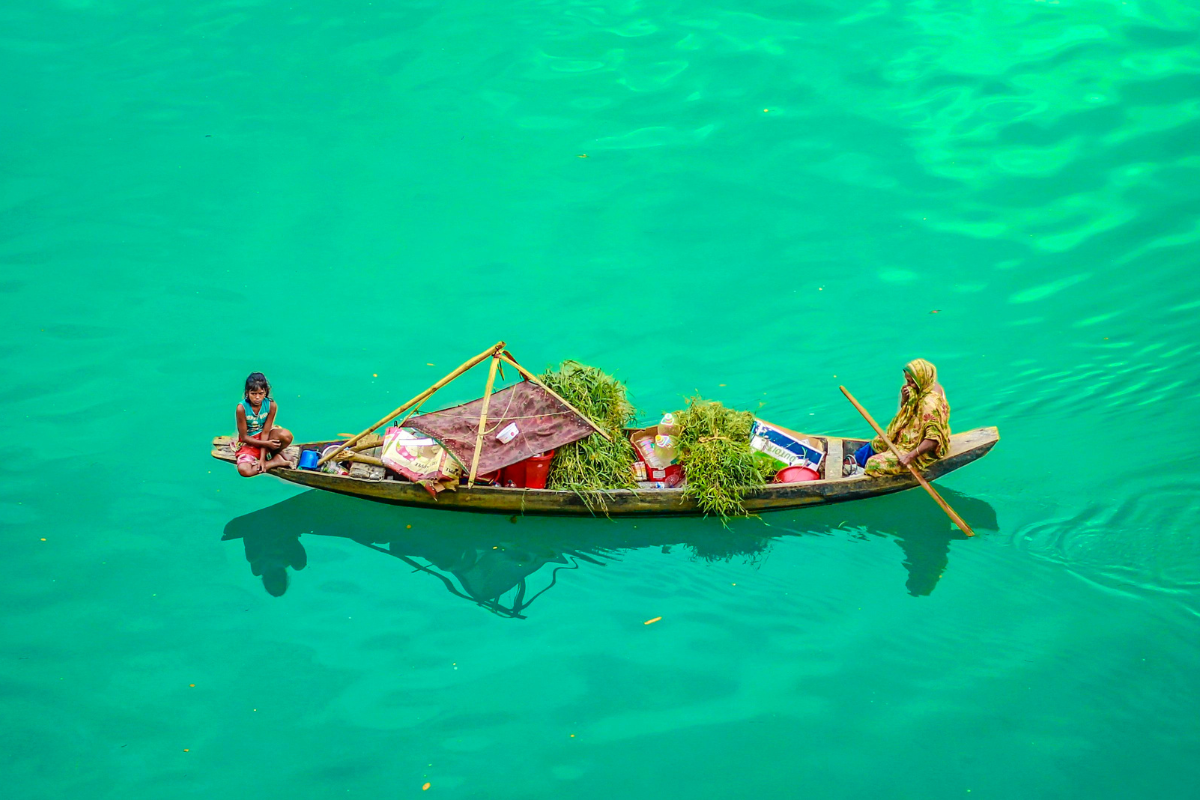

Before sunrise, while much of the world’s commerce is still asleep, floating markets are already moving. Boats emerge through the darkness carrying pyramids of pineapples, baskets of vegetables, flowers, fish and steaming bowls of breakfast. Traders call across the water. Engines rumble beside wooden paddles. Produce passes from farms to boats, from boats to families and from one generation to another.
It is an arresting scene, but beauty is only the surface.
Floating markets are functioning pieces of infrastructure. They connect farmers with buyers, sustain informal occupations, preserve water-based architecture and keep traditional food knowledge alive. From Thailand and Vietnam to Indonesia, Bangladesh and India, they reveal how communities can organize trade around rivers, canals, lakes and seasonal floods.
Yet many of these markets are now being photographed more often than they are understood. Roads are replacing waterways. Pollution is degrading lakes and rivers. Young people are leaving traditional occupations, while tourism sometimes transforms working markets into staged attractions.
The question is no longer whether floating markets belong to the past. It is whether the world can recognize their value in time to include them in the future.
More Than Commerce on Boats
Floating markets developed where water was not a barrier to trade but its main route.
In deltas, wetlands and canal cities, waterways often served as the primary transport routes, allowing farmers and fishers to move fruit, vegetables, fish and household goods by boat long before extensive road networks existed – or in places where roads remained limited. UNESCO and the FAO document numerous examples, from China’s Grand Canal and the Pearl River Delta to the Amazon’s Ver-o-Peso market, where boats connected producers directly with communities and marketplaces. Markets became gathering points where small producers could reach wholesalers, cooks could serve workers, and residents could purchase food close to home.
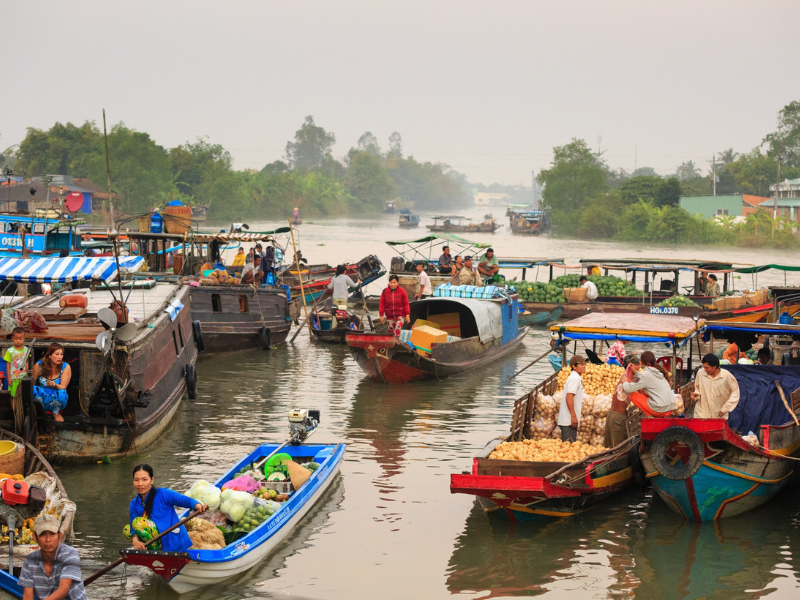
Vietnam’s Cái Răng Floating Market remains one of the clearest examples of waterways functioning as everyday commercial infrastructure. According to the Vietnam National Authority of Tourism, the market developed naturally when road transport was still underdeveloped, and waterways were the primary means of travel. Every morning, hundreds of boats gather to trade agricultural products from across the Mekong Delta, with fruits and vegetables displayed on tall bamboo poles so buyers can identify produce from a distance. Boats serve not only as transport but also as shops, preserving a trading tradition shaped by the region’s rivers for generations. Located near Cần Thơ in the Mekong Delta, it is described by Vietnam’s official tourism authority as the region’s largest wholesale floating market. From early morning until midday, wooden boats arrive loaded with agricultural produce.
Traders traditionally advertise their goods using a cây bẹo – a long bamboo pole carrying a sample of the fruit or vegetable sold below. Before electronic signs and digital marketing, this simple piece of architecture allowed customers to identify products across a crowded river.
Cái Răng also demonstrates the wider economy hidden behind the boats. Its activities support growers, wholesalers, cooks, boat operators, mechanics, guides, accommodation providers and food businesses. The market’s annual culture and tourism festival has attracted more than 130 business booths alongside agricultural exhibitions, local food and traditional performances.
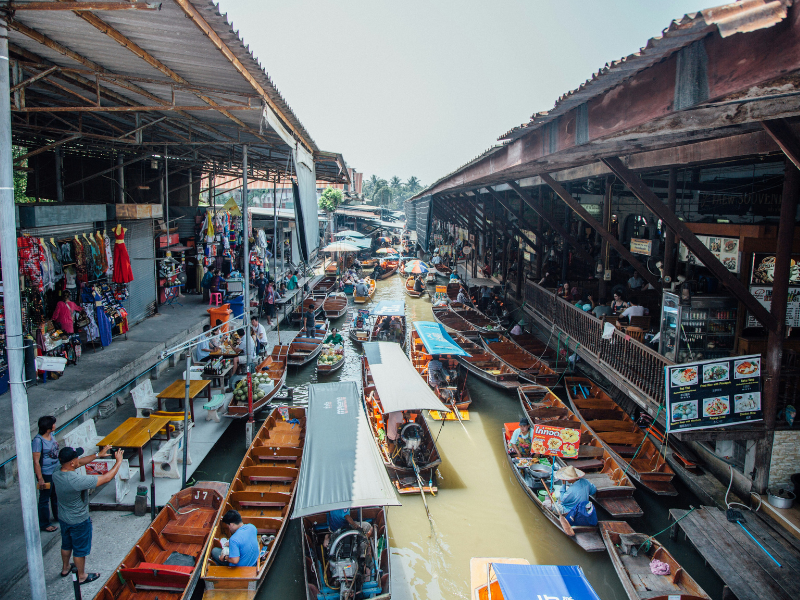
Thailand’s Damnoen Saduak and Amphawa floating markets operate differently but reveal the same enduring connection between communities and waterways. The Tourism Authority of Thailand describes Damnoen Saduak as a lively morning market where hundreds of boats paddle through canals selling fresh fruit, vegetables and local foods, while Amphawa is centred on an evening riverside atmosphere where merchants continue to trade from boats alongside traditional canal-front shops. Together, they demonstrate how Thailand’s canal networks remain not only tourist attractions but also living expressions of riverside culture and commerce.
Indonesia’s Lok Baintan and Muara Kuin markets, Bangladesh’s fruit markets around Barishal and Jhalokathi, and India’s floating gardens, according to the Srinagar Master Plan, further notes that these floating gardens provide livelihoods for local residents while supplying fresh vegetables to the city, making the market an expression of both ecological adaptation and Kashmiri cultural heritage. What unites them is their dependence on functioning waterways and the communities that know how to use them.
The Workers Behind the Waterline
The most visible person in a floating market may be the vendor steering a boat. Behind that vendor, however, is an extensive chain of labor.
Farmers grow the produce. Family members sort and load it before dawn. Boat builders maintain vessels suited to local depths and currents. Mechanics repair small engines. Cooks prepare meals in confined spaces. Porters transfer goods between water and land, while guides, homestays and tour operators connect the market with visitors.
Women play especially important roles as produce sellers, cooks, growers, family-business operators and managers of household income. Yet much of this work belongs to the informal economy and may never appear in conventional employment data.
According to the International Labor Organization (ILO), around 2.1 billion workers remain in informal employment worldwide, many without access to basic labor rights, social protection or income security. Floating markets therefore form part of a much larger economic reality in which essential work continues without the security of formal contracts, pensions, insurance or recognized trading rights.
Protecting these markets should not mean preserving poverty for the sake of atmosphere. Vendors need safe landing places, sanitation, affordable permits, access to finance, social protection and greater control over the tourism businesses profiting from their culture.
A market cannot be called successfully preserved when its boats remain photogenic, but its traders remain economically vulnerable.
Architecture Designed Around Water
Floating market architecture extends far beyond the vessels carrying produce.
It includes stilt houses, water-facing shopfronts, jetties, canal steps, warehouses, shaded loading areas, repair yards, bridges and kitchens adapted to boats. In some river communities, homes traditionally have two entrances: one facing the land and another facing the water.
This dual access allows a household to participate in two connected economies. Goods can arrive by boat, be stored or processed inside the home and later leave by road – or move in the opposite direction.
Such architecture contains knowledge about changing water levels, currents, seasonal flooding, ventilation, loading, balance and the safe use of limited space. It was developed through generations of observation rather than imposed through a universal urban plan.
However, modern infrastructure can interrupt these relationships.
An embankment may protect a riverbank while preventing boats from reaching homes. A bridge may improve road access but restrict the movement of larger trading vessels. A waterfront promenade may attract tourists while displacing repair yards, informal jetties and produce-loading areas.
This is why floating markets need more than infrastructure. They need water-sensitive infrastructure designed around the people already using the water.
When Progress Moves Commerce Ashore
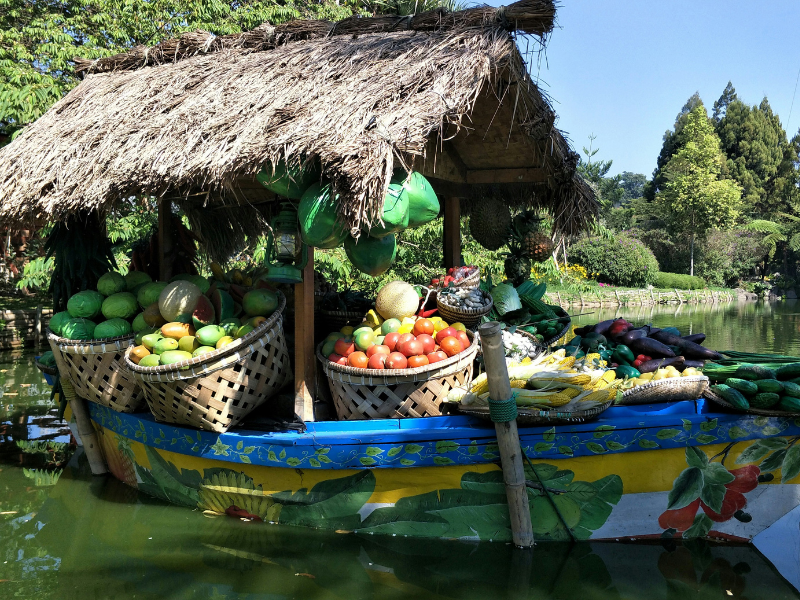
Roads, bridges and supermarkets have created valuable opportunities across Asia. They have also made some river markets less commercially competitive.
A truck can operate according to fixed schedules. A roadside wholesale center can offer larger storage facilities. Supermarkets provide shelter, refrigeration and consistent opening hours. Younger workers may understandably prefer occupations with more predictable incomes and less exposure to rain, heat, currents and physical danger.
Vietnam continues to manage approximately 26,500 kilometers of navigable inland waterways, forming one of Southeast Asia’s largest inland water transport networks. According to the World Bank, inland waterway transport accounted for approximately 17% of Vietnam’s national freight transportation share based on 2018 tonnage, highlighting the continued economic importance of the country’s rivers and canals for moving goods. The organization has also emphasized that water transport supports trade for rural and lower-income communities.
In June 2024, the World Bank approved a US$107 million credit for the Southern Waterway Corridors and Logistics Development Project to improve the capacity, efficiency and safety of southern Vietnam’s inland waterways while reducing greenhouse gas emissions from the country’s transport sector. The investment demonstrates that waterways remain economically relevant rather than obsolete remnants of an earlier era.
However, large transport investments do not automatically protect floating markets. Unless smaller traders, landing sites and traditional vessels are included in planning, modernization may improve movement through a river while removing the communities that once depended on it.
The answer is not to reject roads. It is to connect road and water transport intelligently. Produce-transfer hubs, safe public jetties, cold storage, electric freight boats and coordinated delivery systems could help small producers use both networks instead of being pushed out by one.
The Market Cannot Survive a Dying River
The greatest threat to many floating markets is not changing consumer behavior. It is the deterioration of the water itself.
Untreated sewage, plastic waste, fuel leakage, invasive plants and industrial pollution can turn a food market into a health risk. Sedimentation can make channels too shallow for boats. Riverbank erosion can remove landing areas, while dams and water extraction can alter currents and seasonal water levels.
Climate change adds further pressure through extreme floods, droughts, stronger storms, saline intrusion and shifting agricultural seasons.
For the floating vegetable market on Dal Lake in Srinagar, protecting cultural heritage is inseparable from protecting the lake. Growers, fishers, shikara operators, houseboat communities and tourism businesses all rely on the same ecological system.
The principle is simple: preserving several market boats while allowing their river or lake to become polluted is not heritage conservation. It is scenery management.
Markets need sewage treatment, water-quality monitoring, waste collection, oil controls and river restoration as urgently as they need tourism promotion.
They can also support environmental improvement. Food waste can be composted. Reusable containers can replace disposable plastics. Electric or solar-assisted boats can reduce fumes and noise. Vendors can participate in water monitoring because they observe the river every day and often recognize changes before outside agencies do.
Bangladesh and the Knowledge of Living With Floods
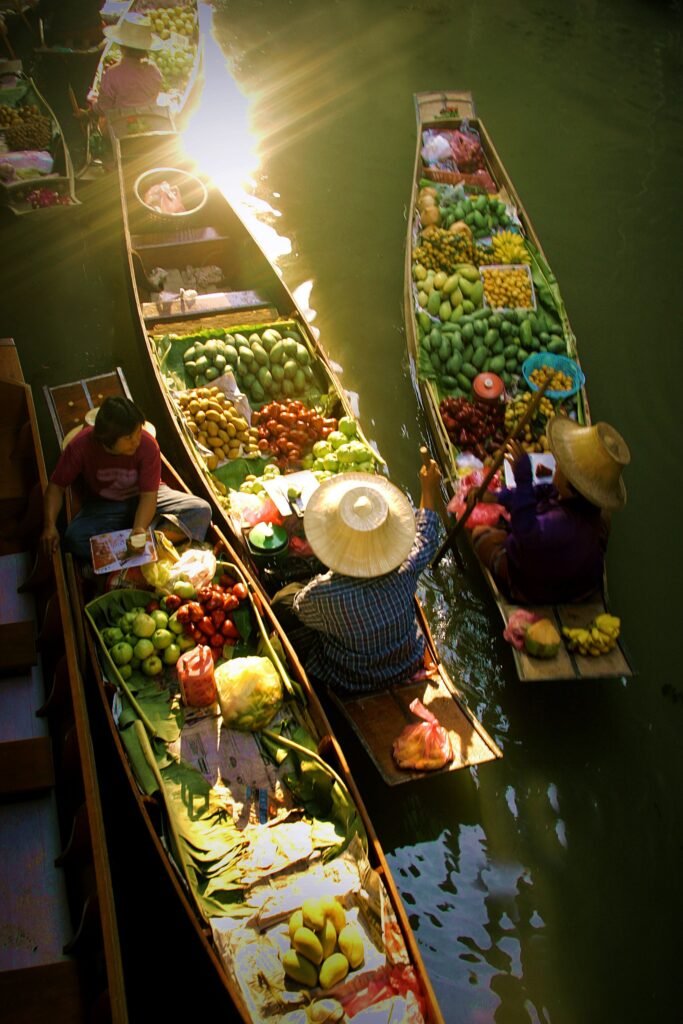
Bangladesh offers an important glimpse of how traditional water knowledge could become more valuable in a changing climate.
In areas where floodwater remains for long periods, farmers create floating beds from water hyacinth and plant material. Vegetables and spices can then be cultivated without conventional dry land.
The Food and Agriculture Organization recognizes Bangladesh’s floating garden system as a Globally Important Agricultural Heritage System. FAO notes that it contributes to food security, livelihoods, ecological resilience and access to productive resources for poorer communities.
Floating agriculture and floating markets should be understood as connected parts of a water-adapted food economy. One enables crops to be grown during inundation; the other can help move and sell them.
As floods become more disruptive in many parts of the world, this knowledge could inform mobile food-distribution points, emergency supply boats, floating storage, temporary health services and commercial systems capable of operating when roads become impassable.
Floating markets are therefore not merely surviving climate change. Properly supported, they may help communities prepare for it.
Tourism: Lifeline or Performance?
Tourism can provide the income needed to keep a floating market active. Visitors spend money on food, boat journeys, guides, homestays, crafts and nearby attractions. Markets can also disperse tourism spending into rural communities and create demand for local ingredients and traditional recipes.
At Cái Răng, visitors can eat noodles on the water, watch produce trading and explore orchard and food-making communities nearby. In Thailand, floating markets have become internationally recognized symbols of canal culture. Tourism has helped sustain waterfront restaurants, boat services and traditional wooden buildings.
But popularity brings risks.
Too many tour boats can overwhelm working vessels. Waterfront rents can rise. Traders may abandon agricultural products for souvenirs. Visitors may photograph vendors without permission, while external operators capture most of the income.
In the worst cases, a floating market becomes a performance of commerce rather than commerce itself.
The distinction matters. A market built primarily for visitors can still have cultural and economic value, but it should not be represented as an unchanged traditional system. Greater honesty would allow destinations to celebrate different models: working wholesale markets, community food markets, hybrid tourism markets and carefully reconstructed heritage attractions.
The most resilient tourism approach will keep the market useful to residents. Traders should participate in decisions, control visitor numbers where necessary and receive a fair share of revenue generated through their labor and image.
Photographed Extensively, Measured Poorly
There is no authoritative global count of functioning floating markets. Nor is there a reliable worldwide figure for their total employment, trade value or contribution to tourism.
This absence is revealing.
Floating markets are photographed extensively but measured poorly. Tourism agencies often record visitor numbers, yet governments may lack consistent information on vendors, women’s income, agricultural supply chains, boat workers, water quality and the number of working markets lost to redevelopment.
The public knowledge gap is equally significant. Many people recognize the visual image of a vendor in a produce-filled boat but know little about the architecture, ecological knowledge and food logistics supporting that image.
Documentation should therefore become part of preservation. Communities could record oral histories, boat-building techniques, market terminology, recipes, seasonal trading routes and memories of environmental change. Schools and universities could work with traders rather than treating them only as research subjects. Digital archives could help younger generations access traditional knowledge through contemporary media.
However, documentation cannot replace daily practice. A boat-building tradition survives when people can make a living building boats – not only when instructions are stored in a museum.
Building the Floating Market of the Future
The future floating market does not need to look futuristic. Its strongest innovations may be almost invisible.
Safe jetties can prevent injuries. Clean-water points can improve food hygiene. Cold storage can reduce waste and allow farmers to earn more from perishable produce. Weather and water-level alerts can help traders avoid dangerous conditions. Digital payments and cooperative online ordering can connect vendors with customers without surrendering control to large platforms.
Electric-boat technicians, water-quality monitors, heritage interpreters, food-safety trainers, river-restoration workers and digital-commerce managers could join established occupations such as farming, cooking, boat building and trading.
Infrastructure should also protect traditional spatial relationships. New embankments need accessible docking points. Bridges must allow working boats to pass. Waterfront developments should retain affordable space for loading, repairing vessels and selling produce.
Most importantly, investment must be community-led. Decisions about market hours, tourism numbers, vendor licenses, boat electrification and architectural conservation should not be imposed on the people whose livelihoods are at stake.
A Prototype, Not a Relic
The modern world often treats progress as a movement away from water – away from boats, wetlands, informal landing places and seasonal ways of living.
Climate change is challenging that assumption.
As cities confront heavier rainfall, flooding and pressure on food systems, the knowledge held by floating-market communities becomes increasingly relevant. These markets show how trade can remain mobile, how homes can face both land and water, how small producers can share transport space and how commerce can adjust to seasonal landscapes.
Not every floating market can or should be preserved in exactly its historic form. Some will become smaller. Others will operate as hybrid land-and-water markets. Technology, safer boats and new occupations will change how they function.
But change does not have to mean disappearance.
At dawn, when a boat reaches the market carrying food from a nearby farm, it is doing more than repeating an old tradition. It is demonstrating a different way of organizing a local economy – one built around flexibility, community knowledge and the realities of water.
The world does not need floating markets because they remind us of the past. It needs them because, with cleaner waterways, thoughtful infrastructure and genuine community ownership, they may help us imagine how to live in the future.
Read More on: