
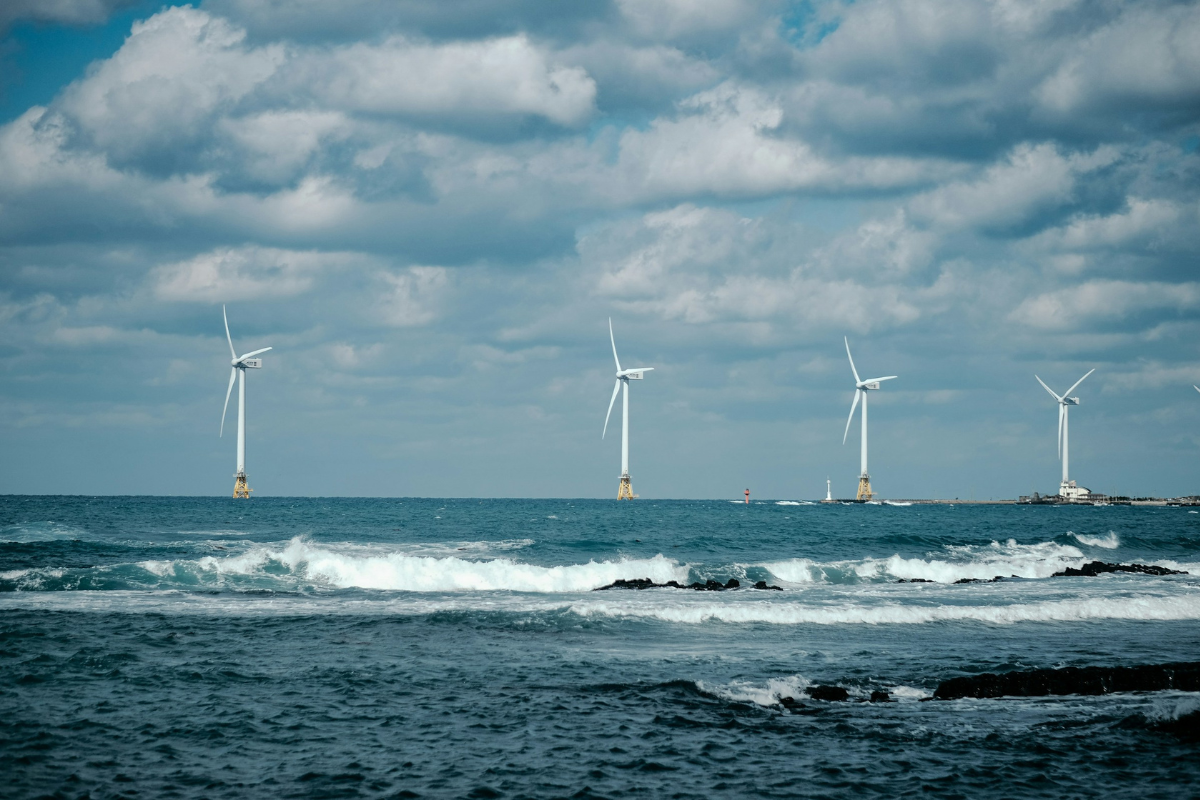

Desalination has moved from emergency infrastructure to a central component of water security in coastal regions.
Over 22,000 desalination plants worldwide deliver fresh water to more than 300 million people, with modern seawater reverse osmosis systems requiring around 2.5 to 4 kilowatt-hours of electricity per cubic meter of fresh water. Desalination currently emits an estimated 76 million tonnes of CO₂ annually, reflecting its reliance on fossil-based electricity in many regions. Additionally, tidal power from the MeyGen project in Scotland has operated for more than six years without any unscheduled maintenance, demonstrating that ocean energy can be harnessed reliably.
Along many coastlines, desalination, wave energy, and salinity-gradient systems are beginning to converge, linking water infrastructure directly to energy and climate policy.
The Ocean as Energy Field
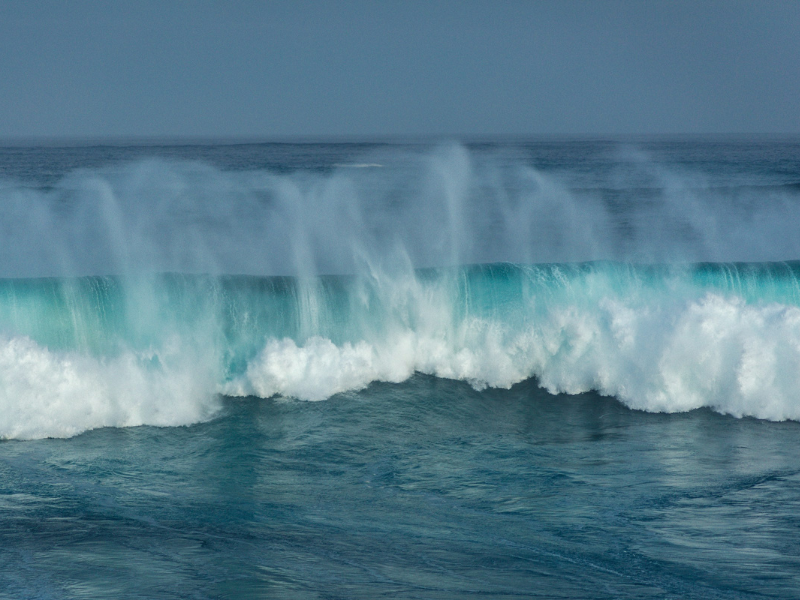
The ocean operates as a dynamic system shaped by mechanical motion and thermodynamic exchange. Its wave patterns and tidal flows are measurable and, in many cases, predictable, making them viable energy sources. The potential of the sea is enormous, and it is estimated by the International Renewable Energy Agency to be between 45,000 and 130,000 terawatt hours of energy per year. Wave energy is estimated at roughly 29,500 terawatt hours annually, exceeding current global electricity demand of about 25,000 terawatt hours. The challenge is not resource size, but deployment.
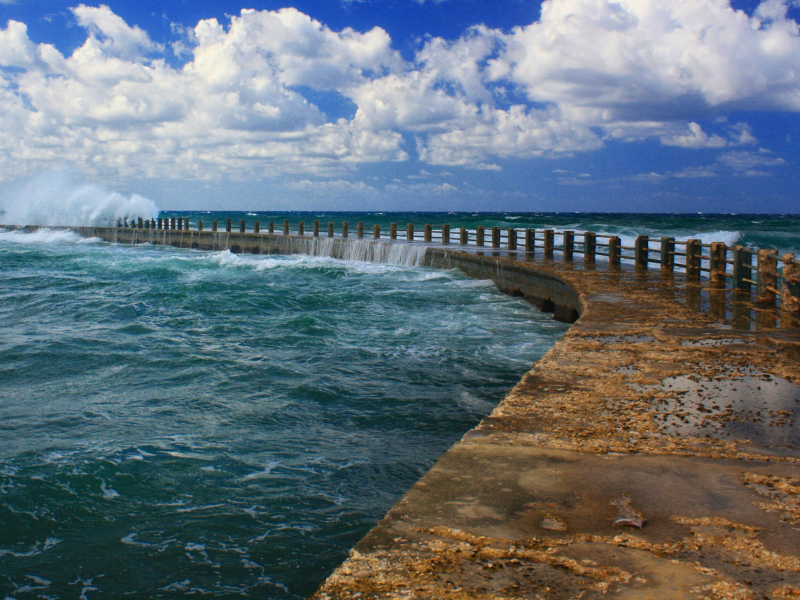
Several coastal regions are testing whether ocean energy can support water production at scale. In the USA, for example, wave energy prototypes near San Diego have been used to power small-scale desalination plants, which have been running for multi-month periods. In the European Union, buoys off the coast of the island of Gran Canaria are already being used to provide freshwater via wave energy, offering a zero-emission solution for the island’s water needs. The DESALIFE project, led by Ocean Oasis, seeks to provide for 15,000 people while reducing CO2 emissions.
In Sweden, the Lysekil project is an ongoing wave power project to harness wave energy to produce electricity on a larger scale. In Norway, the Utsira pilot combines wave energy with flow battery storage to stabilise renewable power for island communities. This is a combination of wind and wave energy that shows the potential of stable renewable energy for energy-intensive uses such as desalination plants.
The ocean is increasingly treated not only as a water source but as an energy system embedded within coastal infrastructure.
Ocean Energy – Power in the Mixing
Beyond motion lies chemistry.
As freshwater and seawater mix, the difference in salt concentration creates energy. This is salinity gradient power, which is one form of renewable energy produced not by the wind or the tide, but by the mixture of waters. According to Ocean Energy Systems, the global theoretical potential for salinity gradient power is about 1,600 terawatt hours annually. Though not as large as wave or tidal power, it is by no means trivial.
On the molecular level, the process can be quantified. Theoretical calculations indicate that the mixture of one cubic meter of seawater and freshwater can potentially produce 0.377 kilowatt hours of energy. Though not an impressive figure in itself, the quantities are enormous.
Technologies like reverse electrodialysis and pressure-retarded osmosis try to harness electricity from the simple process of mixing fresh and saltwater. The Norwegian national electricity company, Statkraft, has already experimented with a prototype for an osmotic power plant in Tofte, showing that salinity, in and of itself, is a viable source for energy production, although the membranes were still too primitive for large-scale commercialization.
The more interesting prospect, however, might be closer than we think: within existing desalination plants, where the discharge of concentrated saltwater has the potential for partially harnessing the existing salt concentration as a source for energy production. As membrane technology continues to improve, what was previously seen as a “waste” product begins to read like a latent infrastructure, a subtle shift in how coastal cities think about exchange.
This represents a structural shift in how coastal utilities evaluate waste streams and energy recovery. Brine discharge, traditionally treated as waste, may become an energy input if membrane and recovery systems improve.
Climate Commitments at the Coastline
Desalination policy is increasingly shaped by climate targets under the Paris Agreement. Within the UNFCCC and Paris Agreement, the mitigation of greenhouse gases in infrastructure sectors is a core component of the global mitigation strategy, and water treatment is included in this remit.
The International Renewable Energy Agency has estimated that ocean energy could be scaled up to 70 gigawatts by 2030, rising to 350 gigawatts by 2050, assuming the acceleration of renewable energy development. Though the figures are small compared with the theoretical potential, the implication is that the policy push for renewables is building. The Global Clean Water Desalination Alliance, launched at COP21, has the express goal of reducing the carbon intensity of desalination processes.
For island nations and arid coastal regions, the intersection of the three trends is less aspirational and more pragmatically imperative. Water, energy, and climate change are increasingly found along the same shoreline.

From Extraction to Alignment
Historically, desalination has operated as a high-energy, extractive system built to overcome environmental limits. But what happens in a world of ocean-powered desalination? What happens in a world in which ocean energy flows don’t need to be imported, in which waves are pumps, in which salinity gradients are sources of power, and in which brine is a resource instead of a waste?
It will, of course, take time for marine energy to become less expensive and less technically difficult, and for salinity gradient technology to grow to scale. But meanwhile, the shoreline itself is being transformed into a space of convergence, in which water and energy systems interlace, in which infrastructure responds to the flows of the ocean instead of fighting them.
The implication is practical: coastal infrastructure must respond to dynamic marine systems rather than operate against them. The alignment of infrastructure with the rhythms of the sea heralds a new era in which water, energy, and policy will evolve together, resilient, adaptive, and attuned to the forces they harness.
Read More on:



[…] Turning Sea Water into Power and Policy […]