
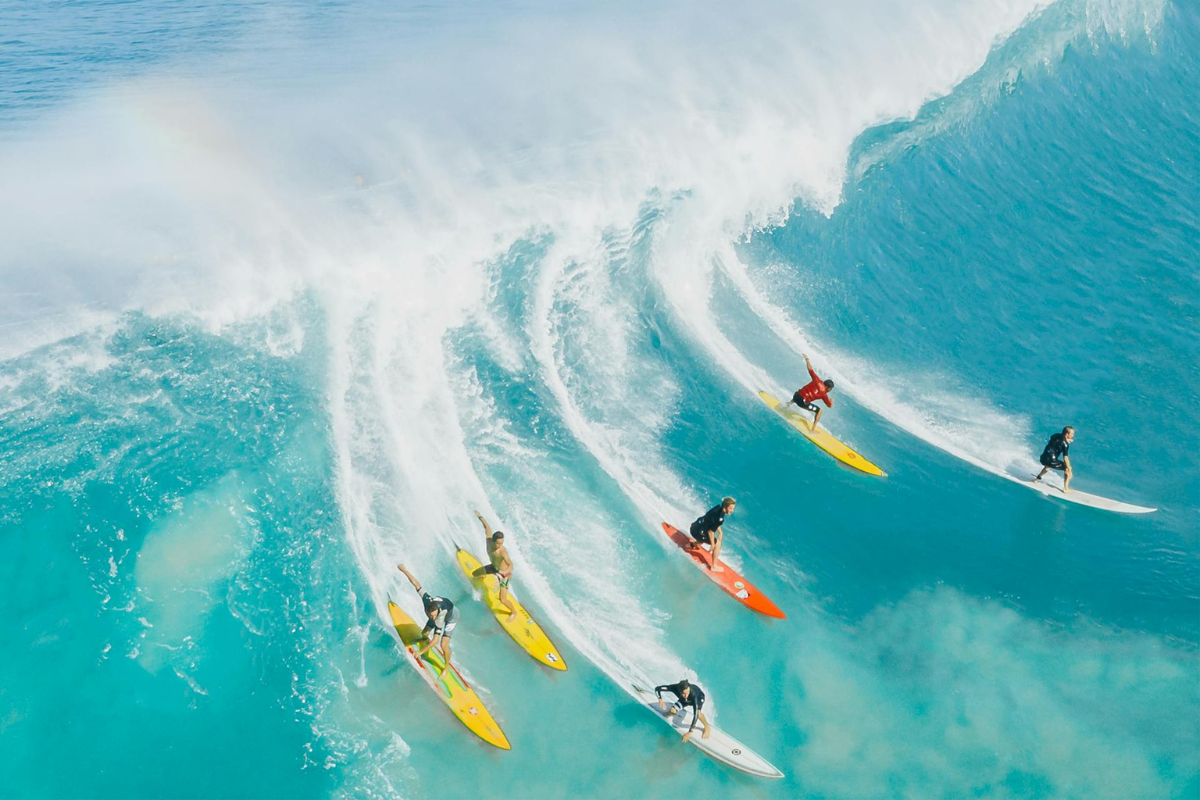

Surfing entered the Olympic Games in Tokyo in 2021, bringing a surf culture shaped by wind, waves, and coastlines into one of the world’s most structured sporting systems. The Olympic debut of surfing marked more than the addition of a new sport. It brought a coastal practice shaped by environment and local knowledge into a system built on standardization.
For many coastal communities, surfing developed outside the structures of organized sport. Waves change constantly with tide, wind, and reef structure. The development of skills is defined by the tides, reefs, and traditions shared among shore-based communities. The inclusion of surfing in the Olympic Games is not simply the addition of a new Olympic discipline; it is the inclusion of a culture defined by the environment within a system defined by predictability.

From Polynesian Practice to Global Sport
Surfing has its origins in Polynesian culture, which had a rich history of wave riding as part of their social rituals, navigation, and coastal cultures. Historical records document that surfing was an important part of Hawai‘ian culture before European contact, serving as both recreation and expression.
Surf culture has since traveled across seas and continents. According to research by Hope Schau at the University of Arizona, the globalization of surfing has been driven by a process referred to as “practice diffusion.” Rather than spreading through simple imitation, surfing evolved through local adaptation. Instead, cultural practices diffuse through adaptation, which is a combination of materials, meanings, and actions.
In surfing, though the surfboard traveled between regions, the sport’s techniques and culture developed in each location. In Hawai‘i, surfers rode long olo boards and thinner alaia boards carved from koa wood, shaped with stone tools to match local waves. In the later days, the invention of the fin and the hollow surfboard in California made the surfboard lighter and easier to maneuver, enabling surfers to turn and trim. In each location, surfers developed their own techniques and styles, ranging from the traditional longboard noseride and soul arch balance on the surfboard to the advanced tricks and stunts on the shorter boards.
By the late twentieth century, surfing had become a global sport supported by professional competitions, board manufacturing, and coastal tourism.
The Olympic recognition of surfing is the latest development in the long process of its globalization as a practice.

Olympic Structure Meets Ocean Conditions
Competitive surfing has always been the perfect blend of physical precision and environmental chaos.
Unlike other sports, the environment that the surfers compete in is dynamic. The wave, the wind, the tide, the height, etc., are always changing. At the Tokyo Olympics, the surfers competed in shortboard events, which took into account factors such as the difficulty of the manoeuvre, the choice of wave, speed, flow, etc. Judges score each wave based on maneuver difficulty, speed, flow, and wave selection.
Ocean conditions are unpredictable and difficult to standardize for competition. During the recent Olympic events in Tahiti, ocean conditions delayed the events for extended periods.
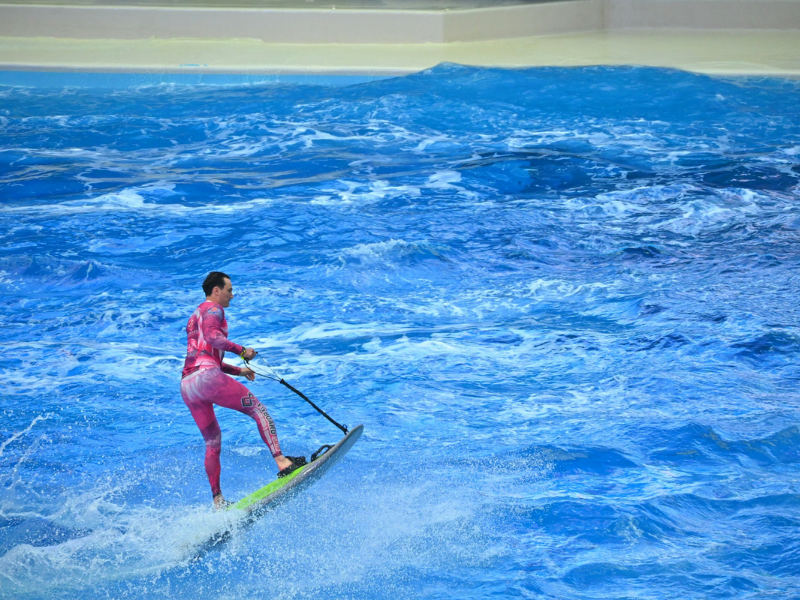
Some surfers and Olympic officials have even begun to consider wave pools as an alternative venue for the Olympic Games. Artificial waves will provide the same conditions for every competitor, thus allowing for the same judging schedule and broadcasting schedule.
But the debate the Olympic Games will stir up is at the core of surf culture: whether the sport is changed by its removal from the ocean’s natural systems.
Surfing depends on reading the water: the shape of the reef, the direction of the swell, and shifts in the current.
A New Visibility for Coastal Communities
The introduction of surfing at the Olympic Games has also seen a substantial increase in participation worldwide, with the ISA boasting over 116 nations affiliated to the organization, opening doors for nations beyond the traditional surfing nations of Australia, Brazil, and the USA to compete at the Games.
This changes how coastlines are viewed. Surf spots are recognized internationally, rather than being local recreational areas. Some countries have invested in surf schools, training programs, and tourist facilities because of the Olympics.
The Olympics provide cultural recognition and economic opportunity for emerging surf nations. Coastal cultures receive recognition as surf destinations, and young athletes receive opportunities to compete at an international level.
With this increased recognition comes increased pressure on the vulnerable coastal systems. Many surf spots rely on coral reefs, sand banks, etc., which are susceptible to the impacts of tourism development, habitat destruction, and pollution. Conservation International explains that the management of these areas is now a major concern in coastal system management, as the quality of these systems will affect the quality of the waves themselves.
Surf culture has always been associated with the environment. Groups like the Surfrider Foundation and the Save The Waves Coalition are dedicated to the conservation of the environment, protection of the beach, and monitoring of water quality, which are the actual problems surfers face in their daily lives.
With the inclusion of surf culture in the Olympic Games, these environmental issues may also come into the fore in the world of sports.

Commercialization and Cultural Tension
Olympic recognition has brought new sponsorship, broadcasting exposure, and global attention to surfing. For instance, during the Tokyo Olympics, the International Olympic Committee reported that new sports, including surfing and skateboarding, helped increase viewership, making it one of the most-watched programs. As part of the Olympic broadcast network, which reaches billions of people worldwide, the sport of surfing receives unprecedented exposure.
While some surfers and communities might view this with pride, others might be skeptical. Surfing has, throughout its history, developed a cultural identity that sets it apart from other sports. This has been done without any institutional regulations, relying instead on communities, creativity, and local knowledge.
The Olympic system of heats, national teams, and medals brings its own logic to the table. The sport is quantifiable, hierarchical, and normalized.
This shift does not erase surfing’s cultural roots. Instead, it’s a matter of surfing having a complex identity that is both surf culture and surf sport.
This is reminiscent of how water culture has evolved more generally, with activities such as rowing or sailing moving back and forth between community-based activities and competitive sports.

Surfing as a Lens on Water Culture
Surfing’s Olympic journey reflects a broader question about how people relate to water environments.
Water sports are often influenced by the environments in which the activities are conducted. Rivers inform rowing, harbors inform sailing, and ocean swells inform surfing. Indeed, when these activities are contested in a global arena, the environments in which they were developed are also represented.
Olympic surfing, therefore, extends the visibility of the coastal environments. Reef breaks, island shorelines, and tidal systems are part of the global sporting narrative.
In an era of rising sea levels, shifting storms, and expanding coastal development, the visibility of coastal environments is important. The future of surfing is tied to the health of the coastlines.
Surf culture is still tied to ocean conditions, which are not entirely controllable by any sporting organization.
The Future of Surf Culture in the Olympic Landscape
Surfing will remain an Olympic sport in future Olympic events, including the 2028 Olympic Games in Los Angeles.
Upcoming events will feature surfing on iconic natural breaks, with a focus on the drama of ocean conditions, while other events will feature surfing on artificial waves, with a focus on standardizing surfing conditions.
This balance reflects a broader challenge faced by many water-based sports: how to participate in the global sporting system while maintaining a meaningful connection to the natural environment.
The Olympic age of surfing is not the end of the culture’s evolution; it is merely the latest step in the long journey that began on the shores of the islands of Polynesia and continues today on the shores of the world.
At its core, surf culture remains an interaction between ocean, coastline, and human movement.
And in that way, it is still the same as it has always been, an activity determined by the sea.
Read More on: