
The Morning That Defines Everything
World Water Day 2026 focused on the relationship between water and gender, highlighting how access is shaped not only by infrastructure, but by who designs, manages, and governs it. In the UN World Water Development Report 2026, which was released in Paris at the headquarters of UNESCO, a message comes through very clearly: to achieve equality in water accessibility, there needs to be more than technological innovations.
World Water Day is not one that starts out with much fanfare in the news media. Instead, World Water Day starts early, at the break of dawn, with how water availability will set the stage for everything else that happens during the day. In 2026, water is better understood not as an environmental issue, but as a system that shapes time, labor, and opportunity in daily life. When engineering is inclusive, it can contribute to this change.
A Shift in How We Understand Water
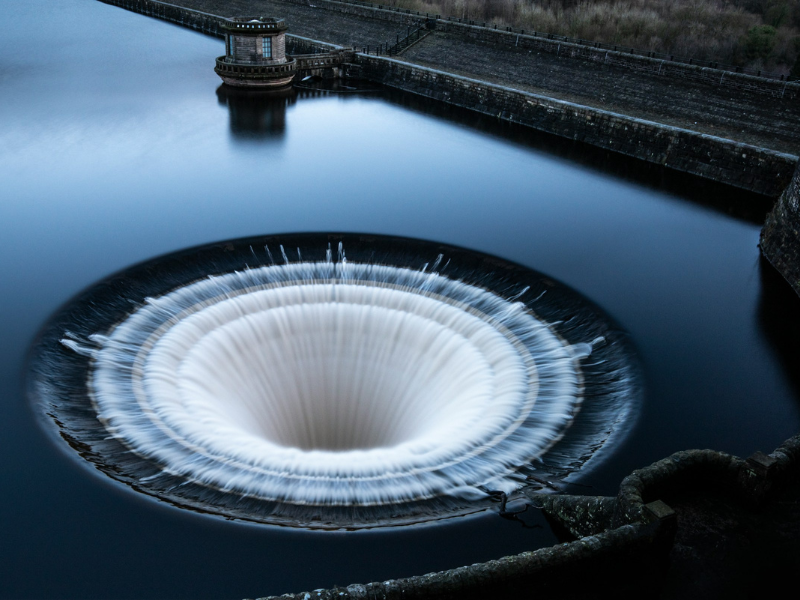
The theme for World Water Day in 2026, which focused on water and gender, helped rethink access as a deeply structural issue. Access does not only depend on the existence of water, but on where water flows, who owns water, and who has the right to influence its flow. Global discussions point to a consistent pattern: while water affects everyone, its impacts are unevenly distributed. Denial of access to water and sanitation exacerbates inequalities, impacting women and girls disproportionately.
On World Water Day, the UN’s global report made clear that the foundation of water security lies in equality. The report shows that water systems are not neutral. They embody the decision-making process, the structure of governance, and participation in decision-making processes.
Time, Not Just Water
The scale of the challenge remains significant, with billions of people not having access to sustainable water sources and sanitation facilities – approximately 2.1 billion people lack safely managed drinking water, while 3.4 billion do not have adequate sanitation.
Water shortage is often viewed in terms of availability. But the reality is that water shortage is a matter of time. It takes time to walk, queue, transport, and return.
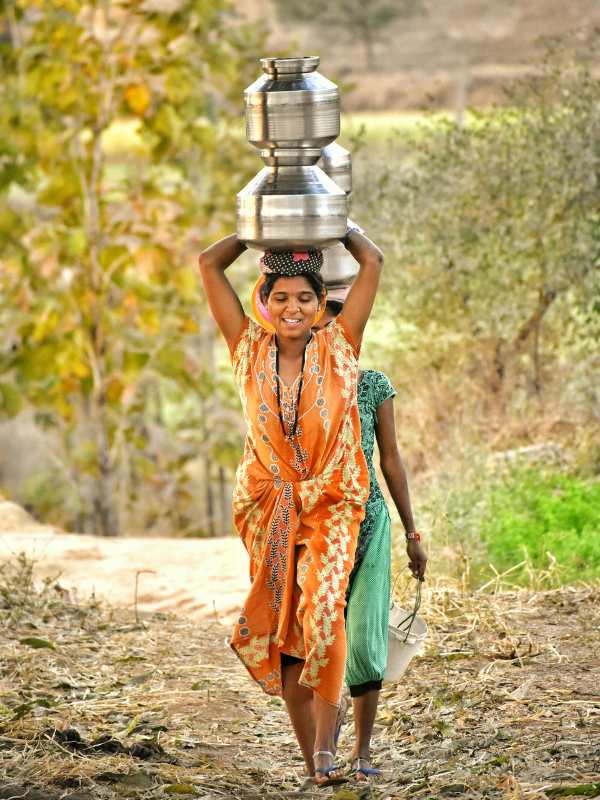
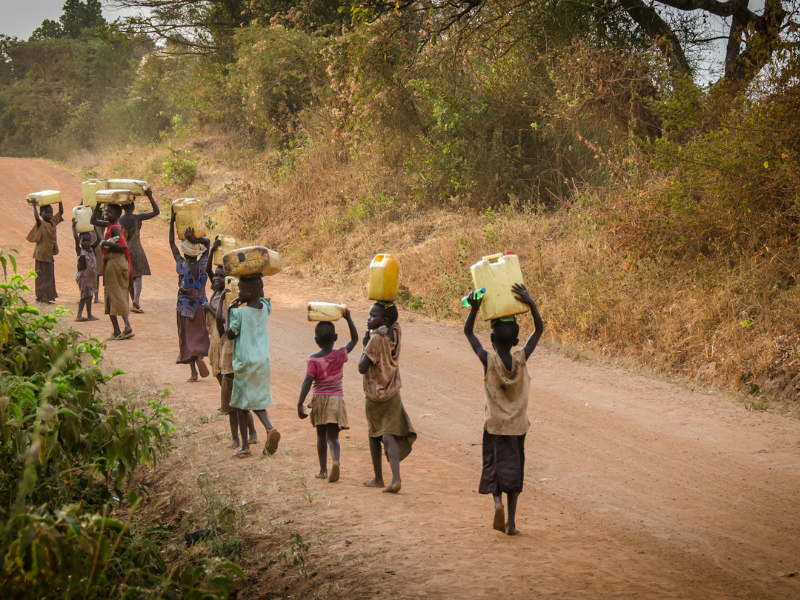
For many, the day begins with collecting water rather than attending school or work. WHO states that an estimated 1.8 billion people across the globe have to fetch water from outside sources due to lack of water within their houses, and more often than not, it is mainly the responsibility of women and girls.
An Ongoing Crisis, Measured Daily
Even as the momentum generated by World Water Day 2026 gains traction, the global situation continues to depict water not as a solved problem but rather as a continuing crisis.
Another, more systemic warning has begun to emerge from UN-linked research. Recent reports suggest the world is entering a phase described as “water bankruptcy,” where demand, overuse, and climate pressures are pushing water systems beyond their ability to recover.
Once again, the discourse takes another turn. Instead of seeing water as a scarce resource in particular areas, it is now being viewed as an unstable global system.
Who Carries Water, Who Shapes Systems
World Water Day 2026 exposed the deep-seated imbalance. Women and girls are disproportionately affected, carrying not only water but the risks, lost opportunities, and invisible labor tied to it.
Nevertheless, the discussion in 2026 was about the designers of these systems, rather than the people who carry the water. Research shows that when women are excluded from decision-making, water systems often reinforce existing inequalities. On the other hand, when women are involved in water governance, the system tends to be more sustainable, which demonstrates that water is not just a resource but also a form of power.
Water functions as both a resource and a form of power.
Global Conversations, Local Realities
While all over the world, World Water Day 2026 took on its own distinctive form, there was no denying what they had in common.
Many people came together to protest about environmental cutbacks in Santiago to demonstrate that access to water depends on both climatic conditions and government policies. Even though the country has very good coverage of water resources, Chile still experiences many inequalities in water access.
Ludhiana, on the other hand, chose a distinct approach to the challenge. A community-based event named “Doublothon 2026” involving over 250 people helped bridge the gap between physical fitness and water awareness. Moreover, it helped bring forward efforts to improve urban water supplies.
From a policy perspective, political leaders throughout the European Union have highlighted that water resilience is key to health, safety, and economic stability, although climate change and social inequality increase threats.
In Beijing, on the other hand, the River Dialogue, an international conference on water governance, featured experts who emphasized that the focus needs to shift from infrastructure to holistic water governance.
Across regions, these events reflect a shared shift: water is increasingly understood as a system shaped by politics, culture, and everyday life.
Climate Pressure and the Urban Settings
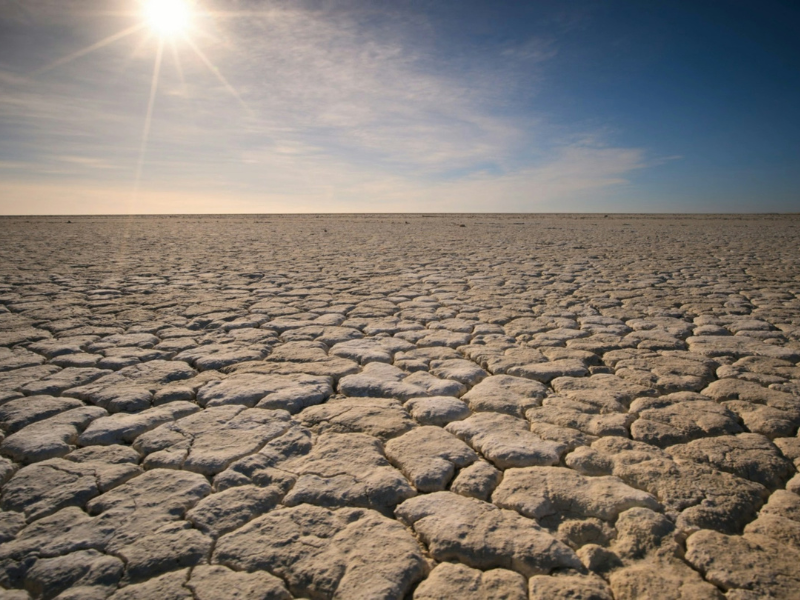
Water systems face increasing stress due to climate change. Shifts in rainfall, drought, and extreme weather are making water access less predictable.
In urban areas, this pressure is already visible. Cities such as Cape Town came close to what was termed “Day Zero,” a point at which municipal water supplies were projected to be shut off as reservoir levels dropped dangerously low after prolonged drought. Meanwhile, Jakarta faces a different form of crisis. Extensive groundwater extraction has led to land subsidence, causing parts of the city to sink and increasing the risk of saltwater intrusion into freshwater systems.
Global studies suggest that about 20% of the cities analyzed have undergone drastic changes in terms of their hydrology, with some turning towards a very wet hydrology regime and others turning towards a very dry hydrology regime. Kano, Bogota, and Cairo are witnessing erratic fluctuations in terms of the wet and dry conditions, whereas places like Colombo, Faisalabad, and Lahore are witnessing changes in terms of being from a period of drought to being prone to flooding.
In cities, population growth and aging infrastructure increase demand, while climate variability makes supply less reliable. In rural settings, conventional water sources become less dependable. These trends are bringing the notion of water resilience into sharper relief.
Water resilience is more than just access. Water resilience involves adapting, recovering from, and providing sustainable water systems to everyone equitably.
The Quiet Impact of Access
Some of the most significant changes are gradual, shaped by steady improvements rather than large-scale interventions.
The difference when one has water inside their own homes is felt right away. Schooling increases. Well-being becomes stable. Time becomes reallocated. It is not a major change. It is simply a minor improvement that builds up.
Rethinking the Meaning of Water
World Water Day 2026 took the discussion from awareness to structure. Water isn’t just about staying alive; it dictates how we spend our time, the chances we have access to, and whether or not we are included.
Water is also an issue of rights. A rights-based perspective sees the availability of water and sanitation as a central issue of human dignity, but one where the fairness of the results rests on who’s listened to when creating the solution.
A Final Reflection
At the very root of World Water Day lies the fact that water sets the limits of daily existence. Water determines whether a day starts with hope or with limitation, whether time can be invested in development or in retrieval, and whether any system fosters progress or subtly undermines it.
As of World Water Day 2026, the lesson was clear: water systems that are built on inclusion, resilience, and equality ensure not just access but empowerment, making water an enabling factor in creating a world that is more equal. This theme, according to global leaders on World Water Day 2026, is one of the “critical enablers of equality and health.”
For in truth, there is a lot more to water than merely relying on it. Water silently shapes daily life and determines who is allowed to lead it.
Read More On: