
A coast can taste sharp with lime and freshly caught fish. An island can taste of abalone simmered into porridge, while a river may carry the ingredients for a meal and the cultural knowledge of how to gather it. In a floodplain, water can even determine where vegetables are grown.
Food is often described through recipes, ingredients, and chefs. Yet long before a dish reaches a kitchen, geography has already helped write its story. Oceans determine which fish can be caught. Rivers and lakes provide freshwater species and irrigate crops. Wetlands support fisheries and food gathering, while seasonal floods can force communities to rethink farming altogether.
The connection is enormous. Global fisheries and aquaculture production reached a record 223.2 million tonnes in 2022, including 185.4 million tonnes of aquatic animals and 37.8 million tonnes of algae. Aquaculture also surpassed capture fisheries as the largest producer of aquatic animals for the first time.
But those numbers only begin the story. Around the world, individual dishes reveal how particular waters have shaped local identity.
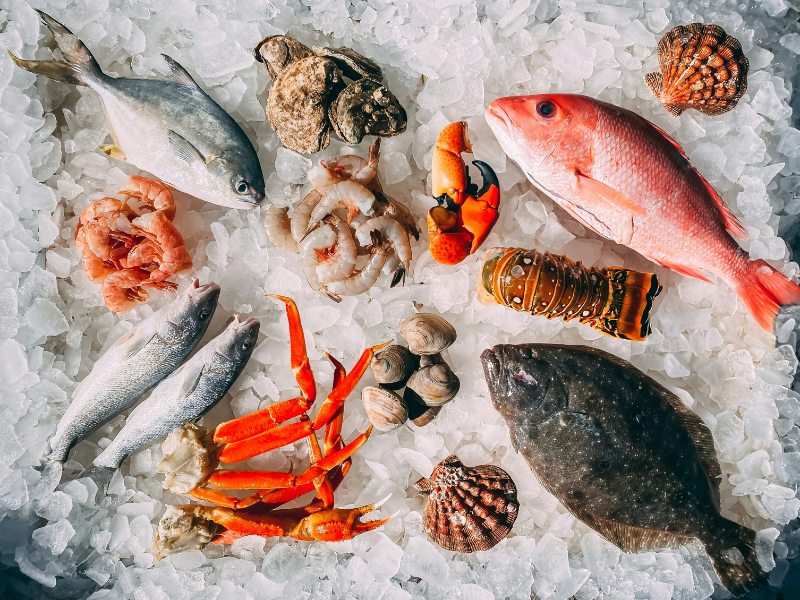
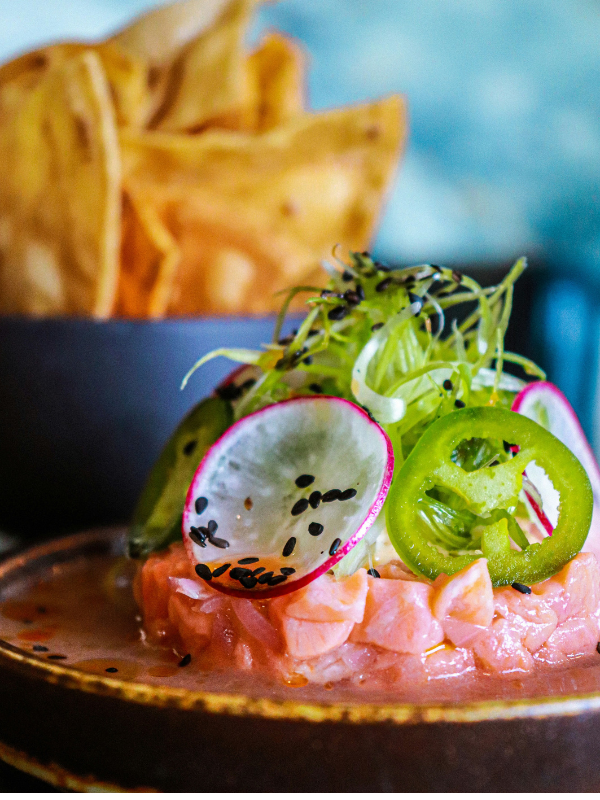
Peru: Ceviche from a sea rich in fish
Along Peru’s northern coast, the relationship between sea and plate is difficult to miss.
The country’s official tourism authority describes Tumbes, Piura, Lambayeque and La Libertad as regions with warm weather and seas rich in fish and seafood. That abundance is reflected in some of the coast’s best-known dishes: ceviche, black-shell ceviche, seafood ceviche, sudado de pescado and steamed fish.
Ceviche combines fish or shellfish with lemon or lime, chili and salt, typically accompanied by onion, sweet potato and corn. Chinguirito, another northern specialty, uses salted and dried guitarfish instead of fresh fish.
Why is it served here? Because local cuisine developed around what the Pacific supplied. An abundant marine environment made seafood a practical foundation for coastal cooking, while preservation techniques such as salting and drying allowed communities to extend the usefulness of their catch.
The same regional menu also demonstrates how landscapes work together. Goat farming is common in northern Peru, making seco de cabrito another local specialty. The plate is therefore almost a map: seafood points towards the Pacific; goat and plant ingredients point inland.
Best served: Ceviche is at its most characteristic when prepared with fresh local fish and served alongside sweet potato and corn, while sudado de pescado offers a warmer expression of the same coastal abundance.
Jeju, South Korea: When divers bring dinner ashore
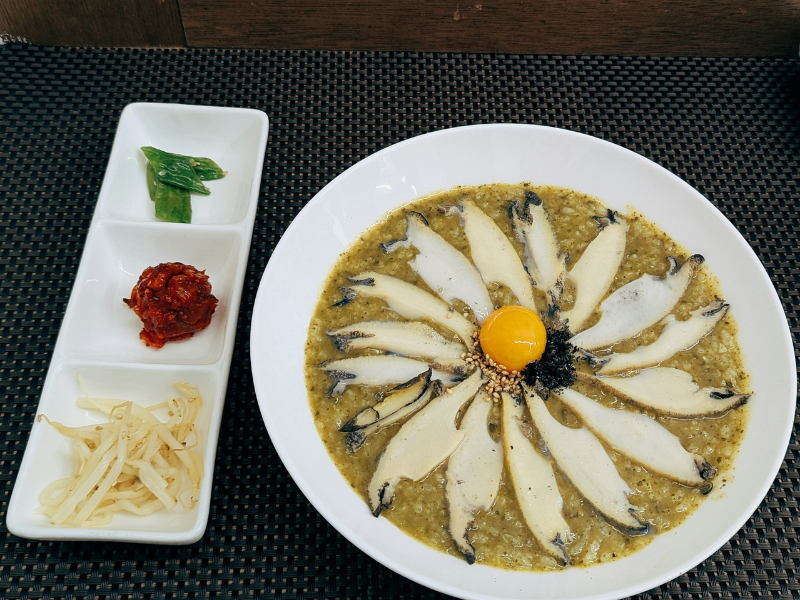
On Jeju Island, food can pass almost directly from seabed to restaurant table.
The island’s haenyeo women divers traditionally gather marine foods without breathing equipment. Their harvests have helped shape a cuisine rich in abalone, sea urchin, turban shell, octopus and sea cucumber.
Visit Jeju documents restaurants where that relationship remains visible. At Jamnyeo Haenyeochon in Hamdeok, around 20 haenyeo from the local fishing village cooperative rotate between diving and working at the restaurant. Its dishes include sea urchin and topshell porridge, grilled abalone, and freshly gathered shellfish.
Elsewhere on the island, haenyeo restaurants serve abalone porridge, sea-urchin seaweed soup, raw seafood and mulhoe, a chilled raw-seafood soup particularly associated with Jeju. Some dishes depend on the day’s or season’s catch, meaning the menu still responds to the sea rather than expecting the sea to respond to the menu.
Why are these dishes served here? Jeju’s island geography gave communities direct access to rich marine resources. Instead of being an occasional luxury imported from elsewhere, seafood became embedded in work, seasonality, and everyday cooking.
Best served: Abalone porridge, sea-urchin seaweed soup, and mulhoe each reflect a different relationship with Jeju’s marine environment, from preservation and nourishment to seasonality and fresh harvests.
Here, flavor is also a record of labor. The person serving the seafood may belong to the same community that harvested it.
Japan: An island cuisine written by saltwater and freshwater
Japan’s food culture demonstrates how several different forms of water can influence one national cuisine.
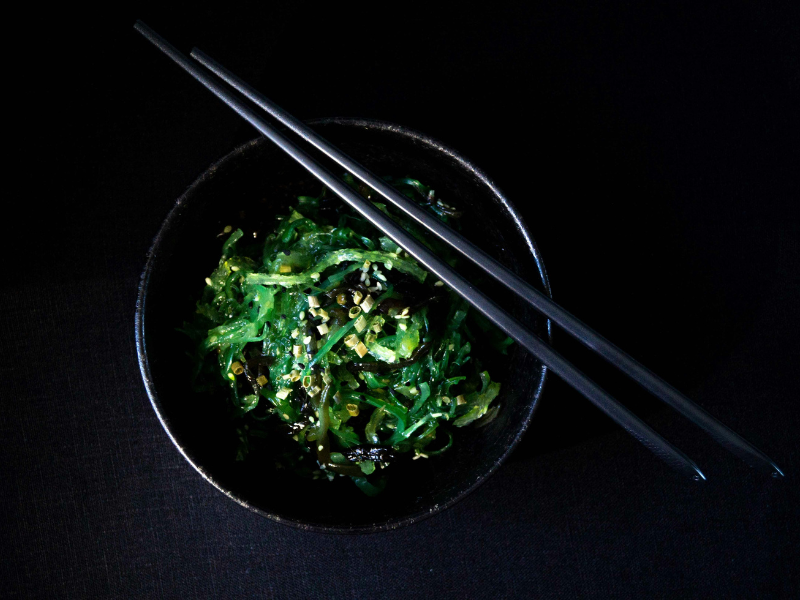
Japan’s Ministry of Agriculture, Forestry and Fisheries describes seafood as an indispensable part of washoku. Marine fish, freshwater fish, shellfish and seaweed have all played longstanding roles in Japanese cooking. Around 50 kinds of seaweed are eaten in Japan today, including kombu, wakame and nori.
Kombu contributes umami-rich dashi. Nori wraps rice and sushi. Wakame appears in soups and vinegared dishes. Seaweed’s long shelf life when dried also helped it move beyond coastal communities and become integrated into diets throughout the country.
Water shaped inland cuisine differently. MAFF notes that freshwater fish became valuable sources of protein in mountainous areas where marine fish were difficult to obtain, with species such as carp and eel forming part of Japan’s freshwater food culture. Ayu, too, was prized as a source of protein in mountainous regions. Around Lake Biwa in Shiga Prefecture, funa-zushi developed by fermenting freshwater fish with salt and cooked rice, improving its storage life while creating a distinctive flavor.
Why are these foods served? Because location determined access. Coastal communities could draw from extraordinarily diverse marine waters, while inland regions relied more heavily on rivers, lakes and rice-growing environments. Preservation methods then developed to keep those foods edible.
Best served: Kombu-based dashi reveals how the sea became part of everyday Japanese flavor; grilled eel shows the importance of freshwater fish; and funa-zushi demonstrates how a lake ecosystem produced one of Japan’s most distinctive preserved foods.
Aotearoa New Zealand: When food gathering measures the health of water
In Aotearoa New Zealand, the connection between food and freshwater extends beyond cuisine into environmental health and cultural practice.
The government’s National Policy Statement for Freshwater Management describes mahinga kai as encompassing freshwater species traditionally used for food and other resources, the places where they are found and the act of gathering them. It sets a remarkably simple test for healthy mahinga kai: kai should be safe to harvest and eat, and desired species should remain plentiful enough for long-term gathering.
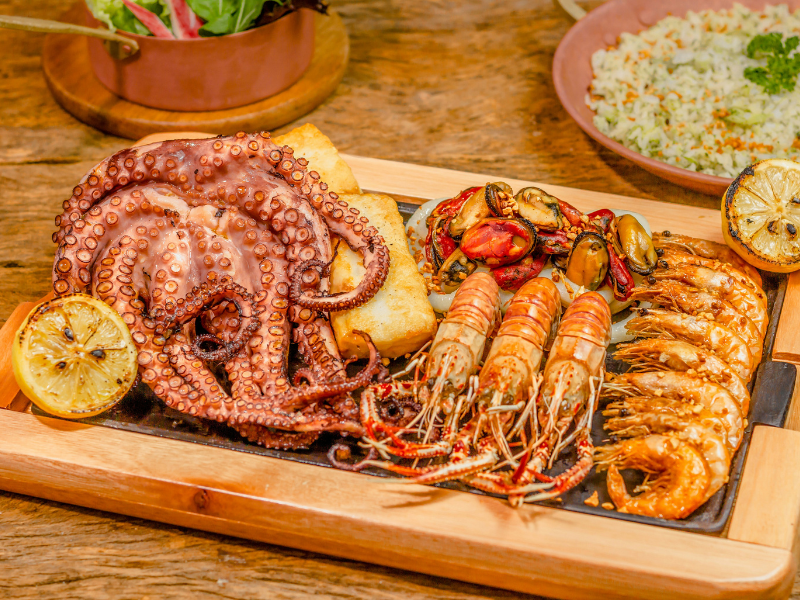
Foods associated with freshwater and coastal gathering can include tuna/eels, īnanga/whitebait, freshwater crayfish, shellfish and edible plants.
Why are they served? Waterways have historically been sources of food, transport routes, and places of cultural significance. Gathering kai also carries knowledge of season, preparation, storage, ecology and tikanga. Gathering kai also carries knowledge of the season, preparation, storage, ecology, and tikanga.
The condition of those waters can therefore alter the food culture itself. New Zealand’s Our Freshwater 2026 reports that an assessment of the Wairoa and Waiau rivers using mātauranga observations from 2021 to 2023 found that 9% of the harvest was unsafe to eat, while 7% of the targeted catch was unsafe to harvest because of visible injury or sickness At five coastal North Canterbury mahinga kai sites sampled between 2019 and 2021, E. coli was detected in watercress and cockles at concentrations exceeding health guidelines for consumption.
Here, asking what a river tastes like becomes inseparable from asking whether that river is healthy enough to continue feeding people.
Bangladesh: Vegetables that grow because the land disappears
Sometimes water shapes a food culture not by supplying an ingredient, but by removing the land beneath it.
In the flood-prone districts of Gopalganj, Pirojpur and Barisal, farmers in Bangladesh have practiced floating agriculture for around two centuries. Beds known as dhap are constructed from water hyacinth and plant residues and used to grow crops while land remains submerged.
FAO records crops including okra, ribbed gourd, Indian spinach, brinjal, cucumber, red amaranth, wax gourd, and bitter gourd being grown on these floating beds. Wetlands around the gardens also support rice cultivation and fishing.
The practice may be traditional, but its productivity can be impressive: FAO estimates that floating vegetable cultivation can be ten times more productive than cultivation on a similar-sized area of land.
Why are these foods grown and served here? Because seasonal flooding makes conventional agriculture difficult or impossible for months at a time. Communities responded by making water part of the farm itself.
Best served: Local vegetables such as brinjal, gourds, okra, and leafy greens, alongside rice and fish, reflect the mixed wetland food system more accurately than any single signature dish.
It is an important reminder that water-shaped cuisine does not always taste of seafood.
From landscape to plate
These places may be thousands of kilometers apart, yet the logic behind their food is remarkably similar.
In Peru, productive Pacific waters favor seafood and ceviche. On Jeju, an island with a diving culture, shellfish are turned into porridges, soups and raw dishes. In Japan, coastal waters, lakes and rivers each produce different ingredients and preservation traditions. In Aotearoa New Zealand, the ability to gather food is itself a measure of freshwater health. In Bangladesh, prolonged inundation led farmers to grow vegetables on floating beds.
Each example begins with the same question:
What can this water provide?
The answer then passes through human knowledge – fishing, diving, cultivating, fermenting, drying, cooking and sharing – before becoming cuisine.
When ecosystems change, recipes can change too
Food traditions are closely tied to the health of the waters that sustain them. Changing marine ecosystems can affect local fish and shellfish, pollution can make traditional foods unsafe to gather, and shifting floods or habitat loss can disrupt farming and harvesting practices.
The impact goes beyond the plate. Food traditions carry knowledge about seasons, species, harvesting and preparation, meaning environmental change can also put cultural and ecological knowledge at risk.
Around the world, however, communities have long adapted food systems to local waters. Bangladesh’s floating gardens, Jeju’s seasonal seafood, Japanese preservation traditions and Aotearoa New Zealand’s mahinga kai are just a few examples among many found across coastal, riverine, wetland and lakeside communities.
Many of these practices existed long before modern ideas of sustainability. They show how understanding and adapting to water has shaped not only what people eat, but the food cultures carried across generations.
So, what does a coast taste like?
Sometimes it tastes of raw fish sharpened with citrus.
Sometimes of abalone cooked slowly into rice, seaweed dissolved into broth, shellfish gathered at low tide or vegetables grown above floodwater.
There is no universal coastal flavor because there is no universal coast.
Every plate carries some combination of geology, climate, currents, seasons, species, and human memory. The world’s waters have quietly shaped food cultures for generations – not simply by providing ingredients, but by teaching communities when to harvest, what to preserve, how to adapt and what to value.
That may be why certain dishes feel inseparable from the places that created them.
They do not simply taste good beside the water.
They taste the way they do because the water is there.
Read More On: