
The ocean’s greatest stories are often hidden beneath its surface. Before exploring what ocean drones are capable of, it is worth understanding the changing conditions beneath the waves that have made these quieter forms of exploration increasingly necessary.
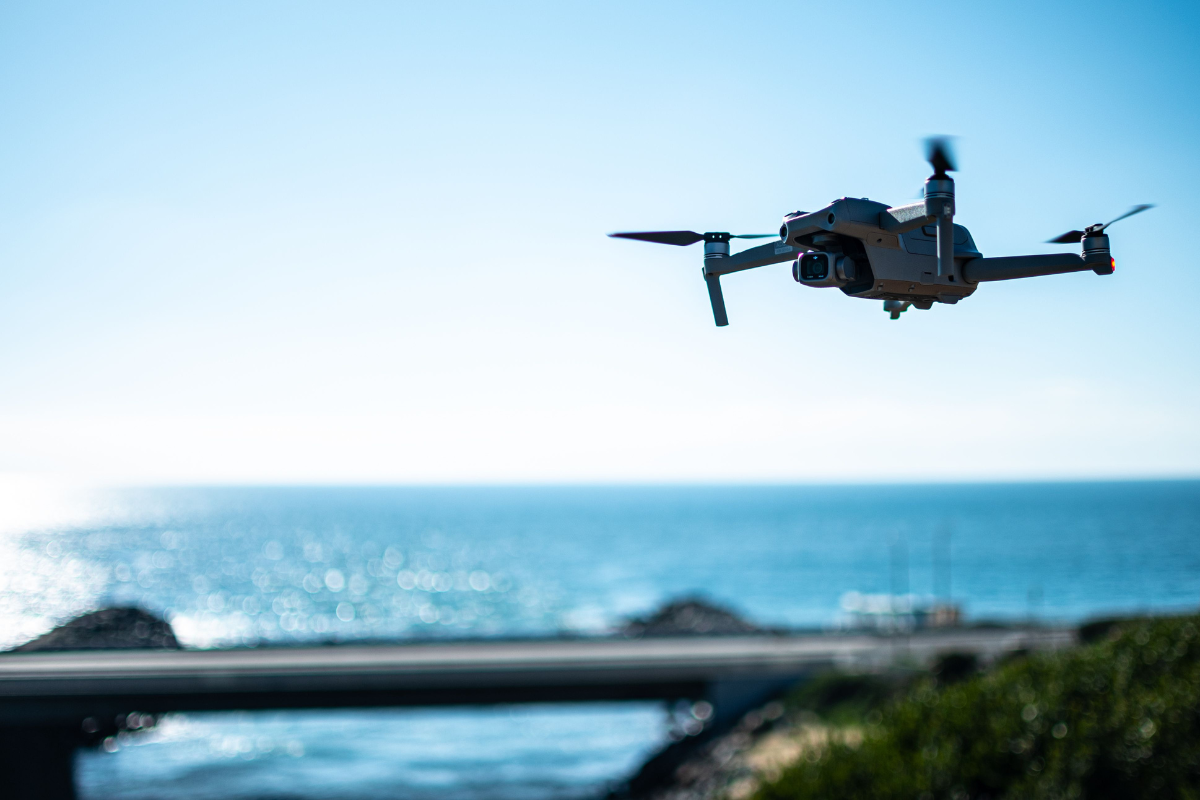
Every year, an estimated 600,000 tonnes of plastic waste enter Europe’s seas, with much of it eventually settling on the seabed rather than remaining visible at the surface. In response, fleets of ocean drones are beginning to work where divers and research vessels have long faced practical limits. In the Mediterranean, the European Union-funded SeaClear2.0 project combines aerial drones, autonomous surface vessels, underwater robots, and intelligent navigation systems to locate, classify, and recover marine litter from the seafloor – an environment that remains far less explored than many landscapes on land.
Yet cleaning marine debris is only one part of a much larger transformation. Around the world, autonomous marine technologies are quietly changing how scientists observe, measure, and understand the ocean itself. Operating beneath the surface, across open water, and along coastlines, these systems are extending the reach of traditional research by collecting continuous data from places that are difficult, dangerous, or too costly to monitor regularly.
From tracking shifting ocean currents and mapping deep-sea habitats to monitoring marine biodiversity and supporting climate research, ocean drones are helping build a more detailed picture of the world’s largest ecosystem. Rather than replacing research vessels, they are complementing them, creating an increasingly connected network of observations that is reshaping how governments, scientists, and coastal communities understand – and ultimately manage – the sea.
A New Generation of Ocean Observation
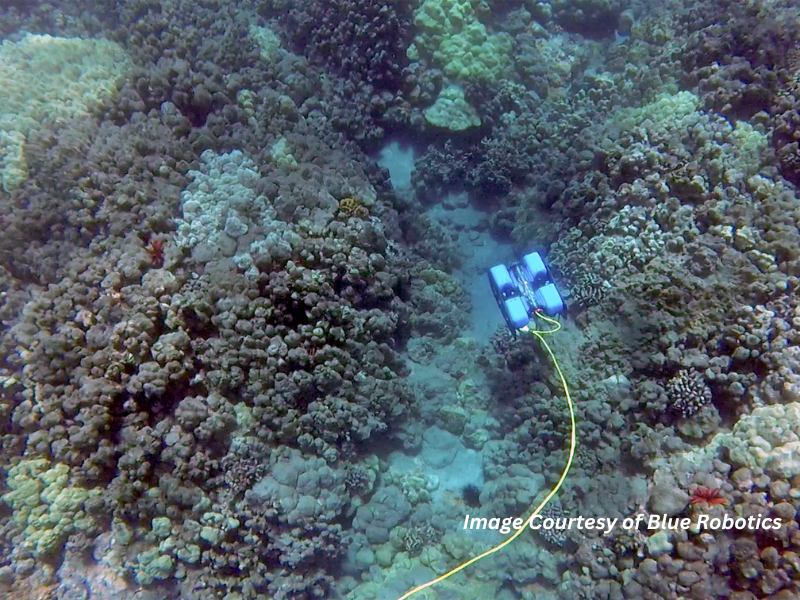
Like the name implies, “ocean drones” refers to many types of autonomous technologies that are designed for different environments in the ocean. Underwater gliders swim through the water measuring temperature, salinity, and the levels of oxygen, and they can even detect currents. Seabed-mapping autonomous underwater vehicles can also explore deep sea habitats. Uncrewed surface vessels can remain at sea for weeks and months at a time by harnessing the wind and waves (while also incorporating solar energy to monitor ocean conditions).
Their greatest contribution is persistence. Unlike conventional research expeditions, which are often constrained by cost, weather, and ship availability, autonomous platforms can repeatedly collect data from the same locations, revealing seasonal changes and long-term environmental patterns that would otherwise remain hidden.
This shift is gradually transforming the ocean from a place observed through occasional expeditions into one that can be monitored continuously.
Mapping a Changing Ocean
Around the world, governments and research organisations are rapidly expanding autonomous observation programmes.
This shift is already evident in practice. In 2025, the U.S. National Oceanic and Atmospheric Administration (NOAA) invested US$10.1 million in six autonomous marine projects supporting hurricane forecasting, deep-ocean mapping, navigation safety, protected-species monitoring, and ocean observation. During the 2025 Atlantic hurricane season, uncrewed surface vehicles entered five tropical storms – including a Category 5 hurricane – to transmit real-time ocean and atmospheric data, while other missions mapped previously uncharted Pacific waters and monitored critical marine habitats. Together, these projects demonstrate how ocean drones are expanding scientific observation in environments that are difficult, costly, or hazardous for conventional research vessels.
Japan is pursuing a similar path through the Japan Agency for Marine-Earth Science and Technology (JAMSTEC), which is advancing autonomous underwater vehicles capable of operating thousands of meters below the surface. In 2026, JAMSTEC successfully demonstrated real-time acoustic transmission of sonar data from its URASHIMA8000 vehicle during trials at depths of around 7,000 – 7,500 meters, marking another step towards more continuous exploration of the deep Pacific.
Meanwhile, UNESCO’s Global Ocean Observing System (GOOS) is expanding autonomous observation on a global scale. In 2025, it recognized the international SUN Fleet as an emerging ocean observing network, bringing together scientists, governments, and industry to coordinate uncrewed surface vehicles capable of measuring up to 26 Essential Ocean and Climate Variables. Operating in remote waters and even hurricane-strength conditions, these autonomous platforms are helping close critical gaps in monitoring air–sea interactions, improving weather and climate forecasting while strengthening our understanding of the interconnected ocean.
The result is an expanding global infrastructure that quietly collects information beneath the waves, creating a far richer picture of how marine environments function.
Beyond Data Collection
The significance of ocean drones extends beyond scientific measurement.
Autonomous systems are helping researchers survey deep coral reefs that remain largely unseen by recreational divers, monitor marine protected areas with minimal disturbance, and assess coastal habitats after storms or marine heatwaves. Others are being developed to identify marine litter, inspect offshore infrastructure, and improve fisheries assessments through artificial intelligence.
One emerging direction is particularly significant. Rather than simply recording information for later analysis, some experimental systems are beginning to recognise unusual conditions while they are still underwater. Artificial intelligence allows certain vehicles to identify marine species, follow biological activity, or adjust their survey routes in response to changing environmental conditions.
Observation is becoming increasingly adaptive rather than predetermined.
Designing for the Unknown
Despite rapid advances, autonomous systems are not without limitations.
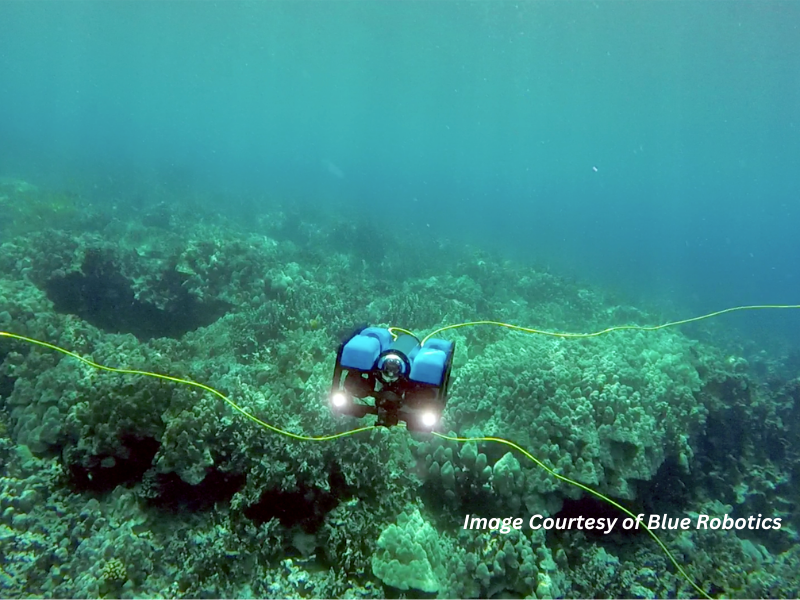
Communication beneath the ocean surface remains difficult. Unlike satellites or aircraft, underwater vehicles cannot rely on conventional radio signals and often communicate using slower acoustic methods. Long deployments also introduce practical challenges, including battery endurance, biofouling, navigation, and the possibility of vehicles becoming entangled in fishing gear or marine debris.
There are broader questions as well. As autonomous systems become more affordable and capable, they are being adopted for scientific research, environmental monitoring, offshore energy, infrastructure inspection, and maritime security. The same technologies that help map fragile ecosystems may also support commercial or strategic interests.
Understanding the ocean increasingly depends not only on what technology can observe, but also on how that knowledge is governed and shared.
From Exploration to Continuous Presence
Historically, ocean science has been defined by voyages. Researchers travelled to sea, gathered information, and returned home to analyse their findings.
Ocean drones are gradually changing that relationship. Instead of isolated expeditions, the ocean is becoming part of a continuous network of observation, where autonomous vehicles, satellites, coastal sensors, and digital models work together to monitor changing conditions almost in real time.
This evolving relationship between technology and water is influencing far more than scientific research. It is shaping conservation strategies, coastal planning, climate adaptation, maritime industries, and the way societies understand the world’s largest connected environment.
The Quiet Transformation
Ocean drones are unlikely to replace ships or the expertise of marine scientists. Instead, they are changing the rhythm of ocean exploration itself.
Their greatest contribution may not be the technology they embody, but the continuity they provide. By remaining where people cannot, returning to places more often, and revealing patterns that were previously impossible to detect, autonomous systems are allowing the ocean to be understood as a living, constantly changing system rather than a series of isolated observations.
As climate change, biodiversity loss, and growing coastal populations place new demands on marine environments, this quieter form of exploration is becoming one of the most important ways we learn from the sea – and, ultimately, how we learn to live more thoughtfully alongside it.
Read More on: