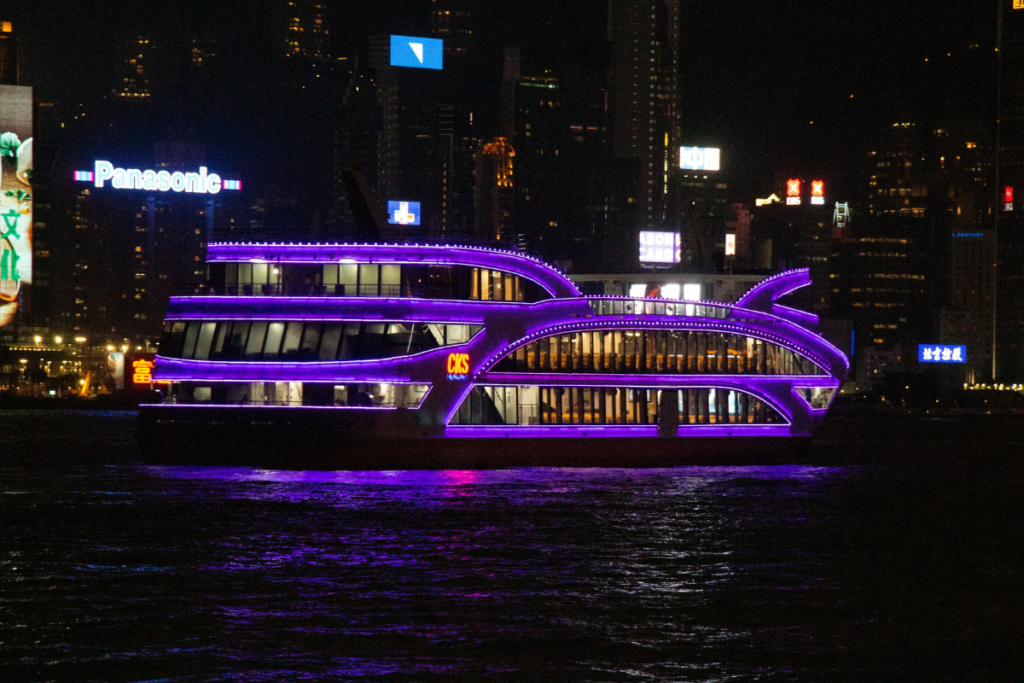
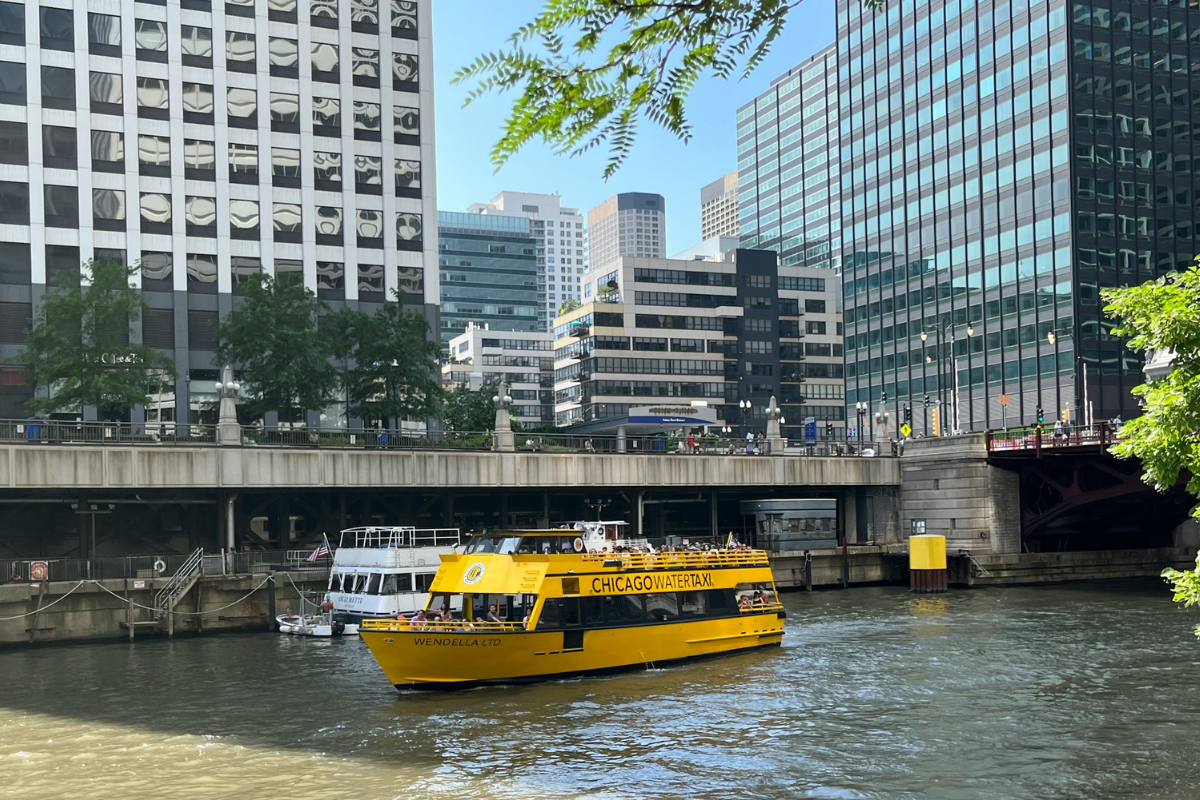

Water taxis were long treated as scenic detours rather than essential infrastructure. Today, water transport accounts for less than 5% of global urban mobility, despite moving millions of passengers daily. That is beginning to change as cities reintroduce waterways as active transport corridors, rather than simply passageways for leisure activities, with small craft redesigned and electrified for daily use, rather than constrained by geographical or infrastructural limitations. To understand what this means for urban movement, it helps to look more closely.
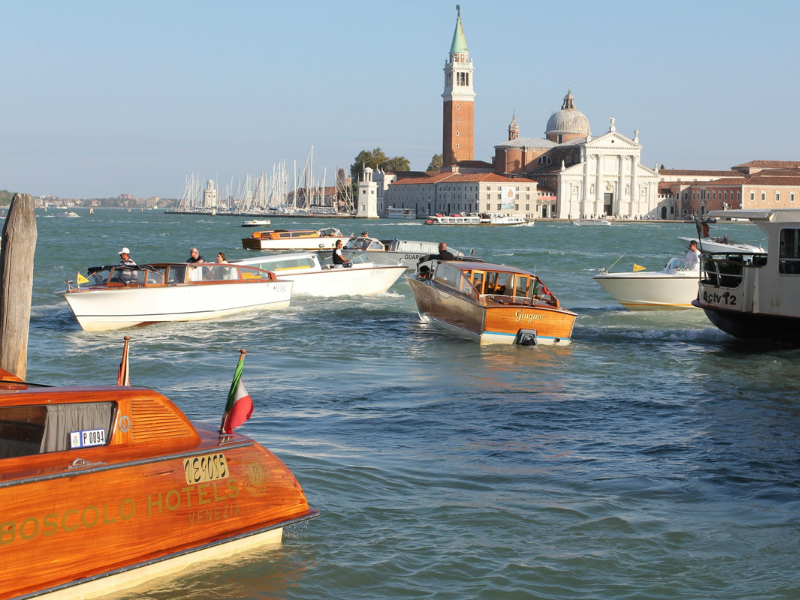
Water Taxis as Infrastructure, Not Experience
Cities were once organised around water. Rivers and coastlines structured early movement, shaping how settlements expanded long before roads redirected urban life inland. Today, that logic is reappearing in measurable ways. In Istanbul, ferry systems carry over 100 million passenger journeys annually, while in Hong Kong, services move more than 26 million passengers each year, figures that position water not as a peripheral route, but as part of everyday urban mobility.
At the same time, the form of the water taxi is evolving. Across Europe, 30% of water taxis now employ electric or hybrid propulsion systems, indicative of a general move towards alternative transport systems. For instance, Stockholm and Oslo are now introducing electric ferries and experimental boats to save energy while increasing frequency, indicating that water-based forms of commuting can be both efficient and environmentally friendly.
This change is also an economic and structural one. The global water taxi market was estimated at USD 114.8 billion in 2025. However, it is projected to reach USD 164.25 billion by 2032. Growth is steady rather than speculative. What defines this growth is its integration into existing urban transport systems. In this sense, the water taxi is no longer defined by the experience it provides but by the way it works.
From Scenic Routes to Daily Commutes
The distinction between tourism and commuting lies in frequency, reliability, and integration.
Water taxis in the tourism sector usually operate intermittently and charge higher rates. On the contrary, water taxis for commuters need to be more reliable in their schedules and linked to bus or rail services.
Cities like Istanbul illustrate how water-based transportation becomes an integral part of people’s routines when incorporated into the overall urban transportation network. Since 2021, Istanbul has expanded its sea taxi network, operating small-capacity vessels across dozens of piers on a 24-hour schedule.
Although the city’s fleet of ferries continues to transport millions of passengers between its European and Asian sides every year as a matter of course, water taxis are part of the overall network but offer a more flexible, on-demand service within it. The limitations of this service, whether in fleet size or pier distribution, have led to the use of data-driven platforms like MeePath, which uses AI and predictive models to optimize routes and service. Water transport operates as one layer within a broader urban mobility system shaped by geography and data.
In other cities, new systems are being designed from scratch, with integration central to their design. In the city of Kochi, the Water Metro uses battery-powered boats to connect the city’s busy port with the 10 islands surrounding it on Vembanad Lake. The system, currently in its expansion phase from its initial four-stop iteration, will eventually stretch over 76 km, with 78 boats operating on 16 routes, carrying up to 150,000 passengers daily. In Kochi, water is not an alternative but the primary structure of movement.
Toward the Next Generation of Water Taxi Systems
From its original form as a flexible and dynamic transport mode, the modern form of the water taxi is now being defined by its relationship to technology, energy, and network. For cities in which water is already part of the movement, smaller, on-demand water taxis are now being positioned as a connector in the movement of people, providing direct routes to support rail, metro, and bus systems.
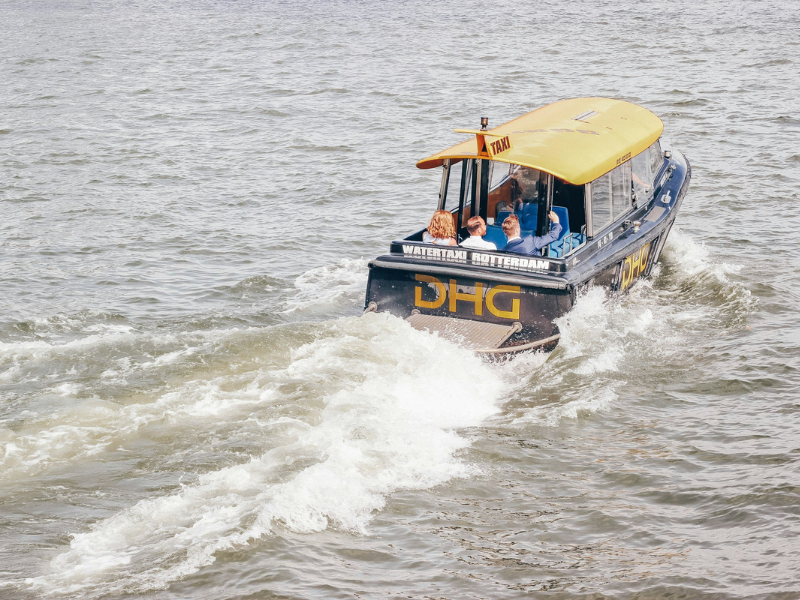
The process of electrification is at the heart of this change. For instance, in Bangkok, electric-powered water taxis are being rolled out along canals, while in Rotterdam, the world’s first hydrogen-powered water taxis are being trialled as part of broader decarbonisation plans. These vessels are designed to be quiet, wake-reducing, and fit within dense environments where environmental pressures are increasingly informing transport options.
Concurrently, the next generation of water taxi services is arguably just as likely to be defined by the associated infrastructure as the vessels themselves. In cities such as Auckland, investments in charging infrastructure for electric vessels up to 2026-2027 illustrate the way in which the waterways are being developed to serve the needs of low-emission transportation modes, which could arguably include the role of water taxis. At the same time, in Northern Europe, autonomous electric water vessels are being developed, where AI-based navigation increases service frequency and reduces operational costs, allowing routes to adjust in real time to demand.
How Cities Move Depends on Geography
Cities implement water transport differently depending on geography.
In Seattle, water taxis provide short crossings that bypass congested bridges in under fifteen minutes. The service has a precise function: to offer a faster option where land transport is inefficient.
In Lagos, water transport presents a different kind of potential. Despite having many major routes, water transport is still not utilized to the full capacity of the demand. The informal sector dominates the transport sector, carrying thousands of passengers every day.
These differences suggest a pattern. Water transport can be viable when it fits the structure of the city and can be well-connected to other modes. When it is not, it remains peripheral.
Back to the Water
The water taxi is not a reinvention, but a recalibration.
For much of the history of the city, water has been the defining feature of the way in which the city functions. Roads and rail shifted movement inland but did not eliminate the structural role of waterways. With the rise of congestion and the environmental constraints that are now shaping the way in which the city is planned, the waterways are again becoming part of the transport system, rather than outside it.
The change is not in the water taxis themselves, but in their place in the city. They are moving from the optional to the essential in some cities.
Water is once again becoming part of how cities move..
Read More On: